Does the Belly Button Look Natural After Tummy Tuck?
Does the Belly Button Look Natural After a Tummy Tuck?
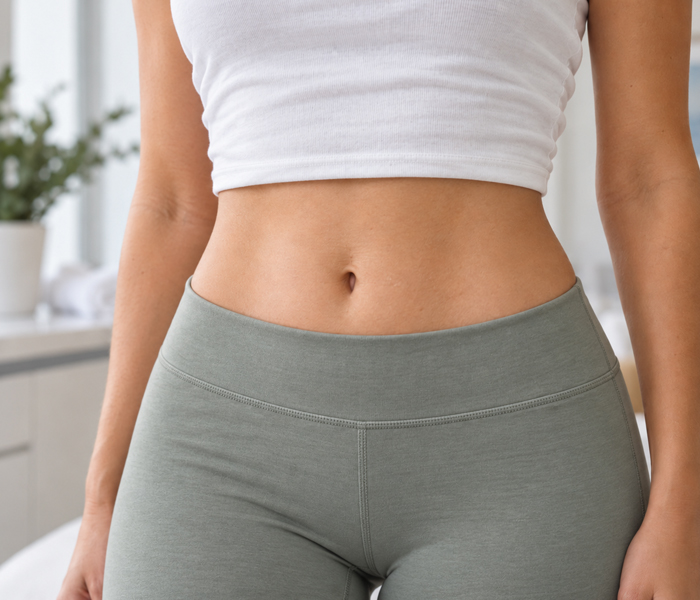
Does the belly button look natural after a tummy tuck? This is one of the most frequently wondered topics by people researching tummy tuck surgery. The short answer is: With the right patient selection, personalized surgical planning, appropriate belly button placement, and careful surgical technique, it is possible to achieve a natural-looking belly button after a tummy tuck. However, the belly button seen immediately after the surgery may not reflect its final appearance due to swelling, edema, stitches, and the healing process.
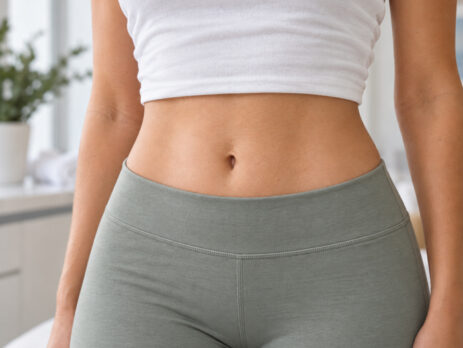
In the aesthetic appearance of the abdominal area, not only a flat abdomen or a slim waist is important. The position, shape, size, depth, and surrounding transitions of the belly button also play an important role in the natural perception of the abdominal area. In plastic surgery literature, the belly button is considered one of the central aesthetic elements of the abdominal area.
Especially during a full abdominoplasty, as the abdominal skin is repositioned, the belly button needs to be harmonized with the new abdominal contour. At this stage, the aim is to create an appearance that is not immediately noticeable as surgically altered when viewed from the outside, is harmonious with body proportions, and has natural curves.
At Op. Dr. Şükrü İşler Aesthetic Clinic, the evaluation for patients considering tummy tuck surgery is personalized. The initial examination or first consultation is free of charge. During the consultation, the excess skin in the abdominal area, muscle laxity, fat distribution, the existing structure of the navel, and the patient’s expectations are evaluated together to determine the appropriate surgical approach.
What Happens to the Navel in Tummy Tuck Surgery?
What is done to the navel during a tummy tuck can vary depending on the type of surgery performed. Especially in full tummy tuck surgery, a significant portion of the abdominal skin is freed and stretched downwards. For this reason, the navel must be brought out through an appropriate point on the new skin surface.
It is important to clarify a common misunderstanding here: In standard full tummy tuck surgery, the person’s anatomical navel is often not completely cut off and discarded to create another navel from scratch. The existing navel can be preserved with its stalk connected to the abdominal wall. After the abdominal skin is repositioned downwards, a new skin opening is created at the appropriate point, and the existing navel is brought out through this opening and reshaped with the surrounding skin.
This procedure can be performed using different techniques in medical literature and is often associated with the concepts of umbilical transposition or umbilicoplasty. The method to be applied may vary depending on the individual’s anatomy, skin thickness, the structure of the existing navel, and the technique used by the surgeon.
The American Society of Plastic Surgeons also states that during a full abdominoplasty, the abdominal skin is moved downwards, a new opening is created for the belly button, and the belly button is brought to the surface through this opening and placed in the appropriate position.
How Should a Natural-Looking Belly Button Be?
There isn’t a single ideal belly button shape. This is because people’s torso length, waist width, skin thickness, fat distribution, and existing navel structure differ from one another. However, aesthetic surgery literature has defined some common characteristics associated with a natural and aesthetically pleasing belly button appearance.
These include the belly button being in the correct position relative to the body, not being excessively large, having a slightly vertical or oval appearance, having a natural depression around it, and the surgical scar being as inconspicuous as possible.
Studies on umbilicoplasty published in the Aesthetic Surgery Journal Open Forum also state that the belly button is a central element in abdominal aesthetics; its shape, position, depth, and visible scar play an important role in the natural perception of the result.
A natural belly button doesn’t have to look like a perfectly geometric shape drawn with a ruler. On the contrary, slight curves, shading, and transitions compatible with the abdominal tissue can help the belly button appear more natural.
Why Might the Belly Button Appear Artificial After a Tummy Tuck?
The artificial appearance of the belly button after a tummy tuck is not due to a single reason. The way a person’s tissues heal is as influential on the outcome as the surgical technique.
The navel being larger or rounder than it should be, remaining too superficial, the formation of a prominent ring-shaped scar around it, being in a position inconsistent with the abdominal midline, or creating a harsh transition with the surrounding tissues can detract from its natural appearance.
Furthermore, the appearance in the first weeks after surgery should not be confused with the final result. In the early period, due to edema, the navel may appear wide, flattened, asymmetrical, or different from normal. Redness and stitch marks around it can also affect the appearance.
As the tissues soften, swelling decreases, and the scar matures, the appearance of the area around the navel may change. Therefore, it is not correct to judge the final aesthetic result solely by looking in the mirror during the early period.
Is the Navel Recreated in Tummy Tuck Surgery?
The answer to this question varies depending on the method applied. In classical full tummy tuck surgery, in most cases, the existing navel’s natural connection to the abdominal wall is preserved. However, because the abdominal skin above it moves downwards, the exit point of the navel on the skin surface is recreated.
Therefore, the external part seen by the patient may have been reshaped, but the underlying anatomical structure is often preserved.
In some special cases, a genuinely new navel may need to be created. When there are previous surgeries, severe scar tissues, loss of the navel, or specific reconstructive requirements, different methods, referred to as neo-umbilicoplasty, can be utilized.
Therefore, the phrase frequently used on the internet, ‘in a tummy tuck, the navel is completely cut and remade,’ is not true for every patient and every technique.
Does the Navel Change in Mini Tummy Tuck?
Abdominal aesthetics involves significant differences between mini tummy tuck and full tummy tuck. Mini tummy tuck is generally preferred for correcting a more limited excess of skin located below the belly button.
In suitable patients, during a mini tummy tuck, it may not be necessary to make an incision around the belly button or to bring the belly button out through a new opening. In a full tummy tuck, however, transposition of the belly button is more frequently required because the skin in the upper abdominal area is also repositioned.
However, the appropriate method should not be determined solely by whether “the belly button is touched or not.” The amount of skin sagging, laxity in the abdominal muscles, excess tissue above and below the navel, and the individual’s overall body structure should be evaluated together.
Why is the Navel’s Position Important?
Since the belly button is located in the center of the abdominal area, even a few centimeters of positional difference can affect the entire abdominal appearance. A belly button that appears too high or too low can be perceived as inconsistent with body proportions.
However, it is not correct to determine the ideal belly button position with the same centimeter measurement for everyone. Torso length, rib cage, pelvic structure, anatomy of the abdominal muscles, and the individual’s existing belly button position should all be evaluated.
Umbilicoplasty research published in recent years also shows that a natural outcome depends not only on the shape of the belly button, but also on its correct position on the abdomen and the three-dimensional relationship it forms with surrounding tissues.
Does the Shape of the Belly Button Affect a Natural Appearance?
Yes. When the navel is very large and perfectly round, some individuals may develop an operated appearance. In aesthetic surgery literature, it is reported that navel shapes that are small, vertical or vertical-oval in character, and have a slight skin fold in the upper part, are perceived as natural.
However, the goal is not to create the exact same navel in every patient. The natural navel appearance in an athletic and thin patient may not be the same as the natural appearance in a patient with thicker skin and fat tissue.
It is more important for the navel to be harmonious with the overall body structure than to conform to any standard geometric shape.
Why Is Navel Depth Important?
A natural navel is not merely a two-dimensional skin opening. Together with the surrounding tissues, it creates a three-dimensional concavity. Therefore, in umbilicoplasty techniques, ensuring the navel has sufficient depth is important for a natural appearance.
A very shallow navel may appear flat or artificial. On the other hand, an excessively deep appearance may also not be compatible with the individual’s anatomy.
In academic publications, creating a controlled concavity around the navel and properly relating the navel to the deep tissues in the abdominal wall are cited among the technical elements that support a natural appearance.
Does a Navel Scar Remain After a Tummy Tuck?
During a full tummy tuck, a surgical procedure is performed around the navel, so an incision line may form there. Due to the nature of surgery, it is not correct to promise a completely “scarless operation”. However, one of the aims of surgical planning is to place the scar as much as possible within the natural folds of the navel and in an inconspicuous manner.
Scar visibility is not determined solely by the suturing technique used. Genetic wound healing, skin type, smoking, tension on the wound, infection, sun exposure, and post-operative care can also affect the outcome.
The American Society of Plastic Surgeons states that after a full tummy tuck, in addition to the horizontal scar in the lower abdominal area, there may also be an incision scar around the belly button. Scars can take months to mature, and their prominence may decrease over time.
When Does the Belly Button Start to Look Natural?
Immediately after abdominoplasty, it is not appropriate to evaluate the final shape of the belly button. In the initial days and weeks, there may be edema, tension, redness, and tissue stiffness in the surgical area.
In the early period, the belly button may appear wider, narrower, pulled higher, or asymmetrical than normal. Some of these may be due to temporary changes during the healing process.
While significant swelling decreases in the first weeks, tissues soften more in the following months. Scar maturation, however, can take longer. The American Society of Plastic Surgeons states that it can take months to approximately one year for the prominence of tummy tuck scars to diminish.
Therefore, a concern such as “two weeks have passed since the surgery, and my belly button doesn’t look natural” does not always provide information about the final outcome. The most accurate assessment should be made during follow-up appointments with the plastic surgeon who performed the surgery.
Does the Shape of the Belly Button Change Over Time After a Tummy Tuck?
Yes, especially in the first months. As post-operative edema decreases, skin tension changes, and scar tissue matures, the contours of the belly button may become more defined.
In the long term, significant weight changes, pregnancy, aging, and alterations in skin elasticity can affect the entire abdominal region, as well as the area around the navel.
Therefore, it is important to maintain a stable weight as much as possible after abdominoplasty. To learn how abdominoplasty results can be affected by weight changes, you can also review the content titled What Happens If You Gain Weight After a Tummy Tuck?.
What Factors Determine a Natural-Looking Navel?
A natural appearance is created by a combination of many factors. Foremost among these is the accurate assessment of the individual’s existing anatomy. The thickness of the abdominal skin, the initial shape of the navel, the structure of the abdominal muscles, the distribution of fat tissue, and previous surgeries can all influence surgical planning.
The second important factor is the position of the navel. The opening on the new skin surface must be created at a point that is harmonious with the individual’s body proportions.
The third factor is the shape and depth of the navel. Instead of a very wide or superficial appearance, a three-dimensional structure that provides a soft transition with the surrounding tissues is aimed for.
The fourth factor is the placement of the scar. The scar is tried to be hidden as much as possible within natural creases.
Finally, the post-operative recovery process is of great importance. Adhering to the dressing, corset, activity, and follow-up program recommended by the surgeon helps in the healthy progression of wound healing.
Does Abdominal Muscle Repair Affect Navel Appearance?
Abdominoplasty does not only mean the removal of excess skin. In suitable patients, laxity in the anterior abdominal wall and separation of the rectus muscles are also evaluated.
Especially seen after pregnancy, diastasis recti, meaning separation of abdominal muscles, can cause the midline of the abdomen to widen and create a protruding appearance.
When the abdominal wall needs to be surgically repaired, not only does the abdomen flatten; the appearance of the anatomical transitions in the midline of the abdomen can also change. Since the area around the belly button is part of this general abdominal contour, holistic planning of the operation is important.
Does Liposuction Affect the Appearance of the Belly Button?
Liposuction and tummy tuck are methods applied for different purposes. While liposuction aims to reduce localized fat tissue, tummy tuck aims to remove excess skin and, if necessary, tighten the abdominal wall.
In some suitable patients, the two procedures can be used within the same surgical plan. Especially, regulating the fat distribution in the waist, flanks, and certain abdominal regions can contribute to a more balanced appearance of the abdominal contour.
However, procedures to be performed around the belly button must be planned very carefully. The aim is not only to reduce fat, but to create a balanced result by preserving the blood circulation and natural transitions of the area.
For detailed information about the differences between the two methods, you can review the content Tummy Tuck or Liposuction?.
Does Waist Slimming After Tummy Tuck Change the Appearance of the Belly Button?
After a tummy tuck surgery, the removal of excess skin in the abdominal area, the tightening of the abdominal wall, and the addition of body contouring procedures in suitable patients can make the abdomen-waist transition appear more defined.
Since the belly button is also located at the center of this new abdominal contour, it should not be evaluated in isolation. For a natural result, the belly button must form an integral whole with the proportions of the abdomen, waist, and torso.
For more detailed information on this topic, you can read the article titled Can Tummy Tuck Slim the Waist?
Can Problems Occur in the Belly Button After a Tummy Tuck?
As with any surgical procedure, there is a possibility of complications in tummy tuck and umbilicoplasty operations. Delayed wound healing, prominent scarring, infection, deformity, asymmetry, narrowing, or rarely, problems related to tissue circulation may be observed.
The likelihood of these risks occurring may vary depending on the patient’s health status, smoking habits, previous operations, the surgical method applied, and the post-operative care process.
If unusual symptoms such as increased redness, foul-smelling discharge, progressively worsening pain, significant color change, fever, or wound dehiscence develop in the belly button, the surgical team that performed the operation should be contacted instead of seeking solutions online.
If the Belly Button Looks Too Round, Will It Improve?
In the early period after surgery, edema and wound tension can cause the belly button to appear rounder than normal. Its shape may change as healing progresses.
However, the evaluation of significant shape problems that persist months later is different. Initially, it may be expected for the wound tissue to mature sufficiently. Afterwards, if deemed necessary, corrective options may be evaluated by the surgeon.
It should also be remembered that not every round belly button signifies a failed surgery. The harmony of the belly button with the person’s overall anatomy is more important than its geometric shape alone.
Does the Scar Around the Navel Fade Over Time?
Surgical scars do not necessarily disappear completely but can change in color and prominence over time. Scars that initially appear pink, red, or darker can become paler as the wound matures.
Wound maturation is known to take months. For some individuals, the reduction in scar prominence can take approximately a year or even longer. Due to individual genetic characteristics, some patients may develop more noticeable hypertrophic or wide scars.
Silicone products, tapes, or other treatments used in wound care should not be automatically applied to everyone. The surgeon should determine which method to start and when.
How is Navel Care Performed After Tummy Tuck?
Since navel care after surgery may vary depending on the surgical technique used, the patient should follow the instructions provided to them.
The cleaning of the area, the timing of dressing changes, showering, the use of a corset, physical activity, and the start time of wound care products can be determined by the surgical team.
It is not appropriate to apply any cream, antiseptic, oil, or product seen online to the navel without a doctor’s recommendation. Unnecessary use of products, especially on newly healed tissue, can cause irritation.
The American Society of Plastic Surgeons also recommends following personalized instructions regarding how to protect the surgical area and any drains after abdominoplasty, how to use medications, which symptoms to monitor, and when to attend follow-up appointments.
When Should the Results After Tummy Tuck Be Evaluated?
The results of a tummy tuck surgery do not appear in a single day. In the initial period, swelling and tension in the tissues can obscure the abdominal contour. In subsequent weeks, as the swelling decreases, the abdomen begins to look more natural.
However, the scar around the navel and the complete softening of the tissues may take longer. Therefore, it is important to know before the operation that healing will progress in stages.
Mayo Clinic and American Society of Plastic Surgeons sources also state that swelling can obscure early results after a tummy tuck, and that it can take months to approximately a year for scars to reach their final possible appearance.
Why is Pre-operative Planning Important for a Natural-Looking Navel?
The natural appearance of the navel is not an issue that begins during the operation. Planning starts during the examination.
The patient’s existing navel’s shape, height, diameter, and surrounding excess skin are examined. The quality of the skin above and below the navel, stretch marks, scars from previous C-sections or other surgeries, the condition of the abdominal muscles, and fat distribution are all evaluated.
At the same time, the patient’s expectations should be heard. Directly replicating another person’s navel seen on the internet may not be anatomically possible or aesthetically correct.
The aim is to create a result that is suitable for the patient’s own body structure and integrates with the abdominal contour.
Who May Be Suitable for a Tummy Tuck Surgery?
Tummy tuck surgery may be considered for individuals who have developed excess skin and laxity in the abdominal area, especially due to significant weight changes, pregnancy, or age.
Surgical options may be considered for patients with significant skin sagging or abdominal wall laxity that cannot be resolved with exercise and weight loss. However, a tummy tuck is not a weight loss method.
Many factors such as the patient’s general health status, body mass index, smoking habits, chronic diseases, past surgeries, and future pregnancy plans should be evaluated before deciding on surgery.
Does the Navel Result After Tummy Tuck Vary From Person to Person?
Absolutely. Even if the same surgical technique is applied, every patient’s tissues do not heal in the same way. Skin quality, skin thickness, amount of fat tissue, wound healing tendency, and torso anatomy affect the outcome.
Therefore, while looking at before-and-after images of other patients before a tummy tuck can provide an idea, expecting the exact same result is not accurate.
The goal of surgery is to create the most balanced and natural appearance possible within the patient’s existing anatomy.
Why is a Personalized Assessment Necessary for a Natural Navel Appearance After a Tummy Tuck?
Although the navel may seem like a minor detail in a tummy tuck surgery, it is one of the central structures of abdominal aesthetics. In successful planning, not only the amount of excess skin but also how the navel will integrate with the new abdominal contour is evaluated.
The navel’s position, shape, depth, the quality of the surrounding skin, and the placement of the scar differ in each patient. Therefore, the scope of the surgery cannot be determined by looking at photographs or solely by the person’s weight.
For patients considering a tummy tuck operation at Op. Dr. Şükrü İşler Aesthetic Clinic, the first examination or initial consultation is free. During the examination, the existing abdominal structure and navel are evaluated, and a personalized plan can be made to determine whether a full tummy tuck, mini tummy tuck, or a different body contouring approach is suitable.
Frequently Asked Questions
Does the belly button look natural after a tummy tuck?
With proper surgical planning and healing, it is possible to achieve a natural-looking belly button. The outcome may vary depending on the individual’s anatomy and wound healing.
Is the belly button cut during a tummy tuck operation?
In a full tummy tuck, the belly button is usually preserved with its stalk connected to the abdominal wall. After the abdominal skin is repositioned, it is brought out through a new skin opening and reshaped.
Is a new belly button created in a tummy tuck operation?
In standard cases, a completely new anatomical navel is often not created. The existing belly button is brought out to align with the new skin position. In some special cases, neo-umbilicoplasty may be required.
Is the belly button touched during a mini tummy tuck?
In many mini tummy tuck procedures, an incision around the belly button may not be necessary. However, the technique to be applied is determined according to the individual’s anatomy.
Will the belly button scar be visible after a tummy tuck?
There may be an incision scar around the belly button. The goal is to conceal the scar as much as possible within natural creases. The final appearance of the scar depends on individual healing characteristics.
Why does the belly button look round after a tummy tuck?
In the early period, it may appear rounder due to swelling and tissue tension. As healing progresses, the shape may change.
When does the belly button’s shape settle?
Although significant changes are seen in the first few weeks, the maturation of tissues and scar can take months. Final evaluation should not be made in the early postoperative period.
Will the belly button shrink after a tummy tuck?
During surgery, the outer appearance of the belly button can be reshaped according to the individual’s anatomy. However, the goal is not a specific measurement, but a result harmonious with the body.
Can the belly button end up too high?
Misplacement of the belly button can affect the aesthetic appearance. Therefore, its positioning is one of the important stages of surgical planning.
Does the belly button widen after a tummy tuck?
Healing, tissue tension, weight changes, and scar tissue can affect the long-term appearance of the belly button. In case of significant widening, a surgeon’s evaluation is necessary.
Is redness in the belly button normal after a tummy tuck?
In the early period, a certain amount of redness can be part of healing. However, if there is increasing redness, foul-smelling discharge, fever, or increasing pain, the surgical team should be contacted.
If the belly button appears asymmetrical after a tummy tuck, will it correct itself?
In the early period, swelling can lead to an asymmetrical appearance. Whether it is permanent can only be more accurately assessed once the tissues have healed.
Can the belly button be completely scarless after a tummy tuck?
A completely scarless result cannot be guaranteed in an area where a surgical incision has been made. The goal of the surgical technique is to make the scar as inconspicuous as possible.
Can silicone gel be used on the belly button?
Wound care products should only be used at the time and in the manner recommended by the operating doctor. Products should not be applied to an open or not fully healed wound without a doctor’s recommendation.
Can a belly button revision be performed after a tummy tuck?
If there are ongoing significant shape, scar, or position problems after wound healing is complete, corrective options can be considered for suitable patients. The decision on whether a revision is needed is made after examination.
Does gaining weight after a tummy tuck distort the shape of the belly button?
Significant weight changes can affect the abdominal skin and surrounding tissues. Therefore, it is recommended to maintain a stable weight as much as possible after the operation.
Does pregnancy affect the tummy tuck result?
Pregnancy can re-stretch the abdominal skin and abdominal wall. This situation can change the result obtained with a tummy tuck and the appearance around the belly button.
What is the most important factor for a natural-looking belly button after a tummy tuck?
There isn’t a single factor. Correct position, a shape and depth appropriate for the body, a minimized scar, proper tissue transitions, and healthy healing are important together.
Can belly button design be discussed before a tummy tuck surgery?
Yes. The patient’s expectations and current anatomy should be evaluated during the pre-operative examination. However, instead of an exact replication of another person’s belly button, an appearance suitable for the individual’s own body should be aimed for.
Is the first consultation at Şükrü İşler Aesthetic Clinic charged?
For patients considering tummy tuck and other aesthetic operations, the first examination or first consultation is free. Personal expectations, abdominal structure, and suitable treatment options can be evaluated during the consultation.
Academic and Scientific Sources
- Improving Umbilical Aesthetics in Abdominoplasty Surgery: A Step-by-Step Technique Guide – Aesthetic Surgery Journal Open Forum / PubMed
- Umbilicoplasty in Abdominoplasty: Modifications for Improved Aesthetic Results – Aesthetic Surgery Journal Open Forum
- Creating the Perfect Umbilicus: A Systematic Review of Recent Literature – PubMed
- The Two-Dermal-Flap Umbilical Transposition: A Natural and Aesthetic Umbilicus After Abdominoplasty – PubMed
- Natural-Looking Umbilicus as an Important Part of Abdominoplasty – PubMed
- Tummy Tuck (Abdominoplasty) – American Society of Plastic Surgeons
Is a Natural-Looking Belly Button Possible After Abdominoplasty?
Yes, it is possible to achieve a natural-looking belly button after abdominoplasty. However, a natural appearance does not merely mean making the belly button small or oval. The belly button must be correctly positioned, have adequate depth, create a natural transition with the surrounding skin, have its scar hidden as much as possible, and be harmonious with the entire abdominal contour.
In a full tummy tuck surgery, in most patients, the existing belly button is brought out through a new skin opening and reshaped, while its natural connection to the abdominal wall is preserved. Therefore, one of the important stages of the operation is to harmonize the belly button with the new abdominal appearance.
Furthermore, it should be remembered that the initial appearance after surgery is not the final result. It takes time for swelling to decrease, tissues to soften, and scars to mature. How natural the result will be depends on the individual’s anatomy, the surgical method used, and healing characteristics.
If you are considering a tummy tuck and are particularly curious about how your belly button will look after the surgery, a personal anatomical evaluation is the most appropriate step. The first examination or initial consultation at Op. Dr. Şükrü İşler Aesthetic Clinic is free of charge. During the examination, excess skin in the abdominal area, muscle structure, the current appearance of your belly button, and your expectations can be evaluated together to provide information about the suitable surgical plan for you.
Important information: This content has been prepared for general informational purposes. It does not replace diagnosis, treatment, or personalized surgical advice. Whether a tummy tuck is suitable for you, the surgical method to be used, potential risks, and expected outcomes should be determined after an examination by a plastic, reconstructive, and aesthetic surgery specialist.