


Why Does the Effect of Botox Last Shorter? 10 Important Reasons
Why Is the Effect of Botox Short-Lived? 10 Important Reasons
After getting Botox, some people may be satisfied with the results for months, while others may notice their facial expressions becoming prominent again within a few months. This situation naturally leads to questions such as “Why did the effect of Botox last shorter for me?”, “Why did Botox wear off in 2 months?”, or “Is my body metabolizing Botox too quickly?” However, it is not accurate to attribute the duration of Botox’s effect solely to an individual’s metabolism. Numerous variables can influence the outcome, from the dosage used and muscle strength in the application area to the individual’s facial anatomy, the application technique, and the characteristics of the botulinum toxin preparation used.
There is no single “normal duration” that applies to everyone in botulinum toxin applications. While the effect of aesthetic botulinum toxin applications generally lasts for several months in clinical studies, significant differences can be observed among individuals. Therefore, if a result that lasted 5 months for your friend starts to diminish earlier for you, it does not solely mean that the application was unsuccessful.
To evaluate how long Botox will be effective, especially in areas like the forehead, between the eyebrows, and around the eyes, it is necessary to consider not only the product used but also the individual’s muscle structure, previous applications, the desired natural appearance, and the administered dose. At Op. Dr. Şükrü İşler Aesthetic Clinic, the first examination or consultation is free. If you have had Botox before and believe the effect diminished earlier than expected, a personalized plan can be made by evaluating your previous application duration and facial muscles together.
How Long Does Botox Usually Last?
When it comes to the duration of Botox’s effect, you can often encounter exact figures like “3 months,” “4 months,” or “6 months” on the internet. In reality, however, the onset and duration of the effect in botulinum toxin applications can vary from person to person.
A significant portion of scientific studies examining botulinum toxin applications for aesthetic purposes have reported that the results visibly persist for approximately 3-4 months, with the effect being shorter or longer in some individuals. A comprehensive review examining the duration of botulinum toxin’s effect in aesthetic applications also states that there are significant differences among studies. You can access the relevant academic publication via PubMed.
The diminishing effect of Botox does not happen all at once either. First, mimetic movements may gradually begin to return. Subsequently, muscle activity gradually increases, and dynamic lines may become visible again. Therefore, “movement has started” is not the same as “Botox has completely worn off.”
For more detailed information on when the initial effects of Botox begin and when the maximum result can be evaluated, you can review our content titled How Many Days Does Botox Settle In? When Does Its Effect Begin?.
Why Does the Effect of Botox Last Shorter in Some People?
The short answer is: The duration of Botox’s effect is not dependent on a single factor. The administered dose, the size and strength of the muscles, the choice of application points, the botulinum toxin preparation used, the person’s previous Botox history, and biological differences can all together influence the outcome.
Especially in a significant portion of situations described as “Botox doesn’t work for me,” more common reasons such as dose, anatomical structure, targeted level of expression, and application technique should be evaluated before concluding actual botulinum toxin resistance.
1. Strong Facial Muscles Can Affect Botox Duration
The size and activity of the muscles where Botox will be applied are not the same from person to person. Some individuals may generate much stronger muscle activity when frowning, squinting, or moving their foreheads. The treatment plan for individuals with high muscle mass and strong facial expressions may not be the same as for someone with a lighter muscle structure.
Academic publications examining the onset and duration of botulinum toxin’s effect also state that muscle mass and individual anatomical differences can play a role in the clinical response. One of the scientific evaluations on this topic was discussed in detail in a study published in the Aesthetic Surgery Journal and indexed in PubMed.
Therefore, applying only a “standard amount” to a person with strong mimic muscles may not always be the correct approach. It is important for the physician to examine the muscle movements in the forehead, between the eyebrows, and around the eyes, and to create a personalized plan.
2. The Dose Used Can Change the Duration of Effect
Just as the “more is always better” approach is not correct in Botox applications, it is also incorrect to think that a dose lower than necessary will be sufficient for every person. The goal is not to completely immobilize the face, but to controllably reduce muscle activity to an amount appropriate for the person’s anatomy and expectations.
Scientific studies show that there may be a relationship between dose and the duration of clinical efficacy. For example, a recent academic review evaluating the dose-response relationship of onabotulinumtoxinA states that appropriate dosing is important for efficacy and duration, and that low-dose use may be associated with a shorter duration of effect in some cases. You can access the study via PubMed.
However, this information should not be interpreted as “the highest possible dose should be used for a longer duration of effect.” The amount to be used should be determined by the physician based on the application area, muscle strength, facial anatomy, the product used, and the desired outcome.
3. Can Baby Botox Last for a Shorter Duration?
The primary goal in the baby Botox approach is typically to achieve a more controlled and natural softening rather than completely eliminating facial expressions. For this reason, the application may be planned with lower amounts or a different distribution compared to a classic procedure.
In an application planned with a lower dose, it is possible for muscle movements to return earlier in some individuals. This may not mean that the procedure was unsuccessful; a more natural and dynamic result may have been aimed for from the outset.
To understand which approach is more suitable for you, you can review our guide titled Botox or Baby Botox? Differences and the Right Choice.
4. Application Area Can Change the Duration of Effect
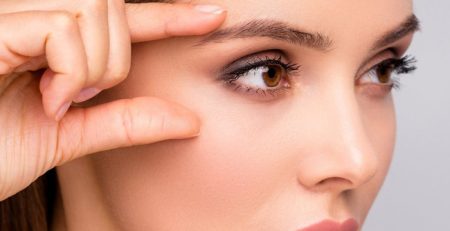
The muscle structure is not the same in every area of the face. The frontalis muscle in the forehead, the muscle groups between the eyebrows, and the orbicularis oculi muscle around the eyes have different anatomical features and different modes of movement.
Therefore, the duration of Botox between the eyebrows and the perceived duration of the application around the eyes may not be exactly the same. While movements may return earlier in one area, the effect may continue more prominently in another.
For example, crow’s feet lines can develop quite differently from person to person due to intense facial expressions around the eyes. For detailed information on eye area applications, you can read our content titled When Should Botox Be Done for Crow’s Feet Wrinkles?.
5. Application Technique and Selection of Points Are Important
In Botox application, not only the total amount but also how this amount is distributed to which muscles and at which points is important. Facial muscles are structures that work in balance with each other. When reducing the movement of one muscle, the function of neighboring muscles and the person’s eyebrow position should also be taken into account.
In the scientific literature, it is stated that the application technique and the correct positioning of botulinum toxin within the target muscle can affect the clinical outcome. An academic review evaluating the duration of action of botulinum toxin emphasizes that in addition to the dose, individual characteristics and application technique can also play a role in the duration.
Therefore, botox should not be evaluated solely by the question, “how many units were administered?” Performing the application in accordance with the anatomical plan is at least as important as the quantity.
6. The Botulinum Toxin Products Used Are Not Identical
Today, there are different botulinum toxin type A preparations available. Not all of these products can be compared using the same unit system, and a specific unit quantity from one brand should not be considered directly equivalent to the same numerical unit in another preparation.
Products may differ in terms of manufacturing method, biological activity measurement system, formulation, and clinical use characteristics. Therefore, if the product used in your previous application differs from the product used in a subsequent application, making comparisons based solely on the number of units can be misleading.
What is important is to use a reliable product, stored under appropriate conditions, and applied according to the individual’s needs, with correct anatomical planning.
7. Is “My Metabolism is Fast, I Melt Botox Quickly” True?
One of the most frequently used statements about botox is the phrase “My metabolism is fast, so I melt botox quickly.” However, this explanation oversimplifies the mechanism of action of botulinum toxin.
Botulinum toxin is not a substance that fills the muscle or circulates freely in the body for months. It works by temporarily reducing acetylcholine release in neuromuscular communication. As neuromuscular communication regains function over time, muscle movements also begin to return.
Studies examining the cellular mechanism of action of botulinum toxin show that it is not accurate to attribute the cessation of clinical effectiveness solely to the general body’s metabolic rate. Functional recovery of nerve endings and mechanisms at the cellular level are important parts of the process. You can access detailed academic information about this mechanism from the mechanism review on PubMed.
Therefore, while “fast metabolism” can be used in everyday language to describe personal differences, it should not be seen as the sole and proven reason explaining short-lasting Botox.
8. Does Extensive Exercise Make Botox Wear Off Faster?
There is a widespread belief among people who exercise intensely that Botox lasts for a shorter period. However, there is no strong and consistent scientific evidence to conclusively show that regular exercise shortens the duration of Botox months later.
It is possible for facial muscles to be strong in individuals with very high muscle activity; however, this situation is different from a simple causality like “sports melt away Botox.” Professional sports, high physical activity, or a fast heart rate alone do not necessarily mean that botulinum toxin will last for a short duration.
Exercise and daily life restrictions recommended for the first few hours or the first day after the application are a different matter. Personal recommendations given by your physician after the procedure should be followed.
9. Can the First Botox Treatment Last Shorter?
It is not appropriate to directly compare the results of someone undergoing botox for the first time with those of another person who regularly receives botulinum toxin applications. Each person’s muscle strength, wrinkle depth, and treatment history are different.
In some individuals, a decrease in the activity of target muscles may be observed over time after regular applications. However, it is not possible to say that every application will last longer than the previous one for everyone.
In the first application, especially if the dose is planned conservatively to ensure a natural appearance, it might be thought that facial expressions return earlier than expected. Follow-up examinations are therefore important.
10. Decreased Botox Efficacy and Botox Resistance Are Not the Same Thing
One of the most concerning issues when botox lasts shorter than expected is the question, “Has my body developed immunity to botox?” The development of neutralizing antibodies against botulinum toxin and the resulting secondary non-response is a scientifically defined condition. However, it is not correct to assume that every person experiencing a short effect from aesthetic applications has developed antibodies.
Before evaluating true immunological resistance, factors such as the administered dose, product, application technique, treatment intervals, muscle structure, and previous application history need to be examined.
You can access an academic consensus study, including evaluations from international experts on immune resistance to botulinum toxin, via PubMed. The publication emphasizes that the development of neutralizing antibodies is possible, but clinical non-response should be carefully evaluated.
How Is Botox Resistance Understood?
A single application lasting a short time is not enough to diagnose botox resistance. For a true secondary unresponsiveness to be considered, the person’s response to previous applications, the product used, doses, application intervals, and clinical results in different areas should be evaluated together.
For example, in individuals who previously achieved significant results from the same or similar applications but progressively responded less despite appropriate doses and techniques being used in subsequent applications, the possibility of resistance can be evaluated by the physician.
Conversely, the failure to achieve the expected result in the first application does not automatically mean that antibodies have developed. Anatomical differences, insufficient dosage, incorrect expectations, evaluation being too early, or the line in the treated area having become static rather than merely dynamic should also be considered.
Is it Normal for Botox to Wear Off in 2 Months?
In some individuals, muscle movements may noticeably start to return around the second month. Although this duration may seem shorter than many people expect, it is not by itself a serious problem or an indicator of botox resistance.
First, it should be determined what is meant by “the effect has worn off”. Being able to move your eyebrows again may not mean that botox is completely ineffective. The purpose of botox is often not to completely stop all facial expressions for months, but to controllably reduce the overactivity of target muscles.
If a good result was achieved in the first weeks after the procedure but movement close to the baseline level returned within 6-8 weeks, the dose, muscle strength, injection points, and previous treatment history can be re-evaluated in the subsequent assessment.
How Do You Know If the Effect of Botox is Diminishing?
The effect of botox generally diminishes gradually. The most commonly noticed changes are:
- The frowning movement starting to strengthen again,
- Forehead lines becoming prominent again during facial expressions,
- Crow’s feet around the eyes reappearing when smiling,
- The smooth appearance from the first few weeks gradually diminishing,
- The range of motion of facial expression muscles gradually increasing.
The appearance of these does not mean that the application suddenly became ineffective. The return of neuromuscular communication is a gradual process.
What Can Be Done to Prolong the Effect of Botox?
There is no home method that guarantees to extend the effect of Botox for months. On the internet, you may encounter numerous suggestions such as zinc supplements, certain vitamins, exercising less, or consuming special nutrients. However, there is no strong and consistent scientific evidence for all of these methods.
The more important points to make the effect of Botox as predictable as possible are:
- The application being planned by a physician experienced in facial anatomy,
- Selecting a dose appropriate for muscle strength,
- Determining application points individually,
- Using reliable and properly stored products,
- Avoiding uncontrolled applications at very short intervals,
- Following the physician’s post-procedure recommendations,
- Informing the physician about previous Botox applications and their results.
Botox should not be considered merely as a single procedure for wrinkle reduction, but within the holistic anatomy of the face. To get information about other non-surgical procedures, you can review our non-surgical aesthetic applications page.
Why is a follow-up after Botox important?
It is not possible to evaluate the final result of Botox immediately after the application. In the first few days, the clinical effect of the toxin has not yet fully manifested. Therefore, making evaluations too early, such as “Botox didn’t take” or “One side moves more,” can be misleading.
During the follow-up examination, the eyebrows, forehead, and eye area are evaluated both at rest and during facial expressions. If deemed necessary, the planning for subsequent applications can be updated in line with the person’s facial anatomy and the product used.
Especially for individuals who have had Botox before, remembering when the previous application was done, how long it approximately lasted, and in which areas movement started earlier can be beneficial for personalized planning.
The Biggest Mistake When Measuring Botox’s Effect: Confusing Movement with Wrinkles
The primary effect of Botox is to temporarily reduce the activity of mimic muscles. However, the lines a person sees in the mirror may not be solely dependent on muscle movement.
If a deep forehead line or frown line that has been present for many years is visible even when the face is completely at rest, this line may have acquired static characteristics. Even if muscle movement has been successfully reduced, it is possible for the established line on the skin not to completely disappear.
In this situation, the person might think, “Botox didn’t work for me”; however, muscle movement might have significantly decreased. Factors such as skin quality, sun damage, age, elasticity, and volume loss should also be considered when evaluating static wrinkles.
Why Might Frown Line Botox Feel Longer or Shorter?
The corrugator and procerus muscles between the eyebrows can be quite strong in some individuals. The activity of these muscles may be more pronounced in people with a constant habit of frowning. In such a facial structure, the treatment plan will differ from that of a person with milder muscle activity.
Similarly, when planning Botox for the forehead area, not only the number of lines is considered. The current height of the eyebrows, the structure of the eyelids, and the role of the frontalis muscle in keeping the eyebrows elevated are evaluated together. Therefore, using an unnecessarily high dose in the forehead area solely to achieve longer-lasting results is not an appropriate approach.
Why Does the Duration of Crow’s Feet Botox Vary?
The orbicularis oculi muscle around the eyes can work intensely during smiling and squinting. Different treatment plans may be necessary for individuals who frequently squint their eyes in sunny environments, those who use strong facial expressions, or those with more pronounced lines around the eyes.
At the same time, some of the fine lines around the eyes are not solely due to muscle movement. Skin quality, sun exposure, and loss of elasticity that develops with age also affect the appearance. Therefore, although Botox reduces muscle movement, complete elimination of all fine lines should not be expected.
Is the Duration of Sweating Botox the Same as Facial Botox?
No. Botulinum toxin can be used not only in mimic muscles but also to reduce nerve signals reaching the sweat glands in the treatment of excessive sweating. However, the target of the application and the evaluated clinical outcome differ from facial Botox.
Therefore, it is not appropriate to directly compare the duration of effect of Botox applied for wrinkles in the facial area with applications for armpit, hand, or foot sweating.
For detailed information about hyperhidrosis and sweating Botox, you can review our content titled Why Does Excessive Sweating Occur? Sweating Botox and Its Duration of Effect.
If the Botox Effect is Short-Lived, Should the Dose Be Increased Next Time?
Making this decision solely by looking at the duration of the previous effect is not correct. First, it should be evaluated which areas the initial application was performed on, the product used, the dosage, muscle strength, when the maximum effect appeared, and how the effect decreased.
While re-planning the dose may be appropriate for some individuals, for others, simply changing the application points might be sufficient. In another person, a more conservative approach might have been preferred in the initial application, especially because the aim was to preserve natural facial expressions.
Therefore, it is not correct to determine a personal dose by looking at standard unit charts on the internet.
Why Does Personalized Planning Determine the Longevity of Botox?
In modern botulinum toxin applications, the goal is not solely to reduce lines. Preserving the position of the eyebrows, keeping the facial expression natural, balancing muscle differences between the two sides, and creating a level of facial expression consistent with the person’s expectations are also parts of the planning.
Therefore, before asking “Which Botox lasts the longest?”, it is more appropriate to answer the question “Which plan is more suitable for my muscle structure, facial anatomy, and desired outcome?”.
At Op. Dr. Şükrü İşler Aesthetic Clinic, the first examination or consultation is free. During the initial assessment, your facial muscles, expressive strength, previous Botox applications, and expectations can be evaluated together to discuss suitable options for you. You can submit your appointment request through the online appointment page.
Frequently Asked Questions
Why did my Botox only last 2 months?
Many factors such as strong muscles, the dose used, the application area, personal anatomical differences, the product, and the treatment plan can cause the effect to feel diminished earlier. A two-month duration alone does not signify Botox resistance.
Why does Botox last 6 months for some people?
Because muscle structure, the preparation used, dose, application area, and the individual’s biological response vary, the duration of the effect can also differ. Significant differences in duration among individuals have been reported in scientific studies.
Does a fast metabolism make Botox wear off quickly?
Attributing the duration of Botox solely to metabolism rate is not scientifically accurate. The restoration of nerve-muscle communication is one of the fundamental mechanisms for the cessation of botulinum toxin’s effect.
Does Botox last shorter for people who exercise?
There is no strong and consistent data proving that regular exercise necessarily makes Botox wear off faster. Muscle structure and individual differences should also be evaluated.
Does Baby Botox last shorter than regular Botox?
Since baby Botox usually involves lower doses and a plan aimed at preserving natural facial expressions, it is possible for muscle movements to return earlier in some individuals. However, the technique used varies from person to person.
Does Botox wearing off early mean that the product used was bad?
No. In addition to the product, dose, muscle strength, application points, and individual differences can also affect the duration. It is not correct to conclude about product quality solely based on the duration of effect.
Why is the effect of Botox very good at first but then decreases rapidly?
During the period of maximum effect, muscle movements can be quite limited. As nerve-muscle communication begins to re-establish, movements gradually return. This transition can be more noticeably observed, especially in individuals who use strong facial expressions.
Can immunity to Botox develop?
The development of neutralizing antibodies against botulinum toxin is scientifically possible. However, it cannot be said that every person experiencing a short effect in aesthetic applications has resistance. Actual resistance assessment should be performed by a physician.
What if there is Botox resistance?
First, it is assessed whether there is actual resistance. Previous products, dosages, application frequency, and clinical response are reviewed. The subsequent approach should be determined by the physician based on the individual’s condition.
Does getting Botox more frequently make it last longer?
More frequent application does not automatically mean a longer effect. Unnecessary and very short treatment intervals should be avoided, and the reapplication time should be determined based on clinical evaluation.
Does the face look worse when Botox completely wears off?
When the effect of Botox wears off, muscle movements gradually return to their initial functions over time. It is incorrect to say that when the treatment is discontinued, the face necessarily becomes worse than it was before getting Botox.
Does Botox completely eliminate wrinkles?
Botox is particularly effective for dynamic wrinkles that appear during facial expressions. For deep and established lines that are also visible at rest, Botox alone may not completely eliminate all wrinkles.
When should a check-up be done after Botox?
Since the effect of botulinum toxin develops gradually, the evaluation is not performed immediately after the procedure. The appropriate check-up time is determined according to the product used, the application area, and the physician’s plan.
Does forehead Botox last the same amount of time as crow’s feet Botox?
Not always. Since the muscles treated, doses, and the way muscles work differ, the duration of effect may vary between areas.
Should zinc be used to enhance the effect of Botox?
There is insufficient and strong evidence to support the routine use of supplements to prolong the duration of Botox. It is not recommended to use any supplement solely for the purpose of extending Botox without consulting a physician.
Botox Duration Does Not Have to Be the Same for Everyone
There is no single reason why the effect of Botox may last shorter in some individuals. Muscle strength, administered dose, injection points, treated area, botulinum toxin preparation used, personal anatomy, previous applications, and individual biological response can collectively determine the outcome.
Therefore, comparisons like “It lasted 5 months for my friend, why did it only last 3 months for me?” are often misleading. Even the same amount of botulinum toxin does not necessarily produce the same clinical result in two different facial anatomies.
Moreover, thinking that the effect diminished early does not directly mean there is botox resistance. While true immunological resistance is possible, factors such as dosage, muscle strength, application plan, and other potential causes should be evaluated first.
Planning botox application according to individual facial anatomy, muscle expressiveness, and natural appearance expectations is important for achieving both a more balanced and predictable result. For general information about botox, you can review the Op. Dr. Şükrü İşler Botox application page.
The initial examination or consultation at Op. Dr. Şükrü İşler Aesthetic Clinic is free of charge. If you believe your botox effect lasted shorter than previous applications, a personalized approach can be developed for you by evaluating your facial muscles and application history.
This content has been prepared for general informational purposes. It does not substitute for diagnosis, treatment, or personalized application recommendations. The suitability and planning of botulinum toxin applications should be determined as a result of a physician’s examination.