Can Breasts Sag Again After Breast Lift?
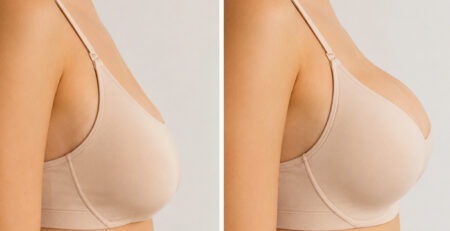
Among the most frequently wondered topics by individuals considering breast lift surgery is the question “Do breasts sag again after breast lift?”. Breast lift, medically known as mastopexy, is a surgical procedure aimed at reshaping sagging breast tissue, removing excess skin, and repositioning the nipple to a more appropriate anatomical position. However, the success of the operation does not mean that the body’s natural aging process will completely stop.
The short answer is: Yes, a certain degree of relaxation or sagging can be observed years after breast lift surgery; however, this does not necessarily mean that the breasts will completely return to their pre-surgery appearance. How long the result will be maintained depends on many factors such as the person’s age, skin quality, breast volume, weight changes, pregnancy, breastfeeding, genetic structure, smoking, the chosen surgical technique, and post-operative lifestyle.
Therefore, the goal in breast lift surgery is not merely to lift the breast as high as possible, but to create a natural and long-term sustainable breast form that suits the individual’s existing tissue and anatomy. At Op. Dr. Şükrü İşler Aesthetic Clinic, the first examination or initial consultation is free for patients considering a breast lift. Thus, the individual’s degree of sagging, breast tissue, skin elasticity, expectations, and the need for implants or reduction if necessary, can be evaluated on a patient-specific basis.
What is Breast Lift Surgery?
Breast lift or mastopexy is an aesthetic surgical procedure aimed at reshaping breast tissue to achieve a more upright and balanced position. During the surgery, excess skin may be removed, breast tissue reshaped, and the nipple-areola complex repositioned to a more anatomically appropriate point, depending on the degree of existing sagging.
Applying the same surgical method to every patient is not correct. The needs of an individual with mild sagging differ from those with advanced breast ptosis. While in some patients with insufficient breast volume, breast augmentation may be added to the lift, in patients with excessive breast volume, a lift combined with breast reduction may be considered.
Therefore, one of the most important stages of successful mastopexy planning is a detailed physical examination before surgery.
Will Breasts Sag Again After a Breast Lift?
Breast lift surgery does not stop aging or the effect of gravity on tissues. Therefore, it is biologically possible for some sagging and downward changes to occur in the breasts over the years.
However, an important distinction must be made here. Natural tissue changes that occur over time after surgery are not the same as a complete return to the severe sagging experienced before the surgery.
With mastopexy, excess skin is removed, breast tissue is reshaped, and the existing anatomical structure is reorganized. In subsequent years, aging, hormones, weight changes, and gravity continue to affect the tissues. Therefore, while the results can be maintained for a long time, it is not correct to guarantee “no changes for life” for any aesthetic surgical procedure.
Scientific studies examining the long-term stability of ptosis after mastopexy also show that changes in breast measurements can occur over time. For a systematic review evaluating the long-term durability of mastopexy and breast reduction techniques, you can access the scientific review published in PubMed Central.
Does Breast Lift Last a Lifetime?
Rather than saying “permanent for life” for a breast lift, defining it as a surgical procedure that can provide long-lasting results is more realistic.
After a patient undergoes surgery, they continue to age. The collagen and elastin structure in the skin changes over time. Gravity persists. The weight of the breast tissue continues to put strain on the skin and connective tissues. Pregnancy or significant weight changes may occur.
Therefore, the new breast shape obtained as a result of the operation should not be expected to remain unchanged for years. However, with the right patient selection, appropriate surgical technique, and balanced lifestyle conditions, it may be possible to maintain the result for a long time.
At this point, it is important for the patient’s expectations from the surgery to be realistic. Breast lift does not stop time; it surgically corrects existing sagging and reconstructs the breast’s form.
What Factors Affect Breast Resagging?
The long-term appearance of breast lift surgery does not depend on a single variable. Multiple anatomical and lifestyle factors play a role together.
1. Skin elasticity: In individuals with strong skin elasticity, maintaining the new breast form may be more advantageous. Very thin, cracked, or significantly inelastic skin may sag more over time.
2. Breast size and weight: Large and heavy breast tissue can put more strain on the skin and supporting structures over time. Therefore, it is important to evaluate the tendency for resagging in large-volume breasts.
3. Age: As age advances, skin elasticity and the mechanical properties of connective tissues can change. This can affect the long-term form of the breast.
4. Weight changes: Frequent weight fluctuations can alter breast volume and skin tension. Significant weight loss, in particular, can lead to a reduction in breast volume and the reappearance of excess skin.
5. Pregnancy and breastfeeding: The enlargement of breast tissue during pregnancy, followed by its reduction, can lead to renewed skin laxity.
6. Genetic makeup: Genetic factors play a role in skin quality and connective tissue characteristics. For this reason, it is natural that the long-term results are not exactly the same in two individuals who have undergone the same surgical procedure.
7. Smoking: Smoking is an important factor in aesthetic surgery in terms of tissue circulation and wound healing. In a large series of augmentation-mastopexy, higher complication and reoperation rates have been reported in patients with a history of smoking. The relevant study can be examined via PubMed.
8. Implant usage: In patients requiring implant addition to a lift, implant volume, tissue quality, and breast weight should be evaluated together. Choosing an excessively large volume can create more mechanical stress on the tissues.
9. Surgical technique: How breast tissue is shaped, the amount of skin excess, and the mastopexy technique used are among the factors that can affect the long-term outcome.
10. Post-operative process: Adherence to the surgeon’s recommendations, avoiding excessive strain on the breast during the healing process, and using an appropriate supportive bra can contribute to the healthy progression of early-stage healing.
When Does Sagging Begin After Breast Lift?
It is not possible to give a definitive period that applies to everyone for the questions “How many years does a breast lift last?” or “After how many years will it sag again?”
While breast shape can remain quite stable for many years in some individuals, earlier changes may be observed in others due to factors such as skin quality, large breast volume, pregnancy, or weight fluctuations.
Furthermore, the natural “settling” process that occurs in the first few months after surgery should not be confused with re-sagging. Immediately after the operation, the breasts may appear firmer and higher due to edema. As the edema subsides and tissues heal, the breast settles into its more natural position.
Therefore, it is not always correct to interpret shape changes in the first few months as “the surgery failed” or “the breast sagged again.”
Does Pregnancy After Breast Lift Cause Re-Sagging?
Pregnancy can cause significant volume changes in breast tissue. During pregnancy, breasts may grow; after pregnancy and breastfeeding, breast volume may decrease again.
Since this volume change can lead to the skin stretching and relaxing again, it may cause a change in breast form in someone who has previously had breast lift surgery.
Therefore, the timing of the operation should be separately evaluated for individuals planning pregnancy in the near future. This does not mean that everyone who wants to have children must postpone the surgery for years. The decision should be made individually based on age, the degree of existing sagging, the timing of pregnancy plans, and the person’s expectations.
Does Breastfeeding Affect the Result of a Breast Lift?
Changes in breast shape are not solely due to breastfeeding. The growth of breast tissue due to hormonal effects during pregnancy and the subsequent loss of volume also play a significant role.
Breastfeeding capacity after mastopexy may vary depending on the technique used, the amount of tissue removed, and the individual’s anatomical characteristics. Individuals planning to have children or breastfeed in the future should discuss this matter in detail with their surgeon before the operation.
Does Weight Fluctuation Affect Breast Lift Results?
Yes. Especially significant weight changes can affect the outcome of a breast lift.
When weight is gained, the volume of fat tissue in the breast can increase and the breast can become heavier. When weight is lost, however, breast volume may decrease and the existing skin may become excessive for the new volume.
Therefore, it is generally advantageous for patients planning mastopexy to maintain as stable a weight as possible. Also, after the operation, avoiding frequent and significant weight fluctuations can help preserve the result for a longer period.
Do Large Breasts Sag Faster After a Lift?
As the weight of the breast tissue increases, the load borne by the skin and supporting tissues can also increase. Therefore, in excessively large and heavy breasts, instead of just a lift, breast volume reduction can also be considered in necessary cases.
In such cases, it may be beneficial to get information about breast reduction surgery.
The goal is not always to create the smallest possible breast. Considering the individual’s rib cage, shoulder width, body proportion, and expectations, an aesthetically balanced and tissue-sustainable volume is aimed for.
Will Sagging Occur if Breast Lift and Silicone are Done Simultaneously?
After a breast lift, a lift can be performed concurrently with a silicone implant in patients who desire upper pole fullness or in some patients with insufficient existing breast volume.
However, not every breast lift patient needs an implant.
If an implant is to be used, the size selection should not be based solely on the “bigger is better” approach. The total weight of the implant and existing breast tissue, skin quality, and chest wall measurements should be evaluated together.
You can review the breast augmentation and breast aesthetics pages for information on cases where breast augmentation and lift can be performed together.
Scientific studies examining long-term augmentation-mastopexy results show that recurrent ptosis can be one of the reasons for reoperation. Therefore, careful patient selection and proper planning of implant-tissue balance are important.
Is it Possible to Prevent Sagging Again After Breast Lift?
Since it is not possible to completely stop aging, it is also not possible to reduce the risk of re-sagging to zero. However, some factors can be kept under control.
- Maintaining a stable weight as much as possible,
- Avoiding frequent and significant weight fluctuations,
- Not smoking or quitting,
- Following doctor’s recommendations during the recovery process,
- Using an appropriate supportive bra for the recommended period,
- Avoiding heavy exercise and strenuous activities in the early period,
- Sharing pregnancy plans with the surgeon before the operation,
- If implants are required, choosing volumes compatible with body and tissue structure
are the main points to consider for maintaining long-term breast form.
Does Exercising Prevent Breasts from Sagging Again?
Exercise is beneficial for general health, body composition, and weight control; however, since breast tissue itself is not composed of muscle tissue, breast exercises do not replace breast lift surgery and cannot completely prevent sagging.
Strengthening the chest muscles can affect the overall appearance of the chest but does not remove excess skin or surgically lift a sagging nipple.
Especially during high-impact exercises like running and similar activities, the use of sports bras that provide adequate support is important for comfort.
Does Wearing a Bra Prevent Resagging?
The use of a supportive bra is important, especially in the early stages of recovery, as recommended by the surgeon. However, it is not accurate to say that bra use will completely eliminate aging or gravity, thereby preventing the breast from sagging for a lifetime.
For large and heavy breasts, the use of a bra that provides adequate support can limit breast movement and provide comfort during daily activities and sports.
When Does the Breast Take Its Final Shape After a Breast Lift?
The appearance immediately after breast lift surgery is not the final result.
In the first few days, swelling, tightness, edema, and shape differences may be observed. As healing progresses, tissues soften, swelling decreases, and the breast settles into its natural position.
For the evaluation of the result, tissues need to heal sufficiently. This period can vary from person to person. It is important not to miss post-operative check-ups, to distinguish between normal healing changes and conditions that require evaluation.
Is It Normal for Breasts to Settle Down After a Breast Lift?
A certain degree of settling can be part of the normal healing process. Tissues that are swollen and tight immediately after surgery will gain a more natural form over time.
However, if a significant downward change in the nipple, unexpected elongation in the lower pole, significant asymmetry, or rapid change in shape is noticed, the surgeon should be contacted for evaluation.
What is “Bottoming Out”?
The term “bottoming out” used in aesthetic breast surgery can be used to describe the downward elongation in the lower pole of the breast or implant and the undesirable changes occurring in the relationships of the inframammary fold.
This condition is not the same as mild sagging due to ordinary aging. It can be related to many factors such as breast tissue, implant, skin quality, and surgical planning.
Different surgical methods have been investigated in the literature evaluating long-term ptosis and lower pole stability after mastopexy. However, it cannot be said that any method completely eliminates recurrence of sagging in all patients. One of the systematic scientific evaluations on this topic can be read via PMC.
Can a Second Breast Lift be Performed if Sagging Recurs?
In some patients, revision mastopexy may be considered due to significant loss of shape occurring years later.
However, the decision for a second surgery is not made based solely on appearance. The technique used in the previous surgery, existing scars, nipple circulation, remaining breast tissue, skin quality, the condition of the implant, if any, and the patient’s expectations should be evaluated together.
A mild change due to natural aging does not always require re-operation. The need for revision is patient-specific.
What Do Scientific Studies Say About Recurrent Sagging After Breast Lift?
Recurrence of breast ptosis after mastopexy is a topic investigated in plastic surgery literature.
In a prospective study published in 2022, changes in breast measurements over time after mastopexy were followed, and the recurrence of ptosis was evaluated. The abstract of the study can be accessed via PubMed.
Another systematic review evaluated the long-term stability of ptosis correction of different mastopexy and breast reduction techniques. Researchers compared different approaches in terms of long-term outcomes among existing surgical methods. The full text of the study is published in PubMed Central.
In another scientific study evaluating a large series of patients who underwent augmentation and mastopexy in the same session, it was reported that recurrent ptosis was among the reasons for reoperation. The research can be accessed via PubMed.
The common message of these studies is that the long-term success of mastopexy depends not only on the surgery itself, but also on tissue characteristics, the surgical method, and patient-specific variables.
Which is the Most Permanent Breast Lift Technique?
Searching for a single technique as “the most permanent breast lift method” on the internet can be misleading. Because the most suitable method varies depending on the degree of ptosis, breast volume, nipple position, skin quality, and the desired outcome.
While a limited intervention around the areola may be sufficient for some patients, more advanced ptosis may require different surgical plans such as a vertical incision or an inverted T.
Therefore, what is important is not to assume that a particular technique is “the best” for everyone, but to apply the right technique to the right patient.
To examine breast lift techniques and current planning in more detail, you can review the Breast Lift page and the Breast Lift Prices 2026 content.
When Is the Best Time for Breast Lift?
The ideal time for the operation varies from person to person. However, generally, a period when body weight is stable, general health is suitable for surgery, and the patient’s expectations are clear is preferred.
If there are plans for significant weight loss or thoughts of pregnancy in the near future, these must be shared during the consultation. These factors are not absolute contraindications to the operation; however, they can affect the timing of the surgery and its long-term outcome.
Will There Be Scars After a Breast Lift?
Since mastopexy is a surgical operation, it requires incisions and therefore scarring is expected. The location of the scar depends on the technique used.
Depending on the degree of sagging, an incision may be planned only around the areola, along a vertical line extending downwards from the areola, or in an inverted T-shape that also includes the inframammary fold.
Scars may be more prominent in the early period and evolve over time as they mature. The final scar appearance can vary depending on the individual’s wound healing characteristics, genetic makeup, smoking habits, and post-operative care.
Breast Lift, or Breast Lift + Implants?
This distinction is particularly important for patients who desire fullness in the upper breast area.
Mastopexy primarily corrects sagging; it does not, on its own, provide a significant increase in volume for every patient. In a patient with sufficient breast tissue, only a lift might be enough. If breast volume is insufficient and the upper pole is noticeably deflated, adding an implant can be considered.
Conversely, if the breast is already large and heavy, it might be more appropriate to reduce the volume or simply reshape the existing tissue, rather than adding an implant.
Therefore, the answer to the question “is an implant necessary?” should be given after a physical examination, not based on a photograph or general recommendations found online.
Is a Natural Appearance Possible After a Breast Lift?
The goal in breast lift is not merely to raise the nipple as high as possible. The breast base harmonious with the rib cage, a balanced upper and lower pole, appropriate nipple position, and the individual’s body proportions should all be evaluated together.
For a natural appearance, it is important that the operation plan is prepared according to the individual’s existing tissue. Instead of an overly taut or anatomically disconnected result, the aim is a breast form that is harmonious with the individual’s body and can settle naturally over time.
Why Is the Initial Examination or Consultation Important?
Although there is a lot of information about breast lifts on the internet, it is not possible to determine which technique is suitable for an individual based solely on general information.
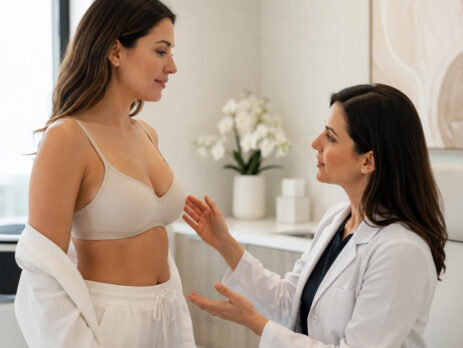
During the examination, the level of sagging, breast volume, nipple position, skin quality, asymmetry between the two breasts, the structure of the rib cage, and the desired appearance of the individual are evaluated together.
Furthermore, it is evaluated whether only a lift will be sufficient; or if an implant, breast reduction, or a different breast aesthetic procedure is necessary.
The first examination or initial consultation at Op. Dr. Şükrü İşler Aesthetic Clinic is free of charge. This allows you to receive detailed information about suitable options for you, after your current breast structure is evaluated, before making a decision about surgery.
To schedule a consultation, you can use the Online Appointment or Contact page.
What Should Be Considered to Increase the Permanence After Breast Lift?
It is not appropriate to attribute the long-term result solely to the patient’s behavior; there are also uncontrollable factors such as tissue quality and biological aging. However, it may be beneficial to pay attention to certain points after the operation.
- Follow the follow-up program recommended by the doctor.
- Avoid heavy lifting during the initial recovery period.
- Return to exercise when permitted by your doctor.
- Use the recommended medical bra for the specified duration.
- Try to keep your weight as stable as possible.
- Avoid smoking.
- Share your new pregnancy plans with your doctor.
- If an unexpected rapid change in breast shape occurs, schedule a follow-up appointment.
Frequently Asked Questions
Will the breasts definitely sag again after a breast lift?
No. It cannot be said that significant sagging will occur again in every patient. However, as aging and gravity continue, some loosening may occur over the years. The amount of change varies from person to person.
How many years does a breast lift last?
It is not possible to give a fixed year that applies to everyone. Factors such as skin quality, breast weight, age, weight changes, pregnancy, and lifestyle affect the outcome.
Do breasts return to their previous state after breast lift surgery?
Changes may be observed over time, but this does not necessarily mean that the breast will fully return to its pre-operative degree of sagging.
If I get pregnant after a breast lift, will they sag again?
The increase in breast volume during pregnancy and its subsequent decrease can alter breast form. Therefore, new sagging or volume loss may be observed.
Does losing weight cause a lifted breast to sag?
Especially significant weight loss can reduce breast volume, causing renewed skin laxity. Approaching the target weight as much as possible before surgery and maintaining a stable weight afterward can be advantageous.
Can I exercise after a breast lift?
Yes, but the timing of returning to exercise should be determined according to the scope of the surgery and the recovery status. Strenuous exercises should be avoided in the early period, and the surgeon’s recommendations should be followed.
Is silicone always necessary for breast lift surgery?
No. In patients with sufficient breast tissue, only mastopexy can be performed. Implant placement may be considered in suitable patients with volume deficiency or upper pole hollowness.
Is a lift alone sufficient for large breasts?
Not always. If the breast is very large and heavy, a lift combined with breast reduction may be more appropriate. The decision is made based on a physical examination.
Can a breast lift be performed a second time?
Revision mastopexy can be performed in necessary and suitable patients. However, previous surgeries, existing scars, the condition of the tissues, and nipple circulation should be evaluated in detail.
Is it necessary to wear a bra after breast lift surgery?
After the surgery, wearing an appropriate supportive bra may be recommended for the duration determined by the surgeon. The duration and type of bra may vary from person to person.
When do breasts look natural after a breast lift?
In the initial period, swelling and tightness may be observed. It takes time for the tissues to soften and the breasts to settle into their natural positions. The final result should not be evaluated in the early period.
Does breast lift surgery completely prevent sagging again?
No. No surgical method can completely stop natural aging or gravity. The operation aims to correct existing sagging and recreate the breast shape.
How are breast lift prices determined?
The price may vary depending on the degree of sagging, the technique to be applied, the scope of the surgery, whether an implant is needed, and additional procedures. For up-to-date information, you can review the Breast Lift Prices 2026 page. Examination is required for precise planning.
Is the first breast lift consultation free?
No. The first examination or first consultation is free at Surgeon Dr. Şükrü İşler Aesthetic Clinic. During the consultation, your breast structure, degree of sagging, and expectations can be evaluated, and personalized treatment options can be discussed.
Realistic Expectations Regarding Resagging After Breast Lift Are Important
Can breasts sag again after breast lift surgery? Yes, over the years, a certain amount of relaxation can occur due to aging, gravity, pregnancy, weight changes, and tissue characteristics. However, this does not mean that the effect of breast lift surgery will disappear in a short time or that the breasts will necessarily return to their pre-operative state.
Some of the most important factors determining the long-term outcome are proper patient selection, surgical planning appropriate to the individual’s anatomy, the balance between breast volume and skin quality, and maintaining stable living conditions after surgery.
Therefore, when planning surgery, it is necessary to focus not only on the question of “how much will the breasts be lifted?” but also on the question of “how can a natural, balanced, and long-term sustainable result be created for my body and tissues?”
If you wish to receive a personal evaluation regarding breast lift, implant requirement, breast reduction need, or the degree of your existing sagging, the first examination or consultation at Op. Dr. Şükrü İşler Aesthetic Clinic is free of charge. You can make an online appointment or contact the clinic via the contact page.
This content has been prepared for general informational purposes. For diagnosis, surgical decisions, surgical techniques, and personalized medical advice, you should be examined by a plastic, reconstructive, and aesthetic surgery specialist.