When Can Exercise Be Done After Breast Aesthetics?
When Can You Exercise After Breast Aesthetics?
The question of when one can exercise after breast aesthetics is among the most frequently asked by patients who have undergone surgery. Because while early movement during the recovery process can sometimes support healing, early and uncontrolled strain can lead to pain, swelling, bleeding, tension along the incision line, and undesirable shape changes in the breast tissue. Therefore, the timing of starting exercise should be determined according to the type of procedure performed, the placement of the implant, the condition of the incision line, the individual’s pain threshold, and the surgeon’s examination findings.
The general approach is as follows: In the first few days, low-impact movements like light walking are encouraged, while exercises that strain the chest and arm muscles are gradually introduced later. Although the recovery process is similar for breast augmentation, breast lift, and breast reduction surgeries, the details may vary. Therefore, instead of “a single date,” a safe and personalized return plan is more appropriate.
Why is Exercise Important During the Recovery Process?
Remaining completely inactive after breast aesthetics is also not correct. Short and controlled walks support circulation, help reduce the risk of blood clots in the legs, and make you feel better. However, it is necessary to distinguish between general physical activity and muscle-specific exercises. The first goal is to revitalize the body; the second goal is to return to fitness without straining the chest area.
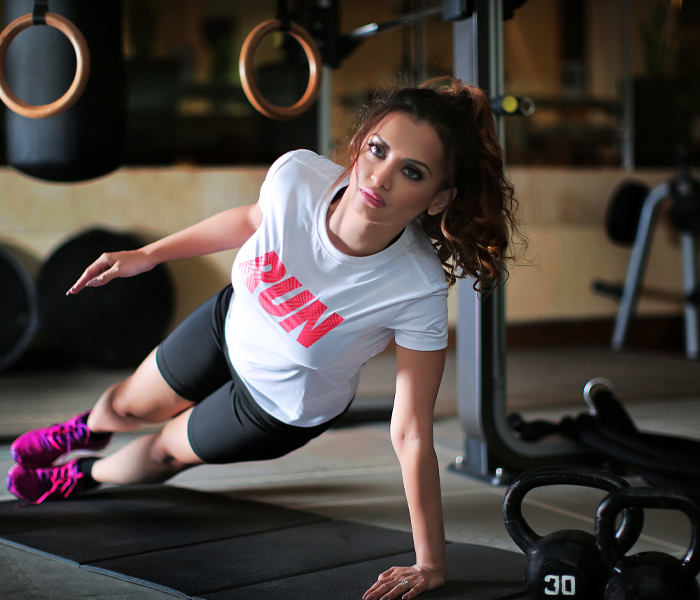
The important point here is the distinction between “early activity” and “early strenuous training.” Walking, light household movements, and daily life activities are generally suitable in the early period. In contrast, sports that actively use the chest-arm line, such as push-ups, bench press, running, HIIT, weightlifting, swimming, and tennis, should be postponed to a later period.
Return to Sports Duration Based on Breast Aesthetic Type
Breast augmentation: On the clinic’s breast augmentation page, it is stated that strenuous activities should be avoided for the first two weeks, intensive use of chest and arm muscles should be avoided for the first three weeks, and a sports bra should be used for one month. Heavy sports and games involving extensive arm movement are not permitted before the first month; caution is advised for more strenuous activities for up to 6–8 weeks. The breast augmentation page is a useful reference on this topic.
Breast lift: In breast lift surgery, it is emphasized that a special bra corset to keep the breasts stable should be used for at least 2 months, a sports bra should be worn continuously for 4 weeks, and it takes approximately 8–10 weeks for the breast to take its final shape. Therefore, the start of sports, especially upper body workouts, should be planned more cautiously. For details, the breast lift page can be consulted.
Breast reduction: The use of a sports bra is important after breast reduction. The clinic’s information text states that a sports bra should be used for 6 weeks, massage should be performed, and temporary conditions such as swelling and numbness may occur in the early period. The recovery process in these types of surgeries can be a bit more delicate; because both shaping and tissue removal are performed. For related content, the breast reduction page is useful.
Breast augmentation with fat injection: In this method, the engraftment process of the fat tissue is important. Therefore, sports that create pressure and activities that may involve impact to the chest area should be planned more carefully. The fat injection for breast augmentation page can also provide additional information to relevant patients.
Breast reconstruction: The return to sports after reconstructive surgery is often more personalized. This is because tissue loss, scar structure, and the need for additional treatment can affect the healing time. Therefore, in addition to the information on the breast reconstruction page, doctor’s check-ups are essential.
How Should the Day-by-Day and Week-by-Week Return Plan Be?
First 24–72 hours: Rest is a priority. Short walks can be taken, but lifting arms overhead, sudden turns, carrying heavy loads, and movements that compress the chest muscles are not recommended.
First week: Light movement around the house, very short walks, and daily living activities can be performed. Exercises that raise the heart rate should be avoided. If there is a sudden pulling sensation, increased pain, or bleeding in the chest area, exercise should be stopped immediately.
Second and third week: Most patients can start brisk but light walks, low-intensity conditioning exercises, and light lower body exercises deemed appropriate by the doctor. Nevertheless, it may be too early for movements that strain the chest muscles, planks, push-ups, weightlifting, and running.
Fourth week: Many patients transition to a more active period with the support of a sports bra. However, exercises that strain the upper body should still be limited. The clinic’s breast augmentation and breast lift content emphasize controlled progression during this period as well.
Sixth to eighth week: With the surgeon’s approval, running, light weights, certain levels of Pilates, cycling, and gradual fitness programs can be considered. However, the initial goal is still to start with low intensity. If there is a feeling of pressure, aching, pulling, or asymmetry in the breast area, the load should be reduced.
Which Sports Start Earlier, Which Start Later?
- Suitable in the early period: short walks, light at-home movements, low-intensity mobilization.
- Suitable later: yoga, Pilates, stationary bike, light cardio, and exercises that do not strain the chest area, such as controlled squats and lunges.
- To be started later: running, jumping exercises, weight training, bench press, push-ups, swimming, tennis, basketball, CrossFit, and all sports that intensively work the chest muscles.
Why is a Sports Bra So Important?
A sports bra helps to stabilize the breast after surgery and reduces uncontrolled movement of tissues. Especially after breast augmentation and breast lift, it provides support for reducing swelling and maintaining shape. The clinic’s own content also shows that the use of a sports bra can vary between a few weeks and 1–2 months. Therefore, a sports bra should be considered not only for comfort but also as a recovery aid.
The correct bra choice should be one that does not exert pressure, does not irritate suture lines, does not push the breast upwards, and is in the form recommended by the surgeon. This support often continues for some time after you return to exercising.
Is Returning to Sports Early Risky?
Early and poorly planned exercise, especially in the first weeks, can increase the risk of bleeding and seroma; it can cause problems such as wound dehiscence (opening of the suture line), increased pain, and implant displacement (movement around the implant). However, not every early movement is harmful. Scientific data shows that controlled and appropriately selected exercise can be safe in some patients. The important thing is to adjust the exercise dose and timing according to the type of surgery.
At this point, your surgeon’s instructions should be the primary guide. General advice read on the internet can be supportive; however, your surgical technique, tissue quality, and healing rate may be different.
What Do Scientific Publications Say About Exercise After Breast Aesthetics?
A randomized study published on the safety of early exercise reported that early exercise after primary breast augmentation did not increase the rates of complications or reoperation. This study supports that early movement may be possible when properly planned. Additionally, a 2024 JAMA Surgery study showed that personalized exercise programs initiated within 1 day after surgery could contribute to the recovery of shoulder strength and range of motion. A 2025 meta-analysis revealed that exercise interventions offered beneficial effects on pain, lymphedema, upper extremity function, muscle strength, and quality of life. The NIHR/NCBI report also stated that structured exercise programs starting within the first 10 days after surgery did not increase wound-related adverse events.
These findings support the approach of “controlled movement” instead of “remaining immobile.” Nevertheless, in aesthetic breast surgery, the final decision should be made based on the type of operation and your doctor’s examination.
Questions You Should Ask Yourself Before Returning to Sports
- Has my pain decreased enough not to affect daily life?
- Is there significant swelling, redness, or tenderness in the breast area?
- Am I using my sports bra correctly and regularly?
- Has my doctor given explicit permission for strenuous sports?
- Do I feel any pulling, pressure, or asymmetry during exercise?
Frequently Asked Questions
When can one do sports after breast aesthetics?
Generally, short walks can be done from the first few days. However, for running, weights, push-ups, and sports that strain the chest muscles, most patients require 4–8 weeks and doctor’s approval. The duration may vary depending on the type of surgery.
When can one go to the gym after breast augmentation?
Light walking and low-intensity movements are suitable in the early period. Returning to weight training in the gym is usually later. One should not rush, especially with upper body and chest exercises.
When can one start running?
Running, jumping, and exercises that create rhythmic jarring are generally not recommended in the early period. In most patients, it can be started gradually after the 6th week, with doctor’s approval.
When are push-ups and bench press allowed?
Since these exercises directly work the chest muscles, they are among the last movements to be started. Most of the time, they are not recommended before 6–8 weeks; sometimes, a longer period may be waited.
When can one swim and enter the sea?
Swimming is not recommended without doctor’s check-up, before the wound line is completely closed. Furthermore, the clinic’s breast augmentation page states that pools, saunas, sunbeds, and steam baths should be avoided for 6–8 weeks.
How long should a sports bra be used?
This duration varies depending on the surgery. In the clinic’s breast augmentation and breast lift contents, it is observed that sports bra usage can last between a few weeks and 1–2 months. Your surgeon will determine the most accurate duration.
What should I do if I feel pain while exercising?
Stop the exercise, do not strain the chest area, and inform your doctor about the situation. If the pain does not decrease or if there are symptoms such as redness, increased warmth, or discharge, a check-up is necessary.
The answer to the question ‘When can one exercise after breast aesthetics (surgery)?’ refers not to a single date, but to the correct sequence: first healing, then light movement, followed by a gradual return to sports. In procedures such as breast augmentation, breast lift, breast reduction, and fat injection to the breast, the durations may vary; however, the common goal is to return to normal safely while protecting the tissues. The best results are achieved when adhering to the surgeon’s plan and not rushing the exercises.
To get more information about breast aesthetics planning at Op. Dr. Şükrü İşler Aesthetic Clinic, you can review the breast aesthetics page, and for operation options, the breast augmentation, breast lift, and breast reduction pages.
Scientific Sources
Exercise after Breast Augmentation: A Randomized Controlled Trial
Early Implementation of Exercise to Facilitate Recovery After Breast Cancer Surgery
Exercise to Prevent Shoulder Problems After Breast Cancer Surgery: PROSPER RCT