Gynecomastia or Fat Accumulation? How to Understand Male Breast Enlargement?
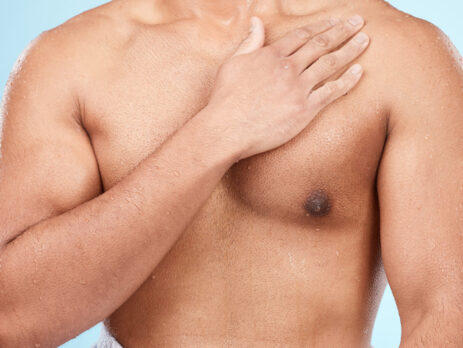
The prominence of the chest area or the enlargement of the breast appearance in men is a quite common but often misinterpreted condition. When you look in the mirror and notice that your breasts are larger than normal, the first question that usually comes to mind is: Is it gynecomastia or fat accumulation? Because breast enlargement in men does not always mean true gynecomastia. In some individuals, breast glandular tissue grows, while in others, the problem may only stem from fat tissue accumulated in the chest area. In some cases, both fat tissue and glandular breast tissue may increase simultaneously.
This distinction is not only important in terms of appearance. The treatment approach for gynecomastia and localized fat accumulation can differ. While weight control and liposuction methods may be considered for suitable patients when only fat tissue is excessive, in true gynecomastia with significant glandular breast tissue, surgical removal of the glandular tissue may be necessary. In mixed types, liposuction and surgical excision can be planned together.
Therefore, the definitive answer to the question “Is the growth in my chest fat or gynecomastia?” should not be given based solely on external appearance. The first examination or consultation at Op. Dr. Şükrü İşler Aesthetic Clinic is free. Information about personalized treatment options can be obtained by evaluating the nature of the growth in the chest area.
What is Gynecomastia?
Gynecomastia is the benign enlargement of glandular, or breast gland, tissue in the male chest area. Men also naturally have a small amount of breast gland tissue. Changes in hormonal balance, age, certain medications, various health conditions, or the use of certain substances can contribute to the growth of this tissue.
Gynecomastia can occur in one breast or both breasts. It is also possible for there to be a size difference between the two sides. In some individuals, a denser, rubbery, or disc-like tissue may be felt just below the nipple. Sensitivity or pain can also be observed, especially in newly developed cases.
For more detailed information about the evaluation of gynecomastia and treatment options, you can review the gynecomastia surgery page.
Scientific publications regarding the clinical evaluation of gynecomastia state that a detailed medical history and physical examination are important; and that laboratory tests and imaging methods may be utilized in necessary patients. Detailed academic information on this subject can be accessed from the study on the clinical evaluation and management of gynecomastia published in PubMed Central.
What is Pseudogynecomastia?
Not every condition that leads to the enlargement of breast appearance in men is true gynecomastia. When the primary cause of enlargement in the chest area is fatty tissue instead of glandular breast tissue, this condition is generally referred to as pseudogynecomastia, false gynecomastia, or lipomastia.
False gynecomastia can be seen more frequently, especially in individuals with a high body fat percentage. However, it does not only occur in overweight men. Due to genetic fat distribution, some men who are generally of normal weight may also have stubborn fat accumulation in the chest area.
In this condition, the breast tissue is often softer and more diffuse. A reduction in breast volume may be observed with weight loss. However, because regional fat distribution varies from person to person, stubborn fatty tissue may remain in the chest area despite weight loss.
One of the academic studies on the scientific definition and surgical approaches to pseudogynecomastia is the pseudogynecomastia treatment algorithm study published on PubMed.
Gynecomastia or Fat? What is the Main Difference?
The main difference between gynecomastia and fat accumulation is the type of tissue causing the enlargement.
- True gynecomastia: The enlargement of glandular breast tissue is prominent.
- False gynecomastia: The increase in fatty tissue in the chest area is prominent.
- Mixed-type gynecomastia: Both glandular breast tissue and fatty tissue are in excess.
In practice, many patients may not have only one type of tissue. Especially in long-standing male breast enlargement, both fat and glandular tissue can coexist in different proportions. Therefore, it is not correct to reach definitive conclusions like “My chest is soft, it’s definitely fat” or “My nipple is prominent, it’s definitely gynecomastia.”
How to Recognize Gynecomastia?
The definitive evaluation of gynecomastia should be done by a doctor’s examination. However, some characteristics may suggest the possibility of true gynecomastia.
- Feeling a denser tissue under the nipple and areola,
- Significant breast enlargement persisting despite weight loss,
- The nipple appearing protruded or puffy forward,
- Presence of unilateral or bilateral enlargement,
- Tenderness or pain, especially in newly developed cases,
- The enlargement in the chest area not being entirely consistent with the overall body fat percentage
may suggest the possibility of gynecomastia. However, these findings alone are not sufficient for diagnosis.
The European Academy of Andrology’s clinical practice guideline emphasizes that the evaluation of gynecomastia should not only focus on aesthetic appearance; it is important to assess underlying causes, medications and substances used, and other possible conditions. You can access the academic guideline via PubMed.
How to Recognize Chest Fat?
When the primary cause of enlargement in the chest area is fatty tissue, the appearance is generally more closely related to overall body fat. The tissue may feel softer and more diffuse. Breast volume can increase with weight gain and decrease to a certain extent with weight loss.
Some characteristics that might suggest adiposity are:
- Generally soft breast tissue,
- Presence of significant adiposity in the abdomen, waist, and other areas,
- Enlargement of breasts when weight is gained,
- Decrease in breast volume when weight is lost,
- Absence of a distinct and dense glandular tissue felt beneath the nipple.
However, there is an important point: Adiposity and true gynecomastia can coexist in the same person. Therefore, a person being overweight does not mean they do not have true gynecomastia.
Can a Gynecomastia Test Be Performed at Home?
Searches such as “gynecomastia test at home” or “how to identify gynecomastia by touch” are quite common online. A person can observe their own chest area to get some clues, but a home evaluation is not a definitive diagnostic method.
In front of a mirror, one can observe the symmetry of the breasts, the appearance of the nipple, and the relationship between breast volume and weight changes. The texture of the tissue around the nipple may also catch a person’s attention. However, it is not always possible for a person to definitively determine on their own whether the tissue is glandular, predominantly fatty, or mixed.
Especially in long-standing gynecomastia, glandular tissue can be felt along with the surrounding fatty tissue. Therefore, simple squeezing or manual examination methods described online do not replace a professional examination.
The fact that the initial examination or consultation at Op. Dr. Şükrü İşler Aesthetic Clinic is free provides a significant advantage for a professional evaluation of breast enlargement and learning about possible treatment options.
Does Gynecomastia Go Away with Weight Loss?
The answer to this question depends on the tissue causing the enlargement. If the primary reason for the breast appearance is fatty tissue, a significant reduction in breast volume may be observed with weight loss. However, in true gynecomastia, enlarged glandular breast tissue may not completely disappear with diet and exercise alone.
Therefore, even if a person loses a significant amount of weight and reduces their body fat percentage, if they notice a prominent protrusion or breast volume around the nipple, an evaluation for the presence of glandular tissue can be performed.
Nevertheless, losing weight is still important. Reducing excess fatty tissue can improve breast contour, help with a clearer assessment of the actual problem, and influence surgical planning in appropriate patients.
Can Gynecomastia Be Cured by Exercising?
Chest exercises can develop pectoral muscles and help the upper body appear more athletic. However, exercise does not directly eliminate enlarged glandular breast tissue.
If the problem is primarily due to fat, a reduction in overall body fat percentage through regular exercise and calorie control can also lead to a decrease in the chest area. However, in true gynecomastia, the glandular protrusion around the nipple may persist despite muscle development.
In fact, in some muscular men with a low body fat percentage, glandular tissue can become more prominent over the developed chest muscle. Therefore, the complaint “I exercise, but my chest isn’t getting smaller” can be one of the situations requiring professional evaluation.
Can Gynecomastia Occur in Lean Men Too?
Yes. Gynecomastia is not only observed in overweight men. True gynecomastia can also be found in individuals with a low body fat percentage, who are lean or athletic. In fact, because there is less surrounding fatty tissue, the glandular tissue under the nipple may appear more prominent in some lean individuals.
Therefore, it is not appropriate to distinguish between gynecomastia and fat based on a person’s weight. Just as true gynecomastia can be found in an overweight man, significant glandular breast tissue can also be present in a thin man.
What Causes Gynecomastia?
Gynecomastia can develop due to various reasons. While hormones play an important role in the growth of male breast tissue, a single, clear cause may not be found in every patient.
Possible causes may include:
- Physiological hormonal changes during puberty,
- Age-related hormonal changes,
- Certain medications,
- Use of anabolic steroids and some hormone-containing products,
- Certain liver, kidney, thyroid, or hormonal diseases,
- Increase in body weight and fat percentage,
- Use of certain substances,
- Idiopathic conditions with an undetermined cause.
For comprehensive academic information on the causes, diagnosis, and treatment of gynecomastia, you can review the scientific resource titled Gynecomastia: Etiology, Diagnosis, and Treatment published on NCBI Bookshelf.
Breast changes, especially those that appear suddenly, grow rapidly, are felt as a unilateral and hard mass, or are accompanied by other symptoms, should not be considered merely an aesthetic problem.
How are Gynecomastia and Fat Distinguished During Examination?
During the evaluation, the patient’s medical history is first taken. The onset of growth, weight changes, medications or supplements used, past illnesses, and the change in the complaint over time are assessed.
In a physical examination, the general contour of the chest area, skin quality, appearance of the nipple and areola, amount of adipose tissue, and characteristics of glandular tissue can be examined. In necessary cases, further investigations or evaluations by relevant specialists may be considered.
International clinical sources also state that a detailed history and physical examination are among the fundamental steps in gynecomastia evaluation. Therefore, it is important to accurately determine the source of growth as much as possible before treatment planning.
Does Ultrasound Differentiate Gynecomastia from Adipose Tissue?
Imaging is not necessary for every patient. However, in cases where the doctor deems it necessary, ultrasonography or other imaging methods can help evaluate the tissue structure. The necessity of imaging is determined according to the patient’s age, examination findings, characteristics of the complaint, and clinical evaluation.
Additional evaluations may be requested, especially when there is an atypical mass, significant asymmetry, or another finding that needs clinical clarification. The specific investigation required should be decided based on the individual examination.
How is Gynecomastia Treated?
There is no single method applied to everyone for gynecomastia treatment. The treatment plan is determined by factors such as the cause of the growth, tissue structure, breast size, skin laxity, patient’s age, and expectations.
The main approaches from an aesthetic surgery perspective are:
- Liposuction: Can be considered in suitable patients where adipose tissue is predominant.
- Glandular tissue excision: Involves the surgical removal of prominent breast gland tissue.
- Combined method: Liposuction and excision can be applied together in cases of both adipose and glandular tissue excess.
- Skin removal: May be necessary in selected cases with advanced growth and significant skin excess.
For more detailed information about the methods used in gynecomastia surgery, you can review the content what is gynecomastia and how is gynecomastia surgery performed?
Is Liposuction Sufficient If There is Only Fat Accumulation?
If the primary cause of increased volume in the breast area is fatty tissue and the skin structure is suitable, liposuction methods may be considered. However, in true gynecomastia where glandular tissue is prominent, fat removal alone may not be sufficient.
Therefore, the primary factor determining the treatment method is not solely the size of the breast. What type of tissue is enlarging the breast is more important.
For detailed information about localized fat accumulation and modern liposuction methods, you can review the content Getting rid of localized fat with Vaser Liposuction.
What is Done If Both Gynecomastia and Fat Accumulation are Present?
Mixed-type male breast enlargement is a quite common condition. In these patients, glandular tissue may be present under the nipple, while excess fatty tissue may also exist around it.
In such a situation, removing only the fatty tissue may not completely correct the prominence under the nipple. Conversely, removing only the glandular tissue may result in a breast contour that is inconsistent with the surrounding fat distribution. Therefore, in suitable patients, reducing fatty tissue with liposuction and surgically removing glandular tissue can be planned together.
The goal is not only to reduce tissue but to create as natural and balanced a male chest contour as possible. The technique to be applied should be individually determined for each patient.
When is the Right Time for Gynecomastia Surgery?
The timing of gynecomastia surgery may vary depending on the patient’s age, how long the condition has persisted, underlying causes, and the degree of discomfort. Some cases of gynecomastia that develop particularly during puberty may recede over time. Surgical options can be considered in cases that become permanent and cause aesthetic or psychological discomfort.
Those who want to get information about seasonal planning can also review the content titled gynecomastia surgery in summer months.
When Should Gynecomastia Be Shown to a Doctor?
Although a large portion of male breast enlargement is associated with benign causes, some symptoms may require more detailed evaluation.
It is especially important to consult a doctor in the following situations:
- If there is a new, hard, or irregular lump in the chest,
- If the growth progresses rapidly in a short period,
- If there is a significant unilateral change,
- If there is discharge from the nipple,
- If there is skin retraction or a noticeable change in the skin,
- If there is severe or persistent pain,
- If an underlying hormonal or systemic disease is suspected.
In such symptoms, it is not correct for an individual to decide on their own, “This is just gynecomastia” or “It’s just aging.”
Gynecomastia or Fat Accumulation? Examination is Important for a Definitive Answer
The reason for breast enlargement in men cannot always be definitively determined by outward appearance alone. Fat tissue, glandular breast tissue, or both may be present in the chest area. This distinction can directly affect the treatment method that can be applied.
If the enlargement in your chest area persists despite losing weight and exercising, if there is a noticeable protrusion around the nipple, or if you are wondering about the answer to the question “Do I have gynecomastia, or is it just fat accumulation in my chest area?”, then professional evaluation is the most appropriate step.
The first examination or consultation at Op. Dr. Şükrü İşler Aesthetic Clinic is free of charge. During the examination, the nature of the enlargement in the chest area will be evaluated, and you can receive personalized information about the treatment options that can be applied according to your needs and expectations.
Frequently Asked Questions
What is the difference between gynecomastia and fat accumulation?
In gynecomastia, there is an enlargement of the mammary gland, i.e., glandular tissue. In pseudogynecomastia, the primary cause of enlargement is fat tissue. In some men, both types of tissue may be present together.
Can gynecomastia be detected by touch?
Feeling a denser or rubbery tissue under the nipple may suggest gynecomastia. However, self-palpation is not a definitive diagnostic method. Since fat and glandular tissue can be present together, a professional examination provides a more reliable assessment.
Is gynecomastia soft or hard?
In gynecomastia, a denser structure than the surrounding fat tissue may be felt under the nipple. However, the consistency of the tissue can vary from person to person and depending on the duration of the condition. Hardness alone does not confirm a diagnosis of gynecomastia.
Does gynecomastia go away with weight loss?
Breast enlargement due to fat tissue can decrease with weight loss. However, true glandular gynecomastia may persist despite weight loss. If a person has both fat and glandular tissue, the volume may decrease with weight loss, but the prominence around the nipple may not completely disappear.
Can gynecomastia be eliminated by exercising?
Exercise develops muscles and can help reduce body fat, but it does not directly eliminate enlarged glandular breast tissue. In true gynecomastia, the protrusion around the nipple may persist despite exercising.
Can thin people have gynecomastia?
Yes. Gynecomastia is not only seen in overweight individuals. Glandular breast tissue can also enlarge in thin and athletic men.
Can gynecomastia occur in only one breast?
Yes. Gynecomastia can be bilateral, as well as unilateral or asymmetrical. It is important for newly developed or prominent unilateral changes to be evaluated by a doctor.
If my chest shrinks with weight loss, is it due to fat accumulation?
A decrease in breast volume with weight loss may suggest that fat tissue plays a significant role. However, this does not mean that there is no glandular tissue at all. In mixed-type gynecomastia, breast volume can also decrease with weight loss.
Is an ultrasound necessary for gynecomastia?
An ultrasound is not necessary for every patient. The need for imaging is determined by examination findings and the doctor’s clinical evaluation.
Is liposuction alone sufficient for gynecomastia surgery?
In suitable cases where fat tissue is dominant, liposuction may be sufficient. If there is significant glandular tissue, surgical excision may be required. In cases where both fat and glandular tissue are present, combined methods may be preferred.
Does gynecomastia recur after surgery?
The risk of recurrence may vary depending on the method applied, the remaining tissue, and underlying causes. The continuation of factors such as hormonal problems, certain medications, or the use of anabolic steroids can contribute to regrowth.
Is there a fee for gynecomastia examination?
The initial examination or consultation at Op. Dr. Şükrü İşler Aesthetic Clinic is free of charge. By evaluating whether the enlargement in the chest area is gynecomastia, fat accumulation, or a mixed type, personalized treatment options can be discussed.
Gynecomastia or Fat Accumulation?
The shortest answer to the question Gynecomastia or fat accumulation? is this: In true gynecomastia, glandular breast tissue is prominent, while in pseudogynecomastia, fatty tissue is prominent. However, in many individuals, these two conditions can occur together, and a definitive distinction may not be possible by simply looking in a mirror or performing a self-examination at home.
While a reduction in breast volume with weight loss might suggest fat accumulation, persistent prominence around the nipple despite a low body fat percentage could increase the likelihood of glandular gynecomastia. Nevertheless, a medical history and physical examination are important for a definitive assessment.
To find out the cause of enlargement in your chest area and to evaluate suitable options for you, you can take advantage of the opportunity for a free initial examination or consultation at Op. Dr. Şükrü İşler Aesthetic Clinic. Following a personal assessment, it can be determined whether only fat tissue reduction, glandular tissue removal, or a combined approach would be appropriate.