Which Aesthetic Procedures Are Performed to Tighten Cheeks?
What Aesthetic Procedures Are Performed to Firm Up the Cheeks?
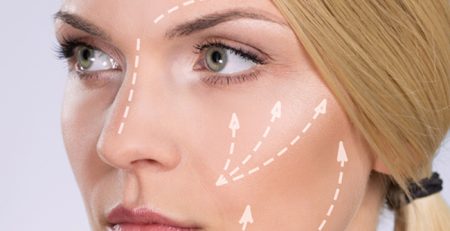
What aesthetic procedures can be done to firm up the cheeks is among the most frequently researched topics by individuals who have noticed a downward shift in their face, a decrease in cheekbone prominence, sagging cheeks, or a more tired expression in recent years. However, “cheek firming” is not the name of a single aesthetic procedure. This is because aging in the cheek area can result not only from skin laxity but also from the displacement of facial fat tissue, volume loss in certain areas, weakening of supporting tissues, and changes in the overall anatomical proportions of the face.
Therefore, while a controlled filler application to the cheekbone and mid-face area might be the most suitable option for one person, a facelift surgery might yield better results for another. In some patients, due to overly full cheeks, it is necessary to define the facial contour rather than firm them up, and in such cases, different procedures like cheek reduction may come into play.
Consequently, the answer to the question “How can I get my cheeks firmed up?” should not be given by looking at only the cheek area in the mirror. Cheekbones, under-eyes, nasolabial folds, jawline, double chin, neck, and the overall proportion of the face should be evaluated together.
The first examination or consultation at Op. Dr. Şükrü İşler Aesthetic Clinic is free of charge. During the free initial assessment, a personalized treatment plan can be created by analyzing whether the problem in the cheeks is due to volume loss, sagging, excessive fat tissue, or a combination of these factors.
Why Do Cheeks Sag Over Time?
In a youthful face, cheek tissues are generally positioned higher, cheekbones appear more prominent, and there is a more balanced volume distribution in the mid-face region. As age advances, this appearance can change for various reasons.
Scientific studies show that facial aging does not occur solely as skin wrinkling. The face contains distinct anatomical fat compartments, and with aging, these tissues may undergo volume changes and downward displacement. These changes can particularly affect the appearance of the mid-face and cheek region.
For academic studies examining the role of facial fat compartments in aging, you can review the facial fat compartments and aging study published on PubMed.
Similarly, a comprehensive scientific review evaluating mid-face aging states that changes in cheek fat tissues can affect the tear trough-cheek junction and the nasolabial region. For a detailed academic source, you can access A Review of Midface Aging.
The main factors that can be effective in cheek aging include:
- Genetic facial structure
- Decrease in collagen and elastin with age
- Volume and position changes of mid-face fat tissues
- Decrease in support around the cheekbone
- Rapid or excessive weight loss
- Yo-yo dieting
- Intense sun exposure
- Smoking
- Decrease in skin quality
- Long-term effects of gravity
For this reason, in cheek lifting procedures, simply tightening the skin or simply performing fillers is not equally effective for everyone.
How to Recognize Cheek Sagging?
Cheek sagging does not always begin severely and noticeably. In the initial stages, a person may only notice in photographs that their face has started to look more tired or downward-sloping compared to before.
Common signs of mid-face aging include a decrease in volume over the cheekbones, a feeling of heaviness in the lower part of the cheeks, accentuation of the under-eye to cheek transition, deepening of nasolabial folds, and the appearance of irregularities in the jawline.
Particularly, the downward displacement of volume in the mid-face area can create a sad or tired expression, even if the person isn’t actually feeling that way.
What is Cheek Lifting Filler?
For individuals with mild to moderate volume loss, one of the most commonly considered non-surgical options is hyaluronic acid-based dermal filler applications.
The aim here is not to inflate the entire cheek. For a natural look, the main goal is to provide controlled volume to the support points required by the facial anatomy.
Volume restoration, especially performed around the cheekbones and in appropriate anatomical areas of the mid-face, can help the cheeks appear more lifted and balanced in some individuals.
In the academic work “Mastering Midface Injections” published in 2023, it is stated that one of the primary goals of midface fillers is to restore lost volume in anatomically appropriate areas. You can access the source via PubMed.
Does Cheek Filler Really Lift the Face?
When evaluating the effect of filler application, the word “lift” must be understood correctly. Filler is not a surgical facelift procedure. It cannot physically reposition severely sagged tissues like a surgical facelift.
However, when the appropriate amount of volume is added to the correct area, the projection of the cheekbone can increase, the midface can become more balanced, and the overall appearance of the cheek area can be perceived as more defined.
Therefore, fillers can be considered particularly in the following situations:
- Mild cheek volume loss
- Decreased prominence of the cheekbone
- Mild hollowing in the midface
- Distinct transition between the under-eye area and the cheek
- Early signs of facial aging
- Suitable patients who do not desire surgery
However, attempting to “lift” the face in a person with significant skin laxity and advanced tissue sagging by using excessive amounts of filler can create an unnatural, heavy, or puffy appearance.
Does Cheekbone Filler Sculpt the Cheeks?
The cheekbone is one of the important anatomical support points for a youthful and dynamic appearance of the face. In some individuals, volume in this area decreases with age, while in others, the cheekbone is structurally less prominent to begin with.
In suitable patients, controlled cheekbone filler can contribute to the cheeks looking more balanced by increasing the projection of the mid-face.
What is important here is not just “how many cc of filler will be injected.” The anatomical plane where the product is placed, the right-left balance of the face, and its relationship with the under-eye area and jawline should also be evaluated.
Are Fat Injections Used to Firm Up Cheeks?
In some patients with significant volume loss in the face, fat injections using the person’s own fat tissue can also be considered.
In fat injection, fat tissue taken from a suitable area of the body is processed and transferred to the needed facial areas. The aim is not just to enlarge the cheeks, but can be to more balancedly restore facial volume lost with age.
One of the significant differences between fat injections and dermal fillers is that the material used is the person’s own tissue. However, it cannot be guaranteed that all the transferred fat will be permanent. A portion of the fat cells may be absorbed by the body over time, and the results can vary from person to person.
Can Non-Surgical Facelift Help with Cheek Sagging?
One of the options explored by patients who do not consider surgical procedures is non-surgical facelift applications.
Non-surgical facial rejuvenation does not refer to a single procedure. Depending on the patient’s needs, different energy-based procedures, treatments supporting skin quality, or volume restoration methods can be considered.
However, the important point is this: the results that non-surgical procedures can achieve and the mechanical tissue repositioning effect that surgical facelift can provide are not the same.
The American Society of Plastic Surgeons also states that minimally invasive facial rejuvenation procedures do not produce the same results as a surgical facelift, but they can be complementary to surgery or an alternative for earlier signs of aging in suitable patients.
For detailed information, the American Society of Plastic Surgeons Facelift Surgery page can be reviewed.
How Does Facelift Surgery Tighten the Cheeks?
If there is not only volume loss in the cheeks but also significant tissue laxity and downward displacement, surgical options may be a more appropriate approach.
Facelift surgery is not merely about removing excess skin. In modern facelift approaches, the deep anatomical structures of the face, the position of fat tissues, the jawline, and areas like the neck are evaluated together.
A facelift evaluation may be considered, especially if the following problems are present along with sagging cheeks:
- Significant cheek sagging
- Jawline distortion
- Jowl formation
- Deepened nasolabial folds
- Laxity in the neck area
- Excess skin
- Inadequate results from non-surgical procedures
What is a Midface Lift?
Midface lift is one of the surgical rejuvenation approaches that specifically focuses on the facial area between the lower eyelids and the corners of the mouth. The aim is to reposition downward-displaced tissues in the midface to create a more youthful cheek contour.
According to information published by the American Society of Plastic Surgeons, a mid-facelift is a more localized facelift approach that specifically targets aging changes around the cheeks and under-eye area.
However, if a person’s signs of aging are not limited solely to the mid-face, a full or more comprehensive facelift plan may be necessary.
Is Mini Facelift Performed for Sagging Cheeks?
A mini facelift is one of the surgical options that can be considered for some individuals with limited facial laxity. Generally, it involves intervention in a more limited anatomical area compared to a full facelift surgery.
However, the word “mini” does not mean that the procedure is suitable for everyone or very easy. Candidacy for a mini facelift should be determined based on the degree of sagging, skin quality, jawline, and the condition of the neck area.
Is Thread Lift Performed for Cheek Tightening?
Thread lift applications are one of the methods frequently researched by individuals who do not desire a surgical procedure. The aim is to mechanically lift tissues using special threads placed under the skin.
However, thread lifts and surgical facelifts should not be considered alternatives to each other. In cases of advanced sagging, expecting results from thread applications comparable to surgical facelift may not be realistic.
Appropriate candidate selection, accurate evaluation of facial anatomy, and realistic expectations are crucial in such procedures.
Does Jawline Filler Make Cheeks Appear Fuller?
The appearance of the cheek is not solely determined by the cheek itself. When the jawline is weak or undefined, sagging in the mid-face may become more noticeable.
In suitable patients, making the lower face contour more prominent with jawline filler can help the cheeks be perceived more balanced by improving the overall proportions of the face.
However, jawline filler is not a facelift method that directly treats cheek sagging. It can be used more for the purpose of rebalancing the facial contour.
Does Bichectomy Tighten Sagging Cheeks?
This topic is often confused. Bichectomy is not a procedure performed to tighten sagging cheeks.
In bichectomy, the goal is to reduce excessive fullness in the lower-middle region of the face by removing a portion of the Bichat fat pad within the cheek.
Therefore, if the person’s problem is volume loss and sagging, bichectomy should be carefully evaluated as it can, on the contrary, lead to an undesired reduction in volume.
The treatments for a young patient with genetically very full cheeks and a round face are completely different from those for a patient whose cheeks have shifted downwards due to aging.
Can Every Cheek Sagging Be Corrected with Filler?
No. One of the most important mistakes made in cheek tightening is to consider every sagging as volume loss.
If the problem is truly a lack of volume, filler can be a very effective option. However, if there is significant skin excess and tissue laxity, merely adding filler can lead to the face appearing heavier.
Therefore, in aesthetic planning, the approach of “more filler = more rejuvenation” is not correct.
Filler or Facelift for Cheek Tightening?
These two methods provide solutions for different problems.
Filler is primarily used to restore volume loss. Facelift, on the other hand, aims to surgically reposition tissues that have descended or loosened.
Filler may be sufficient for a young or middle-aged person with mild volume loss. However, in a patient with significant sagging, jawline distortion, and neck laxity, a surgical facelift can provide more meaningful results.
In some cases, surgical facelift can be planned together with fat injection or other volume-regulating procedures. Because an aged face may exhibit both sagging and volume loss simultaneously.
At What Age is Cheek Tightening Performed?
There is no single ideal age for cheek aesthetics.
While volume or contour problems related to genetic facial structure may be observed in people in their 20s or 30s, tissue changes due to aging may become more pronounced from the 40s and 50s onwards.
However, age alone is not the sole criterion for decision-making. The facial anatomy, skin quality, and degree of sagging can vary significantly between two people of the same age.
Therefore, the decision should be based on the individual’s anatomical needs, not their date of birth.
Does Rapid Weight Loss Cause Cheeks to Sag?
After significant weight loss, the fat volume in the face may decrease. It is especially possible for the cheek area to appear more sunken or loose in individuals who lose a large amount of weight in a short period.
In this case, it is important whether the person’s weight is stable when planning the procedure. Volume or surgical planning performed while weight changes are ongoing can lead to changes in facial proportions again in subsequent months.
Is a Natural Appearance Possible After Cheek Tightening?
One of the most important factors for a natural result is choosing the right method for the right patient.
The aim of a natural aesthetic approach is not to make a person’s face resemble someone else’s, but to make their existing anatomy more balanced.
For example, applying excessive filler to a face with minimal volume loss can disrupt a natural appearance. Similarly, insufficient intervention in a person with significant sagging may not meet their expectations.
For this reason, facial rejuvenation planning should be holistic. In facial aesthetics assessment, examining the eye area, jawline, and neck region along with the cheeks can ensure more balanced results are planned.
Can Cheek Tightening Procedures Be Combined?
Yes. Since facial aging affects more than one anatomical structure, a combined approach may be necessary for some patients.
For example, missing volume after a surgical facelift can be restored with fat injection. In another patient, mid-face filler and jawline contouring can be planned together.
However, performing the maximum possible number of procedures simultaneously does not constitute a good aesthetic plan. The goal should be to determine the procedures that the person truly needs.
Are there Risks Associated with Cheek Tightening Procedures?
Like all medical and aesthetic procedures, those applied to the cheek area also carry potential risks.
In filler applications, temporary swelling, bruising, tenderness, and asymmetry may be observed. More rarely, serious problems such as vascular complications can occur.
In surgical facelift procedures, risks such as bleeding, infection, scarring, temporary or permanent sensory changes, asymmetry, and anesthesia-related complications may be present.
Therefore, it is important to thoroughly evaluate the patient’s medical history before the procedure and to discuss the risk-benefit balance of the method to be applied.
Why is Facial Analysis Important Before Cheek Aesthetics?
One of the most critical steps in facial aesthetics is the anatomical analysis performed before the procedure.
During facial analysis, it’s not just about how much the cheek has sagged. Cheekbone projection, undereye transition, nasolabial lines, jaw structure, mandibular line, jowl, and neck relationship should be evaluated together.
Academic literature also emphasizes that facial aging is a multi-layered process. The comprehensive scientific study titled “The Facial Aging Process From the Inside Out” highlights the importance of evaluating the aging process at the bone, fat tissue, muscle, and skin levels together. You can access the full text of the study via NIH / PubMed Central.
What is the Best Aesthetic Procedure for Cheeks?
There is no single “best cheek aesthetic.” The best procedure is the one that correctly addresses the source of the problem.
To summarize simply:
- If volume loss is the primary concern, fillers or fat injections may be considered in suitable patients.
- If there is mild laxity and a skin quality problem, non-surgical methods can be considered.
- If there is significant tissue sagging, surgical facelift may be an option.
- If the cheek is overly full, cheek reduction or bichectomy may be another option.
- If the jawline is weak, refining the jawline area can complete the facial proportion.
Therefore, it is not correct to assume that a procedure that looks good on someone else on social media is also the right option for you.
What is Evaluated During the Free Initial Consultation?
The initial examination or consultation at Op. Dr. Şükrü İşler Aesthetic Clinic is free of charge.
The free initial consultation is an important step in determining which procedure is necessary. During this assessment, not only a single region of the face but also its overall anatomical proportion can be examined.
During the consultation;
- The degree of volume loss in the cheeks,
- Sagging in the skin and deep tissues,
- Cheekbone structure,
- Under-eye to cheek transition,
- Nasolabial lines,
- Jawline and submental (double chin) area,
- Skin quality,
- Age and general health status,
- Previous aesthetic procedures,
- The person’s expectations
can be evaluated to create a personalized aesthetic roadmap.
This approach is important for preventing unnecessary procedures, creating realistic expectations, and aiming for a more natural facial balance.
Results for Those Who Wish to Firm Their Cheeks
For individuals who wish to firm their cheeks, numerous surgical and non-surgical options are available today. However, the correct method should be determined not so much by how much the cheeks sag, but by why they sag.
While filler or fat injection may be sufficient for a person with volume loss, a facelift may be a more appropriate option for a patient with significant tissue laxity. For an individual with a genetically overly full face, completely different cheek thinning procedures may be considered.
Therefore, instead of merely searching online for the “best cheek firming procedure,” a more correct approach is to have the facial anatomy evaluated by a specialist physician.
The initial examination or consultation at Op. Dr. Şükrü İşler Aesthetic Clinic is free of charge. By evaluating your cheek structure, degree of sagging, skin quality, and facial proportions, it can be determined which of the options such as fillers, non-surgical procedures, facelifts, or other alternatives is more suitable for you.
Frequently Asked Questions
What is the most effective procedure to firm up the cheeks?
The most effective procedure varies depending on the source of the individual’s problem. Different procedures can be considered, such as fillers for mild volume loss, a facelift for significant tissue sagging, or cheek reduction for excessive cheek fullness.
Does cheek filler completely correct sagging?
No. Fillers can be particularly useful in cases where volume loss is prominent. They cannot correct advanced skin and tissue sagging to the same extent as a surgical facelift.
Does cheek filler make the face look puffy?
Fillers applied to an unsuitable area or in excessive amounts can make the face look heavy and puffy. Therefore, anatomical planning is more important than the quantity.
Does cheekbone filler make the face look younger?
In suitable patients, restoring lost mid-face support can provide a more balanced and youthful appearance. However, it is not necessary for everyone.
Is it possible to lift the cheeks without surgery?
In cases of mild signs of aging, non-surgical procedures can improve the appearance. However, for severe tissue sagging, non-surgical methods should not be expected to yield results comparable to a surgical facelift.
Is thread lift or filler better?
The purpose of the two procedures is different. While fillers are used for volume restoration, thread lifts aim for mechanical tissue support. Which method is more suitable should be determined based on facial anatomy.
Does a facelift firm up the cheeks?
Yes. In suitable patients, a facelift can provide significant rejuvenation in the cheek and lower face area by repositioning facial tissues that have shifted downwards.
Is bichectomy performed for cheek sagging?
No. The primary purpose of bichectomy is to slim down an overly full face by reducing the Bichat fat pad inside the cheeks. It is not a treatment for sagging.
What can be done for sunken cheeks after weight loss?
In cases of volume loss due to weight loss, fillers or fat injections in suitable patients may be considered. However, it is important for the person’s weight to become stable for treatment planning.
Which procedure is performed for cheek rejuvenation after age 40?
Age alone is not sufficient to choose a procedure. While a 40-year-old person might have slight volume loss, another might have significant sagging. The decision should be made based on facial anatomy.
After age 50, is filler or a facelift better?
This entirely depends on the individual’s tissue laxity. If there is significant sagging and a disrupted jawline, a facelift might be more effective. If there is limited volume loss, fillers can be used as a supportive treatment.
Are cheek rejuvenation procedures permanent?
Permanence varies by procedure. Hyaluronic acid fillers are metabolized over time. While surgical facelifts provide longer-lasting results, the aging process does not stop completely.
Will my facial expression change after cheek rejuvenation?
In well-planned procedures, the goal is not to change facial expression, but to make the person’s existing facial structure appear more balanced and rested.
Can cheek aesthetics and jawline contouring be done simultaneously?
In suitable patients, a combined evaluation of the mid-face and jawline can provide a more balanced facial contour. However, it is not always necessary to treat both areas in every individual.
Is the consultation before cheek aesthetics charged?
At Op. Dr. Şükrü İşler Aesthetic Clinic, the first examination or consultation is free of charge. During the initial assessment, facial anatomy, expectations, and suitable treatment options can be discussed in detail.
How to make an appointment for cheek tightening?
To get a personal assessment regarding cheek aesthetics, fillers, non-surgical facelift, or surgical facelift, you can contact Op. Dr. Şükrü İşler Aesthetic Clinic and request a free initial consultation.
Note: This content is for general informational purposes only. The suitability of an aesthetic or surgical procedure can only be determined after a medical examination.