

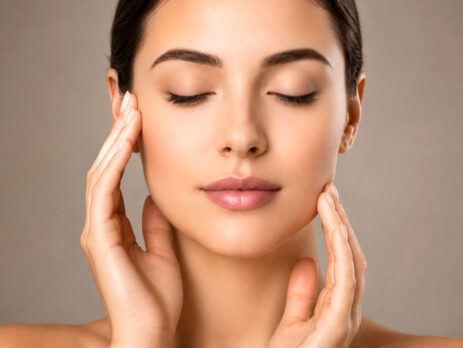
Botox or Baby Botox? Differences and the Right Choice
Botox or Baby Botox?
When forehead lines, vertical wrinkles between the eyebrows, and crow’s feet around the eyes start to become prominent, one of the most frequently asked questions is, “Should I get Botox or baby Botox?” In both applications, the main goal is to soften the appearance of lines by controlled reduction of excessive movement of mimic muscles. However, the dose used, the distribution of application points, the targeted reduction in muscle movements, and the expected outcome are not the same.
Classic Botox can be preferred for individuals where dynamic wrinkles are more prominent and stronger balancing of muscle activity is required. Baby Botox, on the other hand, is a personalized application approach that aims to provide a subtle and natural softening using lower doses, while preserving facial expressions as much as possible. Therefore, there isn’t a single answer to the question of which one is better that applies to everyone.
The right decision should be made by evaluating the individual’s age, muscle strength, depth of wrinkles, facial anatomy, eyebrow position, skin quality, previous applications, and expectations from the result. At Op. Dr. Şükrü İşler Aesthetic Clinic, the first examination or consultation is free. During the free initial assessment, your face will be examined both at rest and while making facial expressions to determine which of the classic Botox or baby Botox options is more suitable for your needs.
What is Botox and How Does It Work?
Botox is one of the medical aesthetic methods based on the application of botulinum toxin in very small and controlled amounts to specific muscle points. The applied substance temporarily reduces communication between nerve endings and the targeted muscles. Thus, the muscles’ ability to repeatedly fold the skin is controllably weakened, and dynamic wrinkles that appear especially during facial expressions begin to soften.
Botox is not a filler application. It does not add volume under the skin, does not swell the face, and does not fill wrinkles. Its primary effect is to temporarily balance the movement power of the selected muscles. This distinction between Botox and fillers is very important in choosing the correct procedure. Grooves caused by volume loss and lines caused by muscle movement are not treated with the same method.
The dose and points used in classic Botox application should be determined not according to a standard template, but according to the individual’s anatomy. Applications performed without evaluating the strength of the forehead muscle, the height of the eyebrows, the structure of the eyelids, and the right-left balance of the face can lead to unnatural results. For this reason, the success of Botox depends not only on the product used, but also on correct anatomical evaluation and a personalized application plan.
For more detailed information about the application areas and procedure of Botox, you can review the Botox application page.
What is Baby Botox?
Baby Botox is not a different or lighter-content Botox product. Essentially, the botulinum toxin substance used in classic applications is utilized. The difference is that the dose is kept lower, the application points are distributed more precisely according to the person’s facial expressions, and the aim is to controllably reduce muscle movements instead of completely suppressing them.
In the baby Botox approach, the goal is often not to completely immobilize the face, but to preserve some natural facial expressions while reducing excessive muscle activity that causes lines to form. It is particularly sought after by individuals whose wrinkles are not yet very deep, who have fine lines, and who do not want their surroundings to immediately realize they have had a procedure.
However, the term “baby” does not mean that the application is simple, risk-free, or suitable for everyone. The use of low doses also does not guarantee that the procedure will necessarily yield the correct result. If too little dose is used, the desired softening may not be achieved, and if the balance between the muscles is not properly established, asymmetry in facial expressions may occur. Therefore, baby Botox is also a medical procedure that must be planned by an experienced physician who knows facial anatomy.
For details of the application, its targeted appearance, and areas where it can be applied, you can refer to the content titled What is Baby Botox?
What is the Main Difference Between Botox and Baby Botox?
The most fundamental difference between Botox and baby Botox is not the product used, but the application plan. Classic Botox can be planned to provide more pronounced muscle relaxation and stronger wrinkle control. In baby Botox, a lighter muscle relaxation is aimed for with lower doses.
The main differences between classic Botox and baby Botox are:
- Dosage amount: In baby Botox, lower doses are generally preferred. In classic application, a higher total dose may be required depending on the muscle strength and the degree of the wrinkle.
- Facial expressions: In baby Botox, the aim is to preserve more facial expressions. Classic Botox can provide more pronounced movement control.
- Prominence of results: Classic application can create a stronger softening in dynamic lines that have started to deepen. Baby Botox aims for a subtler and harder-to-notice change.
- Suitable candidates: Baby Botox may be considered for individuals with finer lines and less pronounced muscle movements. Classic Botox may be more suitable for individuals with significant muscle activity.
- Duration of effect: When a lower dose is used, the effect of Baby Botox may diminish earlier in some individuals compared to the classic application.
- Need for follow-up: Both methods require a results assessment. In Baby Botox, due to the lower dose, an additional application may be needed.
These differences are not strict rules. In some individuals, a classic dose may be applied to one area of the face, while a lower dose may be applied to another. For example, while a classic approach is applied to the strong muscles between the eyebrows, a more controlled plan may be preferred for the forehead area. A successful application analyzes the needs of each area separately, rather than treating the entire face with a single dose approach.
Who Might Be More Suitable for Baby Botox?
Baby Botox can generally be considered for individuals with mild and early-stage dynamic facial lines, who prioritize a natural look and wish to preserve their facial expressions. Individuals undergoing Botox for the first time and concerned about the change being too noticeable may also explore the low-dose approach.
Potential candidates for Baby Botox may include:
- Those with fine lines newly forming on the forehead and around the eyes,
- Individuals who have wrinkles that are not prominent at rest but appear during facial expressions,
- Those who want to largely preserve their facial expressions,
- Those who have not had Botox before and desire a controlled start,
- Those who do not want a significant change in eyebrow position,
- Those who work in front of the camera and value preserving natural facial movements,
- Those who want a result that their surroundings won’t easily understand as having had a procedure.
However, age alone is not a selection criterion. Just as being young does not automatically mean being suitable for baby Botox, being older does not necessarily mean only classic Botox should be done. Some young individuals may genetically have very strong forehead or glabella muscles. In some older individuals, muscle activity may be weak, and lines may be light. The decision should be made based on the current condition of the face, not on the date of birth.
Who Might Be More Suitable for Classic Botox?
Classic Botox may be preferred for individuals whose facial expression muscles are strong, where wrinkles are pronounced, and where a low-dose application would not provide sufficient control. Especially if the vertical lines between the eyebrows make a person look angry, tense, or tired even at rest, more effective balancing of muscle movements may be necessary.
Situations where classic Botox may be considered include:
- Those with strongly working forehead muscles,
- Those with pronounced lines between the eyebrows that are starting to deepen,
- Those whose crow’s feet become prominent during smiling,
- Those who have not achieved sufficient results from a previous low-dose application,
- Those who want the effect to last as long as possible,
- Those who prefer a more pronounced reduction in facial expression movements,
- Those in whom lines are visible not only during facial expressions but also at rest.
For static wrinkles prominent at rest, botox can reduce muscle movement, limiting further deepening of the line and softening its appearance over time. However, for very deep static lines, botox alone may not completely eliminate the line. Different procedures that support skin quality or filler options may also be considered in suitable patients.
In Which Areas is Baby Botox Preferred, and In Which Areas is Classic Botox Preferred?
The choice of application may vary not only according to the individual but also according to the face area. The same person may have different muscle strengths in the forehead, glabella, and eye areas. Therefore, instead of applying equal doses to all areas, the muscles should be analyzed individually.
Forehead area: The forehead muscle helps lift the eyebrows. Using a dose higher than necessary can cause a heavy feeling in the eyebrows or make the eyelid area appear lower. Therefore, especially in individuals with naturally low eyebrows, the forehead area can be planned with more controlled doses. For detailed information about forehead lines, you can review the content What is Forehead Botox?
Between the eyebrows: The muscles that pull the eyebrows together are quite strong in some individuals. If there are deep vertical lines between the eyebrows, a classic botox approach may be more effective. However, the current shape of the eyebrows, eyelid structure, and the balance they create with the forehead muscle must be evaluated.
Eye area: Low and balanced doses may be preferred to preserve a natural smile in crow’s feet that form when smiling. A stronger plan may be required for individuals with very prominent lines. You can find information about the timing for the eye area on the When Should Botox Be Done for Crow’s Feet Wrinkles? page.
Lines on the nose bridge: Lines that appear during smiling or nose movement can be controlled with small doses. However, since applying to the wrong muscles can affect smiling movements, the injection points must be determined carefully.
Lip area: Very low doses may be preferred for fine lines above the lip. Since the muscles in this area are involved in speech, drinking, and smiling functions, it is important to avoid excessive doses.
Chin and neck: Customized doses can be used for the orange peel appearance on the chin tip or for muscle bands in the neck. In these areas, a plan should be prepared based on anatomical need rather than strictly adhering to the “baby Botox” or “classic Botox” label.
Does Baby Botox Look More Natural?
One of the most important goals of baby Botox is to preserve natural facial expressions as much as possible. However, a natural result is not achieved merely by using a low dose. Applying a low dose to the wrong spot can also lead to distorted eyebrow shape, asymmetry, or an insufficient result. Similarly, classic Botox, when applied to the correct points and in an appropriate amount for the individual, can also provide a natural, balanced, and non-frozen result.
Therefore, the idea that “Baby Botox always looks natural, classic Botox always looks frozen” is not correct. A frozen appearance often results from doses that are not appropriate for the facial anatomy, applying the same approach to all areas, or failing to establish the correct balance between muscles.
For a natural result, the goal is not to eliminate all facial expressions, but to reduce excessive muscle movements that make a person look tired, angry, or older than they are. The face should still be able to smile, show surprise, and express emotions. In a successful application, those around you may notice that you look more rested, but they may not easily understand the reason for the change.
Is Baby Botox Less Permanent?
The duration of botulinum toxin’s effect varies from person to person. The dose used, muscle strength, application area, individual metabolism, previous treatments, and daily lifestyle characteristics can affect its permanence. Generally, in baby Botox applications performed with a low dose, muscle movements may return earlier.
This does not mean that baby Botox is unsuccessful. The goal of the application is not to completely immobilize the muscle, but to reduce its movement capacity in a controlled manner. However, due to the use of a lower dose, the results are likely to last for a shorter period compared to classic Botox.
The effect of Botox does not suddenly end. Muscle movements gradually return over time. While lines visibly soften in the first few weeks, facial expressions may begin to increase in subsequent months. Control and reapplication times are determined according to the individual’s needs.
When Does Botox Start to Take Effect?
The result of botox and baby botox application does not appear immediately after the procedure. The first changes usually start to be noticed within a few days. Often, a period of approximately 10-14 days is required for the effect to settle and for the balance between the muscles to be evaluated.
In the first days after the procedure, it is possible for one side to be affected faster than the other. Therefore, a definitive decision about the final result should not be made by looking in the mirror too early. A control evaluation is usually performed after the effect has settled. If deemed necessary, small dose adjustments can be planned.
To learn how the process progresses day by day, you can review the guide titled How Many Days Does Botox Settle?.
Should First-Timers Choose Baby Botox?
There is no rule that all individuals getting botox for the first time should choose baby botox. While starting with a low dose may be suitable for some individuals, using an insufficient dose in a person with strong muscles and deep lines can lead to an unsatisfactory result.
What is important in the first application is for the person to clearly express their expectations. “I don’t want my eyebrows to move at all”, “I want my forehead lines to significantly diminish”, “I don’t want my surroundings to notice the procedure”, or “I want the harsh expression between my brows to soften” such expectations change the application plan.
In the physician’s evaluation, the face is examined at rest, when the eyebrows are raised, when the eyebrows are furrowed, and when smiling. This reveals how strong each muscle is. Undergoing the procedure for the first time does not solely necessitate the use of a low dose; the important thing is to achieve the targeted result with the lowest effective and safest dose.
Does Baby Botox Prevent Wrinkles?
Botulinum toxin application temporarily reduces the continuous folding movement of the muscles on the skin. Due to this mechanism, it is believed that regular and properly planned applications can slow down the deepening process of dynamic lines. However, it cannot be definitively said that baby botox prevents all wrinkles that may appear in the future.
Facial aging is not only caused by mimic muscles. Sun exposure, genetic factors, smoking, skin dryness, collagen loss, and changes in bone and fat tissue also play a role in the appearance of aging. Therefore, botox is only one part of a comprehensive skin care and aging management plan.
Instead of administering botox to individuals with no lines simply because they have reached a certain age, the actual needs of the face should be evaluated. Although scientific data on preventative applications continues to develop, it is important not to perform unnecessary procedures on individuals and to establish realistic expectations.
What Should Be Considered After Botox and Baby Botox?
After the application, daily life can usually be resumed quickly. Slight redness, tenderness, small bumps, or bruising may be observed at the injection sites. These effects are mostly temporary.
After the procedure, the personal instructions given by the physician must be followed. It is important not to apply pressure to the treated areas, to avoid massage, and to follow the physician’s recommendations regarding strenuous physical activity on the same day. Any medications being used or existing illnesses must be reported before the procedure.
If you are planning botox before a holiday, wedding, photoshoot, or an important event, the procedure should not be left until the last day. Sufficient time should be allowed for the result to settle and for any potential small bruises to disappear. Regarding holiday planning, you can benefit from the content How Many Days Before a Holiday Should Botox or Filler Be Done?
What Are the Possible Side Effects of Botox and Baby Botox?
Botulinum toxin applications are widely used medical aesthetic procedures when performed with correct patient selection, suitable product, accurate dosage, and anatomical knowledge. However, like any medical procedure, botox also has possible side effects.
Pain, redness, tenderness, swelling, headache, or bruising may be observed at the injection site. These are generally short-term effects. Depending on the application point, dose, and the individual’s anatomy, problems such as temporary eyebrow or eyelid drooping, facial asymmetry, or unwanted muscle weakness may occur.
A low dose in baby botox does not eliminate all risks. Especially around the eyes, mouth, and forehead, millimeter-level application differences can affect the outcome. Therefore, the procedure should not be evaluated solely based on price or the number of units used.
Who Cannot Be Administered Botox?
Botox application for aesthetic purposes is generally postponed during pregnancy. If the procedure is considered during breastfeeding, existing scientific data and the individual’s condition should be evaluated by a physician. Individuals with known hypersensitivity to botulinum toxin, those with active infection in the application area, and people with certain neuromuscular diseases may not be suitable candidates.
Blood thinners, muscle relaxants, certain antibiotics, and other regularly used medications should be reported to the physician before the procedure. Medications should not be stopped without a doctor’s recommendation. If an unexpected reaction was experienced after Botox previously, this information must also be shared.
Is Botox or Baby Botox More Expensive?
Botox prices are not solely determined by whether the application is called “baby” or “classic.” The number of areas to be treated, the required dosage, the product used, the strength of the muscles, the scope of the procedure, and the need for follow-up can affect pricing.
Using a lower dose in baby Botox does not always mean the procedure will be significantly cheaper. The necessary anatomical assessment, planning, and follow-up process for a safe and balanced application are the same. When comparing prices, not only the total cost but also the reliability of the product used and the experience of the performing physician should be considered.
For current assessment and factors affecting prices, you can visit the 2026 Botox Prices page. The definitive application plan and cost can only be determined after your facial structure has been evaluated.
How to Make the Right Botox Choice?
The right Botox choice should not be made based on standard dosage charts seen online or on results that look good on another person. Every face has a different muscle strength, eyebrow structure, eyelid level, and wrinkle pattern.
During the assessment, answers to the following questions are sought:
- Are the lines visible only during facial expressions, or also at rest?
- How strong are the muscles between the forehead and eyebrows?
- Are the eyebrows naturally low or high?
- Is there heaviness or drooping in the eyelid?
- How much of their facial expressions does the person want to preserve?
- Has botox been done before, and how long did the results last?
- Is there an existing asymmetry in the face?
- Is the expectation a slight refresh, or a more noticeable softening?
Based on the answers to these questions, a personalized plan can be prepared, involving only baby botox, only classic botox, or a combination of both approaches in different areas. The most appropriate method is not the name of the application, but the method that meets the needs of the face.
Initial Examination or Consultation is Free
Before deciding whether to get botox or baby botox, your face needs to be evaluated by a physician. Photos on the internet, general charts prepared by age, or other people’s experiences do not indicate the correct dosage for you.
At Op. Dr. Şükrü İşler Aesthetics Clinic, the initial examination or consultation is free. During the free initial consultation, the strength of your mimic muscles, the depth of wrinkles, your eyebrow and eyelid structure, previous procedures you’ve had, and your expectations from the result are evaluated. This allows for a personalized plan to be created specifically for your face, rather than an excessive or insufficient application.
To get information about botox, baby botox, and other non-surgical aesthetic applications, you can use the online appointment page or contact the clinic via the information on the contact page.
Botox or Baby Botox? Which is Better in the End?
There is no absolutely better procedure between Botox and baby Botox. The better option is the application planned according to the individual’s muscle structure, wrinkles, and expectations.
Baby Botox may be suitable for individuals with fine lines who wish to preserve their facial expressions and aim for a subtle change. For individuals with strong muscle activity, deep lines, and a desire for more pronounced movement control, classic Botox may provide more effective results. In some individuals, both approaches can be used together in different areas of the face.
When making a decision, one should not act solely on the idea that ‘a smaller dose will be more natural.’ Naturalness arises not from the lowest dose, but from applying the correct amount to the correct muscle. During a free initial examination or consultation, your face can be evaluated in detail to determine the appropriate dose and application areas for you.
Frequently Asked Questions
Are baby Botox and regular Botox the same substance?
Yes. Baby Botox is not a different or lighter product. The fundamental difference lies in the dose used, the application points, and the targeted muscle movement control.
Does baby Botox completely freeze the face?
In baby Botox, the aim is generally to preserve more facial expressions. However, the result depends on the dose used, as well as the application points and the individual’s muscle structure.
Does classic Botox necessarily look frozen?
No. Classic Botox performed with doses appropriate for facial anatomy can also yield natural results. A frozen appearance is often associated with an excessive dose or an unsuitable application plan.
How many months does baby Botox last?
The duration of effect varies from person to person. Since a low dose is used, muscle movements may return earlier in some individuals compared to classic Botox.
At what age is baby Botox performed?
Suitability is not solely determined by age. The condition of the lines, muscle strength, facial anatomy, and the individual’s expectations are evaluated together.
Should someone getting Botox for the first time choose baby Botox?
Not always. It may be suitable for individuals with fine lines and an expectation of a natural look. In those with strong muscle structure, a low dose might be insufficient.
Does baby Botox completely remove wrinkles?
Baby Botox can soften the appearance of dynamic lines. It may not completely eliminate static wrinkles that are deep and noticeable at rest.
What is the difference between Botox and filler?
Botox temporarily reduces muscle movements. Filler, on the other hand, is used to add volume or provide tissue support in appropriate areas.
When are the results of Botox visible?
The initial effects are usually noticed within a few days. The full results to settle and be evaluated typically take about 10-14 days.
Is a follow-up required after Botox?
A follow-up allows for the evaluation of the balance between muscles and the outcome of the application. Small dose adjustments can be made if necessary.
Is baby Botox safer?
Using a low dose does not eliminate all risks. Both procedures must be performed by a physician with appropriate patient selection and correct anatomical planning.
Can I have asymmetry on my face after baby botox?
Natural asymmetries may be present on the face before the procedure. Inappropriate dose distribution can lead to temporary asymmetry. Therefore, a face analysis before the procedure is important.
Does baby botox lift the eyebrows?
Slight changes in eyebrow position may occur depending on the application points. However, the same eyebrow lifting effect is not expected in every person, and the result depends on facial anatomy.
Is baby botox used in sweat treatment?
The term “baby botox” is mostly used for low-dose facial applications. The dose and application plan required for excessive sweating treatment are different.
Can botox be done during pregnancy?
Aesthetic procedures are generally postponed during pregnancy. You should consult your doctor for your personal situation.
Is it necessary to stop medications before botox?
You must inform your doctor about all medications you are using. No medication should be stopped without your doctor’s recommendation.
When can one return to daily life after botox?
Most people can return to their daily lives shortly. However, personal recommendations given by the doctor after the procedure must be followed.
How is botox price determined?
The price may vary depending on the application areas, required dose, muscle strength, product used, and personalized treatment plan. Exact information can be provided after an examination.
Is it mandatory to have a procedure during the free initial consultation?
No. The initial consultation is held for the purpose of evaluating your face, explaining the options, and answering your questions. After the consultation, you can decide whether or not to proceed with the treatment.
Academic Resources
- Botulinum Toxin A for Reducing the Appearance of Facial Wrinkles – PMC
- Microdroplet Botulinum Toxin: A Review – PMC
- The Whole Truth About Botulinum Toxin: A Review – PMC
- Botulinum Toxin for Cosmetic Treatments in Young Adults – PubMed
- Botulinum Toxin Injection for Facial Wrinkles – PubMed