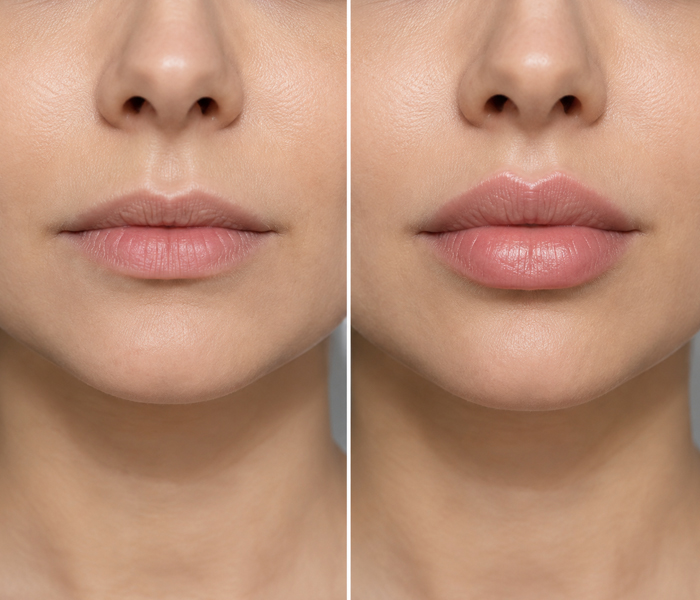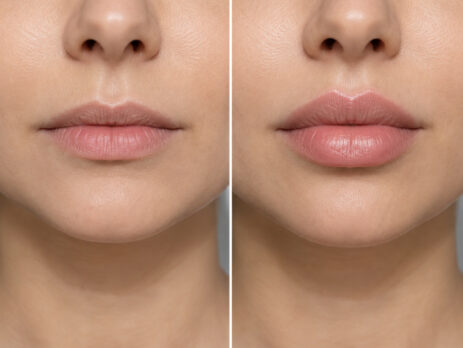
What is a Lip Lift? What is its Difference from Lip Fillers?
What is Lip Lift? What is its Difference from Lip Filler?
The only factor determining the appearance of the lips within the face is not just how full the lips are. The distance between the upper lip and the nose, how much of the vermilion (red part) of the lip is visible, the amount of upper front teeth showing when smiling, the lip contour, and its proportion with other parts of the face also play a significant role in aesthetic appearance. Therefore, the same method may not be suitable for everyone who wants to make their lips more prominent.
Lip lift is a lip aesthetics procedure primarily aimed at surgically shortening the distance between the base of the nose and the upper lip, and making the visible red part of the upper lip more prominent. Lip filler, on the other hand, is an injection-based procedure typically applied to add volume to the lips, shape the lip contour, or reduce asymmetries, mostly using hyaluronic acid-based fillers.
Therefore, lip lift and lip filler should not be considered direct alternatives to each other. If a person’s main problem is a long upper lip distance, continuous filler application may not provide the desired proportion. In contrast, for a person who only wants to increase lip volume, even if the distance between the nose and lip is normal, lip filler might be more suitable than a surgical lip lift.
Which method is more appropriate for shaping the lip structure should be determined by evaluating the person’s facial proportions, lip structure, philtrum length, age, tooth visibility, existing lip volume, and aesthetic expectations together.
What Does a Lip Lift Do?
The primary purpose of a lip lift surgery is not to directly add filler material to the upper lip. The operation aims to change the position of the upper lip by shortening the skin segment between the base of the nose and the upper lip.
As a result of this change, in suitable patients:
- The distance between the nose and the upper lip may appear shorter.
- The red part of the upper lip may become more visible.
- The lip may appear more upturned and defined.
- Changes in the visibility of the upper front teeth during rest or smiling can be achieved.
- The proportion between the lower and middle parts of the face can be made more balanced.
- A more youthful proportion can be aimed for in the upper lip area that appears elongated with age.
For this reason, a lip lift should not be thought of merely as a “lip augmentation surgery.” The main goal is less about lip volume and more about upper lip position and facial proportions.
More detailed information about surgical options for the lip area can be found on Op. Dr. Şükrü İşler Aesthetic Clinic’s Lip Aesthetics page.
How Is a Lip Lift Performed?
Although various surgical techniques have been described for lip lift, one of the frequently used approaches for aesthetic upper lip lifting procedures is the subnasal lip lift technique, which is performed from beneath the nose.
During planning, the nasal base, philtrum columns, lip contour, mouth width, and overall facial symmetry are evaluated. The amount of skin to be removed from the area near the nasal base is determined individually for each person. Measurement and surgical planning are crucial, as removing too much or too little tissue can directly impact the aesthetic outcome.
After the planned section of skin is removed, the upper lip tissue is repositioned upwards, and the incision is closed. One of the aims of planning the incision close to the natural folds at the base of the nose is to ensure the scar remains in as inconspicuous an area as possible.
The scope of the operation, the technique to be used, the anesthesia method, and whether any other procedures will be performed simultaneously may vary from person to person.
Does a Lip Lift Make Lips Fuller?
Although the lip may appear more defined and fuller in some individuals after a lip lift, the procedure technically does not add volume to the lip.
Making the red part of the upper lip more visible can make the lip appear visually more voluminous. However, if the goal is to increase the actual volume of the lip tissue, fillers or different volume-enhancing methods suitable for the patient can be considered.
This distinction is quite important. Because on before-and-after photos on the internet, the lip appearing significantly enlarged after a lip lift can be misinterpreted as the procedure having a filler effect. In reality, the change largely results from the repositioning of the lip and the increased visibility of the red lip tissue.
What is Lip Filler?
Lip filler is a minimally invasive aesthetic procedure typically performed by applying hyaluronic acid-based fillers to the lip area.
With lip filler:
- Lip volume can be increased.
- The ratio between the upper and lower lip can be adjusted.
- Lip contour can be made more defined.
- Asymmetry can be reduced.
- Specific lip areas can be supported in a controlled manner.
- Age-related volume loss can be reduced.
For detailed information about lip filler, the Bursa Lip Filler page can be reviewed.
One of the important characteristics of hyaluronic acid fillers is that their results are temporary. The properties of the product used, the amount applied, metabolism, lip movements, and the individual’s anatomical features can affect the duration of permanence.
What is the Most Important Difference Between Lip Lift and Lip Filler?
The most fundamental difference between the two procedures is which anatomical problem they address.
Lip lift is a surgical procedure aimed at shortening the distance between the nose and the upper lip and changing the position of the upper lip.
Lip filler, on the other hand, is an injection procedure aimed at adding volume to the lip itself and changing its shape.
To explain with a simple example; the problem of two people with a thin-looking upper lip can be completely different. In one person, the lip tissue might genuinely lack volume. In this case, filler could be considered. In the other person, even if the lip volume is sufficient, the distance between the nose and the upper lip might be long, and the red part of the lip might appear to turn inward. In such an anatomy, a lip lift evaluation might be more meaningful.
Therefore, instead of choosing a procedure based solely on the assessment “my lip looks thin,” it is necessary to determine why the lip appears thin.
Is Lip Lift More Permanent, or Lip Filler?
There is a significant difference between the two applications in terms of permanence.
Since lip lift is based on the surgical removal of tissue and repositioning of the upper lip, the anatomical change it creates is long-lasting and essentially permanent. However, no aesthetic surgical procedure stops natural aging. Over the years, skin elasticity, soft tissues, and facial proportions continue to change.
Lip filler, on the other hand, is temporary due to the breakdown of the filler material over time. If the desired result is to be maintained, reapplication may be necessary in the future.
Therefore, the expectation of a “lip that will never change throughout life” is not accurate for a lip lift either. While a lip lift creates a permanent anatomical change, the facial aging process continues.
Who Might Be a Suitable Candidate for a Lip Lift?
A lip lift can be considered especially for individuals who are bothered by the anatomical proportions in the upper lip area and desire a surgical solution.
Potential candidates include:
- Those whose distance between the base of the nose and the upper lip appears long relative to their face,
- Those whose red part of the upper lip is not sufficiently visible,
- Those bothered by the elongated appearance of the upper lip,
- Those who develop elongation in the upper lip area with aging,
- Those who desire a more permanent upper lip position,
- Individuals who do not wish to have continuous fillers and whose primary problem is philtrum length
may be included.
However, merely measuring the distance between the nose and the lip is not sufficient to make a decision. The visibility of the upper teeth, the structure of the nose, the appearance of the gums during a smile, lip movement, and the overall proportions of the face must be evaluated together.
Who Might Be a Better Candidate for Lip Fillers?
For individuals whose distance between the nose and upper lip is balanced but wish to change their lip volume or contour, filler might be a more suitable option.
Especially:
- Those who want to increase lip volume,
- Those who want a more defined lip contour,
- Those with mild lip asymmetry,
- Those who do not want surgical operations,
- Those who want a temporary and, if necessary, adjustable change
can be considered for lip fillers.
However, it should not be forgotten that filler is also a medical procedure. It is important that the application is performed by a competent physician who understands anatomy and can recognize and manage potential complications.
Is Filler Sufficient for a Long Upper Lip?
This is one of the most frequently asked questions by individuals researching lip lifts.
If the distance between the nose and the lip is significantly long, adding volume to the upper lip can increase the lip’s visibility, but it does not genuinely shorten the skin segment called the philtrum.
In fact, repeatedly applying a high amount of filler solely to visually compensate for this distance can lead to an unnatural lip projection in some individuals.
Conversely, it should not be concluded that a lip lift is necessary for every upper lip that appears long. It is not correct to make an operation decision based on just a single measurement without evaluating the entire face.
Are Teeth More Visible After a Lip Lift?
Lip lift, when planned appropriately, can increase the visibility of the upper front teeth by changing the position of the upper lip. This effect can contribute to a younger perception of the face, especially in individuals whose upper lip lengthens with aging and whose upper teeth become less visible at rest.
However, this feature should be carefully evaluated in individuals who already have excessive tooth or gum visibility initially. This is because lip lift is not performed to the same extent in everyone. The amount of the procedure needs to be planned according to the facial anatomy.
Therefore, smile analysis is one of the important parts of lip lift planning.
Can Lip Lift and Lip Filler Be Performed Together?
Yes, in suitable individuals, lip lift and lip filler can be considered as complementary procedures, either at different times or within a plan deemed appropriate by the physician.
For example, if the person’s lip volume is still insufficient after the upper lip distance and lip position have been adjusted with a lip lift, contour or volume support with a small amount of filler can be considered after healing is complete.
The important point here is to know that the two applications do not perform the same task. Lip lift changes position and proportion, while filler supports volume and contour.
Information about aesthetic planning covering the entire face can be obtained from the Facial Aesthetics page.
Does a Scar Remain After a Lip Lift?
Since lip lift is a surgical procedure, scar formation is inevitable. The aim here is not to completely eliminate the scar, but to plan the incision in an area that is as consistent as possible with the natural anatomical curves at the base of the nose.
How the scar heals depends on numerous factors such as the individual’s genetic wound healing characteristics, skin structure, surgical technique, postoperative care, sun exposure, and smoking.
In the initial period, the incision line may be more prominent. Over time, in many patients, the color and visibility of the scar may decrease. However, statements such as “lip lift absolutely leaves no scar” are not realistic.
For individuals with high sensitivity regarding scars, it is important to discuss this matter in detail with their surgeon during the pre-operative examination.
What is the Recovery Process Like After a Lip Lift?
Recovery varies from person to person. In the first few days, swelling, tightness, and tenderness may be observed around the upper lip and nasal base. Depending on the technique used by the surgeon, the control and removal time of the sutures may vary.
During the early recovery period, it is possible for the lip to appear more elevated or taut than it truly is. As the swelling subsides, the appearance becomes more natural. Time should be given for the tissues to heal to evaluate the final result.
During this process, it is important to follow the wound care, activity, sun protection, and control recommendations given by the surgeon.
Is Recovery Faster After Lip Fillers?
Since lip fillers do not require a surgical incision, they generally have a shorter social recovery period compared to a lip lift. However, temporary swelling, tenderness, redness, or bruising may be observed after the injection.
In current clinical studies, swelling, firmness, bruising, and tenderness are among the frequently reported temporary side effects of hyaluronic acid lip fillers.
Among rarer but important complications, infection, nodules, filler migration, and vascular occlusion may be present. Therefore, lip filler should not be considered a simple beauty application but rather a medical procedure requiring detailed knowledge of facial anatomy.
What Are the Risks of a Lip Lift?
As with any surgical procedure, there are also some risks in lip lift surgery.
Possible risks include:
- Bleeding,
- Infection,
- Swelling,
- Asymmetry,
- Prominent scarring,
- Temporary or permanent sensory changes,
- More or less lift than expected,
- Undesirable changes in the appearance of the nasal base or lip,
- Delayed wound healing
can be listed.
The risk rate can be affected by many factors, including the individual’s health status, anatomy, surgical technique, and postoperative care.
What Are the Risks of Lip Fillers?
Temporary reactions such as swelling, redness, tenderness, and bruising are common with lip fillers. Additionally, problems such as asymmetry, irregularity, nodule formation, infection, and the displacement or migration of the filler material to an undesired area over time can occur.
One of the rare but more serious complications is vascular occlusion. Accidental injection of filler material into a blood vessel or application in a way that creates pressure on a vessel can impair tissue circulation. Therefore, if unusual and progressively increasing pain, significant changes in skin color, or unexpected findings occur after the procedure, prompt medical evaluation is important.
In the international literature regarding the prevention and management of complications with hyaluronic acid fillers, the importance of anatomical knowledge, correct patient selection, appropriate application technique, and early recognition of complications is particularly emphasized.
Which Looks More Natural: Lip Lift or Lip Filler?
Naturalness is related more to applying the correct method to the right patient than to the name of the procedure used.
In a person with a long upper lip, merely adding volume can create an unnatural projection, while a properly planned lip lift can provide a more balanced result. Conversely, for a person with a normal philtrum length and low lip volume, a lip lift might be unnecessary; controlled filler can yield a more natural outcome.
Therefore, there is no general rule stating that ‘lip lift is always more natural’ or ‘filler is always more natural.’
For a natural result, it is important to evaluate the entire face, consider the upper and lower lip ratio, and preserve the individual’s existing anatomy.
Can Lip Lift Be Performed on Men?
Lip lift is not a procedure exclusively for women. Men with appropriate upper lip length and facial proportions can also be considered for a lip lift.
However, the ideal lip proportions for male and female faces are not necessarily the same. Furthermore, features such as beard and mustache placement, skin thickness, and lip projection can influence surgical planning.
For this reason, the procedure should be planned according to the individual’s facial anatomy, not using standard measurements.
What is the Ideal Upper Lip Distance for a Lip Lift in Centimeters?
On the internet, specific millimeter or centimeter values may be presented as ‘ideal’ for a lip lift. However, it is not correct to consider a single measurement aesthetically ideal for all faces.
Facial length, nose structure, chin projection, age, gender, tooth visibility, and the individual’s natural facial proportions influence this assessment.
Therefore, the decision for a lip lift should not be based solely on a philtrum measurement taken with a ruler. During the examination, both the static face and dynamic lip movements during speech and smiling should be evaluated.
Does a Lip Lift Change the Smile?
Due to the change in the position of the upper lip, a lip lift can also affect the appearance of the smile. The visibility of the upper teeth may increase, and more of the vermillion (red part of the lip) may be seen.
While this situation creates the desired aesthetic effect in some individuals, it may require a different evaluation in individuals who initially have excessive gum visibility.
Therefore, in operation planning, not only photographs of closed lips but also the appearance during smiling should be taken into consideration.
Is Lip Filler Needed Again After a Lip Lift?
Not everyone who has a lip lift needs to get fillers afterwards.
If the lip position and visibility after a lip lift meet the person’s expectations, additional volume application may not be necessary. However, if there is also a volume deficiency in the lip tissue, filler can be considered after healing is complete.
This decision should not be made definitively beforehand, without seeing the new lip proportion that emerges after a lip lift.
Can a Lip Lift Be Performed on Those Who Have Had Lip Fillers Before?
Having had lip fillers before does not, by itself, mean that a lip lift cannot be performed. However, the type of existing filler, when it was applied, how much product is in the lip, and whether the filler affects the anatomical assessment are important.
In some individuals, it may be necessary to wait for the existing filler to diminish before surgical planning, or a different planning approach may be required if deemed necessary by the physician.
Therefore, it is important to inform the physician during the examination about all previous lip fillers and the products used.
At What Age Is a Lip Lift Performed?
A lip lift is not solely a facial rejuvenation surgery performed in advanced age. It can also be considered in young adults who genetically have a long upper lip distance.
As age progresses, elongation may occur in the upper lip region, so a lip lift can also be part of a perioral rejuvenation plan.
Instead of age being the sole determining criterion for the operation, the completion of facial development, the person’s anatomical needs, general health status, and realistic expectations are evaluated together.
What is Considered Before a Lip Lift?
During the examination, not only the thickness of the lips is evaluated.
In terms of surgical planning:
- The distance between the nose and the upper lip,
- The visibility of the vermilion (red part of the lip),
- The amount of upper front teeth visible,
- Gum visibility during a smile,
- Lip symmetry,
- Nose base anatomy,
- Upper and lower lip ratio,
- Overall facial length and proportions,
- Previous fillers or surgical procedures,
- The person’s wound healing characteristics
can be evaluated together.
As a result of this evaluation, it can be determined whether the person’s actual need is for a lip lift, lip filler, another lip aesthetic method, or no procedure at all.
Is the First Examination or First Consultation Free?
Yes. The first examination or first consultation at Op. Dr. Şükrü İşler Aesthetic Clinic is free of charge.
When deciding between a lip lift and lip filler, it is healthier to evaluate the person’s own lip and facial anatomy rather than making a choice based solely on internet photos or general measurements.
During the free first consultation, the upper lip distance, lip volume, teeth visibility, facial proportions, and the patient’s expectations can be evaluated together to discuss which method might be more suitable.
To create an appointment request, you can use the Online Appointment page or reach the clinic from the Contact page.
Lip Lift or Lip Filler? A Short Comparison
Lip lift: Aims to surgically shorten the distance between the upper lip and the nose.
Lip filler: Aims to add volume and shape to the lip tissue.
Lip lift permanence: The anatomical change is long-lasting and essentially permanent; natural aging continues.
Lip filler permanence: It is temporary, and its effect diminishes over time.
Lip lift recovery: Requires a specific wound healing process due to the surgical incision.
Lip filler recovery: Generally has a shorter social recovery period, but swelling and bruising may occur.
Lip lift main advantage: It can directly change a long upper lip distance.
Lip filler main advantage: It can change lip volume and contour without a surgical procedure.
What Do Academic Studies Say About Lip Lift?
In systematic reviews on lip lift, surgical upper lip lifting techniques are reported to be able to create measurable changes in upper lip length, vermilion visibility, and lip aesthetics.
For a systematic review evaluating upper lip lift techniques, the study Different Techniques and Quantitative Measurements in Upper Lip Lift: A Systematic Review can be examined.
For another systematic review evaluating the aesthetic effect of subnasal lip lift applications, the study Impact of Subnasal Lip Lift on Lip Aesthetic: A Systematic Review can be accessed.
For current scientific evaluations regarding lip lift techniques and patient selection, the study The Bullhorn and Beyond: Evidence-Based Review and Clinical Recommendations for Lip Lift Techniques can also be examined.
What Do Scientific Data Show About Lip Fillers?
Current systematic reviews and meta-analyses evaluating randomized controlled trials on hyaluronic acid lip fillers show that improvements in lip volume and aesthetic appearance can be achieved, but temporary side effects can be quite common.
In this regard, the study Efficacy and Safety of Hyaluronic Acid Lip Fillers: A Systematic Review and Meta-Analysis of Randomized Controlled Trials can be examined.
For an international expert consensus on the prevention and management of hyaluronic acid filler complications, the study Global Aesthetics Consensus: Avoidance and Management of Complications from Hyaluronic Acid Fillers is one of the important resources.
Scientific reviews evaluating complications in lip and perioral fillers also emphasize the importance of anatomical knowledge and early complication diagnosis.
Frequently Asked Questions
Does lip lift replace lip filler?
Not always. While lip lift changes the upper lip distance and lip position, filler increases lip volume. Which method is suitable depends on the individual’s primary problem.
Is lip lift permanent?
The anatomical change made surgically is long-lasting and fundamentally considered permanent. However, the natural aging process continues.
Is lip filler permanent?
Hyaluronic acid lip fillers are temporary. The duration of permanence varies depending on the product used and individual characteristics.
Does lip lift enlarge the lip?
It does not add volume to the lip, but it can make the lip appear more prominent and fuller by making more of the upper lip red (vermilion) visible.
Can I get filler if my upper lip distance is long?
Filler application may be possible, but filler does not physically shorten the philtrum distance. In individuals where the length is pronounced, a lip lift should also be considered.
Can filler be applied after a lip lift?
In suitable individuals, after healing is complete, filler can be considered for additional volume or contour.
I’ve had lip fillers before, can I get a lip lift?
Having had filler in the past is not an automatic contraindication. However, the amount, type, and timing of the existing filler should be evaluated during examination.
Will the lip lift scar be visible?
A scar forms due to the surgical incision. The incision is usually planned close to the natural creases at the base of the nose. The visibility of the scar may vary depending on the individual’s wound healing and other factors.
Do teeth become more visible after a lip lift?
In suitable patients, the visibility of the upper front teeth may increase. Therefore, the appearance of the teeth and gums should also be evaluated before the operation.
Does a lip lift change the smile?
Due to the change in upper lip position, there may be a change in the appearance of the smile. Dynamic smile analysis is important during planning.
Does lip lift or filler look more natural?
The right application for the right patient can yield natural results. A lip lift might be more suitable for someone with a long philtrum, while controlled lip filler might be more appropriate for someone with only volume loss.
Is there a specific age limit for getting a lip lift?
The procedure is not solely for the elderly. Anatomical need, facial development, health status, and expectations are evaluated together.
Is a lip lift performed on men?
Yes. However, male facial proportions, lip structure, mustache area, and other anatomical features require personalized planning.
Can a lip lift be done without surgery?
Surgical lip lift involves repositioning the upper lip by removing skin. Fillers or different non-surgical applications can support some aesthetic goals, but they do not create the same anatomical change as a surgical lip lift.
Can it be determined whether a lip lift or filler is needed during the first consultation?
For most individuals, suitable options can be determined by evaluating facial proportions, upper lip length, lip volume, tooth visibility, and expectations. At Op. Dr. Şükrü İşler Aesthetic Clinic, the first examination or initial consultation is free.
Lip Lift or Lip Filler: Which Should Be Preferred?
The decision between a lip lift and lip filler depends not so much on the question of “which is better?” but rather “which problem needs to be corrected?”.
If the distance between the nose and the upper lip is long, the red part of the upper lip is less visible, and the problem primarily stems from lip position, a lip lift can be considered. If the lip position and philtrum length are balanced but lip volume is insufficient, lip fillers may be more appropriate.
In some individuals, both problems may be present. In such cases, surgical and non-surgical methods are not competitors but can become complementary options within a proper treatment plan.
The most important point is that the choice of procedure should be based on the individual’s own facial anatomy, not on lip models seen on social media or standard measurements.
For a personal evaluation regarding lip lift, lip fillers, or other lip aesthetics methods, you can contact Op. Dr. Şükrü İşler Aesthetic Clinic. The initial examination or first consultation is free of charge.
This content is for general informational purposes. To determine which procedure is suitable for you, to evaluate potential risks, and for a personalized treatment plan, an examination by a specialist physician is necessary.