How Does Rhinoplasty Outcome Change in Thick-Skinned Noses?
How Does Rhinoplasty Result Change in Thick-Skinned Noses?
The result of rhinoplasty in thick-skinned noses may differ in some aspects from individuals with thin or medium-thickness nasal skin. The main reason for this is that in rhinoplasty, not only the nasal bone and cartilages but also the skin and soft tissue layer covering these structures directly affect the final appearance. Thick nasal skin can further obscure the fine details of the newly created nasal framework underneath, and it may take longer for the nasal tip, in particular, to achieve the expected definition.
However, having thick skin does not mean that a successful or natural-looking nose aesthetic cannot be achieved. The real important point is the correct pre-operative evaluation of skin thickness, the strength of the nasal cartilages, the structure of the nasal tip, facial proportions, and the patient’s expectations.
In patients with thick skin, the goal is not merely to reduce the size of the nose. Often, it is much more important to create a nasal framework underneath the skin that is strong enough, balanced, and capable of maintaining its form in the long term. Therefore, rhinoplasty in thick-skinned noses is one of the important aesthetic surgical topics that requires personalized planning.
The first examination or consultation at Op. Dr. Şükrü İşler Aesthetic Clinic, conducted to evaluate your nose structure, skin characteristics, and expectations, is free of charge. This allows an assessment of how thick nasal skin might affect your rhinoplasty outcome, based on your personal anatomy.
What Does a Thick-Skinned Nose Mean?
The thickness of nasal skin varies from person to person. The skin on the nose is not just the visible outer layer. Beneath the skin, there are sebaceous glands, connective tissue, and layers of soft tissue of varying thicknesses. In rhinoplasty literature, this structure is often described as the skin-soft tissue envelope.
In thick-skinned noses, the volume of soft tissue, especially in the nasal tip region, can be greater. The skin may have a structure described as oily, porous, or sebaceous. However, it is not accurate to make a definitive classification merely by looking at the nose or observing that the skin is oily.
In surgical evaluation;
- Skin thickness at the nasal tip,
- Skin characteristics on the nasal dorsum,
- Subcutaneous fat and connective tissue,
- Strength of nasal cartilages,
- Width of the nasal tip,
- Structure of the nasal alae,
- Existing nasal tip support,
- Whether a previous nose surgery has been performed
should be evaluated together.
Indeed, scientific studies examining the effect of nasal skin on rhinoplasty outcomes indicate that skin thickness, especially in the nasal tip and columella regions, can be significant in making surgical results visible. You can access the academic study on this topic via PubMed.
Why Might Rhinoplasty Results Differ in Thick-Skinned Noses?
In rhinoplasty, the surgeon reshapes the nasal bone and cartilage structures. However, the external shape seen at the end of the operation is determined by the skin covering this new nasal skeleton.
Thin skin can show even small underlying changes more clearly. The disadvantage of this is that even very minor surface irregularities can be noticed externally.
Thick skin, on the other hand, can more easily camouflage minor irregularities. Conversely, it can reduce the visibility of very subtle contours and nasal tip details created underneath.
Therefore, thick skin should be considered both an advantage and a characteristic requiring a different surgical planning.
The systematic review published in 2023, which examined rhinoplasty in thick-skinned noses, also states that pre-operative, intra-operative, and post-operative processes should be considered together to optimize outcomes. You can access the relevant scientific publication via PubMed.
Is the Nasal Tip Less Defined in Thick-Skinned Noses?
Among the most emphasized areas in thick nasal skin is the nasal tip. The reason for this is that the most important aesthetic transitions and light-shadow relationships of the nose occur around the nasal tip.
Even if the nasal tip cartilages are surgically reshaped, thick skin can prevent these details from appearing as sharp externally as they would with thin skin.
Therefore, it is important to realistically determine the pre-operative expectations of a patient with thick skin.
The goal is not to create an extremely pointed or sharply defined nasal tip in every patient. The aim is to create a nose that is harmonious with the rest of the face, looks natural, has adequate support, and is compatible with the patient’s anatomical characteristics.
In thick-skinned noses, it may become especially important for the nasal tip to have adequate structural support. Instead of merely reducing the nasal tip, it may need to be supported and reshaped according to the existing cartilage anatomy.
Can the Nasal Tip be Reduced in Thick-Skinned Noses?
Yes. Thick skin is not an obstacle to the aesthetic reshaping of the nasal tip. However, the amount of thinning that can be achieved is not solely related to how much the cartilages are reduced.
The appearance of the nasal tip is determined by;
- Skin thickness,
- Width and strength of the cartilages,
- Tissues under the skin,
- Current projection of the nasal tip,
- Structure of the nasal alae,
- Angle between the nose and the lip
collectively.
Therefore, “reducing a thick-skinned nose as much as possible” is not always the correct surgical goal. An overly reduced or insufficiently supported nasal skeleton may not be able to adequately carry the thick skin envelope.
In the modern rhinoplasty approach, it is important to correctly balance reduction with structural support.
Why is Strong Cartilage Support Important in Thick-Skinned Noses?
Thick skin and soft tissue envelope have a certain weight and exert a certain force. Therefore, adequate structural support may be needed for the nasal tip to maintain its planned position in the long term.
For this reason, in thick-skinned rhinoplasty cases, the surgical plan is not solely based on removing excesses.
Depending on the patient’s anatomy, reshaping of the nasal cartilages, preservation of existing tissues, and utilization of supportive techniques may come into consideration when necessary.
In the academic review titled “Management of Thick Skin in Rhinoplasty” published in 2024, it is stated that prolonged postoperative edema, scar tissue formation, and the effect of the skin-soft tissue envelope on the final outcome should be considered in thick skin. You can access the scientific study here.
Does Post-Rhinoplasty Edema Last Longer in Noses with Thick Skin?
In noses with thick skin, one of the issues that needs special emphasis is edema.
A certain degree of swelling after rhinoplasty is part of the natural healing process. In individuals with thick skin and a more voluminous soft tissue structure, edema, especially around the nasal tip, can be noticeable for a longer period.
Therefore, if the nasal tip appears wider than expected a few weeks or a few months after surgery, it does not always mean that the final result will remain this way.
During the early stages of healing, the nose can continuously change.
In the guide when does swelling subside after rhinoplasty? prepared by Op. Dr. Şükrü İşler Aesthetic Clinic, more comprehensive information regarding the development of edema and the process of results becoming apparent after rhinoplasty can be found.
When Does the Result Become Apparent in Noses with Thick Skin?
It is not correct to evaluate the rhinoplasty result based on the appearance immediately after surgery.
In the first few days, edema is prominent. As weeks progress, swelling decreases and the main contours of the nose begin to emerge. However, the refinement of fine details, especially at the nasal tip, can take much longer.
In patients with thick skin, the healing process may need to be followed more patiently compared to patients with thin skin.
The appearance in the first months is not the final result. As the swelling on the nasal tip decreases and the skin adapts to the new nasal framework, the appearance continues to change. In some cases with thick skin, the final evaluation may require follow-up exceeding 12 months.
It is not possible to assume a single timeline is correct for all patients. Age, skin characteristics, surgical procedures performed, previous surgeries, healing tendency, and individual biological characteristics can alter the process.
What Might a Thick-Skinned Nose Look Like in the First Month?
The first month is a very early period for evaluating the result of rhinoplasty.
Swelling in the nose, a broad appearance of the nasal tip, or temporary small differences between the two sides may be observed. Patients with particularly thick skin may not see the nasal tip details they imagined before the surgery in the first weeks.
This situation does not necessarily mean a bad outcome.
During follow-up appointments with the surgeon, the course of healing is evaluated, and appropriate recommendations are given to the patient for that period.
What Changes Between 3 and 6 Months?
As the edema decreases, the transitions on the nasal dorsum and nasal tip become clearer. The nose may begin to integrate more naturally with the face.
However, in a patient with thick skin, the nasal tip, in particular, may still not have reached its final refinement.
One of the most important things the patient should do during this period is not to evaluate the result prematurely and not to miss doctor’s appointments.
Can the Nose Continue to Change After 1 Year?
Yes. Changes after rhinoplasty are not limited to just the first few months.
Especially in noses with thick skin, the adaptation of the skin-soft tissue envelope to the new nasal framework can take longer. Therefore, in some patients, small changes may still be observed even after one year.
The final evaluation should be personalized.
Is a Natural Appearance Possible in Thick-Skinned Noses?
Yes. A natural-looking rhinoplasty result is possible in thick-skinned noses.
Even the ability of thick skin to better camouflage small skeletal irregularities can be an advantage in some cases for a natural appearance.
The critical point here is that the surgical goal should be determined based on the individual’s own anatomy.
Instead of trying to exactly copy another patient’s nose;
- Forehead-nose transition,
- Nasal dorsum,
- Nasal tip,
- Lip-nose relationship,
- Chin structure,
- General length and width of the face
should be evaluated together.
Natural rhinoplasty aims for the entire face to look balanced, rather than just the nose looking good on its own.
Why is Pre-operative Examination More Important for Noses with Thick Skin?
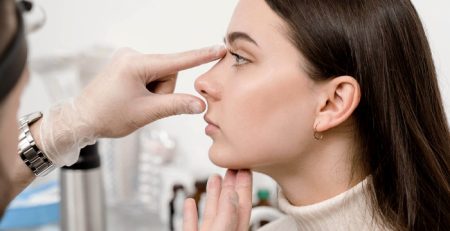
In thick nasal skin, pre-operative evaluation is one of the most important stages of surgical planning.
The doctor needs to analyze not only the external appearance of the nose but also the underlying structure beneath the skin.
During the examination;
- In which areas the skin thickness is concentrated,
- The strength of the nasal tip cartilages,
- The structure of the nasal bridge,
- The width and drooping of the nasal tip,
- Septum structure,
- Whether there is a breathing problem,
- Face and nose ratios,
- Previous operations,
- The patient’s expectations
are evaluated.
Thanks to this evaluation, what changes are realistic for the patient can be explained more clearly.
The first examination or consultation at Op. Dr. Şükrü İşler Aesthetic Clinic is free of charge. If you have a thick-skinned nose structure, you can get detailed information during the first consultation to evaluate the change that can be achieved with rhinoplasty based on your personal anatomy.
For general information about rhinoplasty, you can also check out the Nose Aesthetics (Rhinoplasty) page.
Is Open or Closed Rhinoplasty Better for Noses with Thick Skin?
There is no single rule that applies to everyone, such as “open rhinoplasty must be performed if the skin is thick” or “closed rhinoplasty is better.”
Open and closed rhinoplasty are different surgical approaches. Which method will be used is not determined solely by looking at skin thickness.
When making a decision;
- The degree of nasal tip deformity,
- The structure of the cartilages,
- The presence of a deviation in the nose,
- Previous surgery,
- The presence of functional problems,
- The extent of planned changes
such factors are evaluated.
Therefore, the correct question should be “which approach is more suitable for my nasal anatomy?” instead of “which technique is better for thick skin?”
Can the Nasal Hump be Corrected in Noses with Thick Skin?
Yes. Having thick skin is not an obstacle to correcting the hump on the nasal dorsum.
Shaping the nasal hump is related to bone and cartilage structures. However, how the new nasal dorsum will appear externally after the surgery is still affected by the skin-soft tissue envelope.
During surgical planning, not only the removal of the hump but also the preservation of the relationship between the nasal dorsum and the nasal tip is important.
The aim is not to create an excessively small nose, independent of the rest of the face; but to achieve a profile harmonious with the individual’s facial structure.
Does the Nasal Tip Drop in Noses with Thick Skin?
The long-term behavior of the nasal tip cannot be explained solely by skin thickness.
The resilience of the cartilages, existing nasal tip support, the surgical technique used, the healing process, and individual anatomy all play a role.
Due to thick skin coverage, creating sufficient structural support at the nasal tip can become particularly important in some patients.
Therefore, when planning rhinoplasty for thick-skinned noses, not only the appearance in the first few months but also long-term stability should be considered.
Can Thick Nasal Skin Be Completely Thinned During Surgery?
The primary goal of rhinoplasty is not to completely thin the nasal skin.
Skin and subcutaneous tissues are important for healthy blood circulation and healing in the nasal region. Therefore, uncontrolled thinning of thick skin is not a correct approach.
In some specific patients, additional surgical or medical approaches targeting skin-soft tissue characteristics may be evaluated. However, whether these are necessary should be determined based on the patient’s skin structure and the surgeon’s examination.
A recent study published in 2025, evaluating 166 rhinoplasty patients, highlights the importance of classifying nasal skin thickness and the personalized pre-operative evaluation of patients with thick skin. You can access the relevant academic publication via PMC.
Why are Scar Tissue and Supratip Fullness Important in Thick-Skinned Noses?
It is possible for edema and the healing response to be more pronounced after surgery in a thick skin-soft tissue envelope.
Especially prolonged fullness in the supratip area, just above the nasal tip, can cause the patient to perceive their nose as wider or their nasal tip as less defined than it is.
Therefore, post-rhinoplasty doctor check-ups are not only for wound control. The distribution of edema, skin adaptation, and the development of the nasal tip are also monitored.
Therefore, it is important to avoid making definitive decisions about the nasal tip in the early period for patients with thick skin.
What Should Be Considered After Rhinoplasty in Thick-Skinned Noses?
Post-surgery recommendations may vary depending on the patient and the performed operation. Therefore, your surgeon’s personal instructions should be followed first.
In general;
- Doctor’s check-ups should not be missed.
- The nose should be protected from impact.
- Heavy exercise should not be done during the period when the doctor has not given permission.
- Recommendations regarding sleeping position should be followed.
- Behaviors that can put pressure on the nose should be avoided.
- Medications or different applications should not be used without the doctor’s recommendation.
- The recovery process should not be compared with other patients.
Patience is especially important in patients with thick skin. Because the shaping of the nasal tip and the reduction of edema can occur at different rates from person to person.
Is Rhinoplasty Unsuccessful in Thick-Skinned Noses?
No. Thick skin alone does not mean that rhinoplasty will be unsuccessful.
The scientific literature clearly states that thick nasal skin is a more challenging feature in terms of surgical planning. However, the same studies show that appropriate patient evaluation, realistic expectations, a strong and balanced nasal framework, and a personalized surgical and follow-up approach are important in optimizing outcomes.
Therefore, generalizations such as “rhinoplasty is not possible with thick skin” are not correct.
A more accurate approach is to take into account the anatomical features brought by thick skin from the beginning of surgical planning.
What are the Main Differences Between Thick-Skinned and Thin-Skinned Noses?
| Feature | Thick-Skinned Nose | Thin-Skinned Nose |
|---|---|---|
| Nasal tip details | May appear with softer transitions | May appear more defined |
| Minor skeletal irregularities | Can be camouflaged more easily | Can be noticed more easily |
| Post-operative edema | May last longer, especially at the nasal tip | Can typically reduce noticeably sooner |
| Nasal tip support | Structural support may gain particular importance | Requires different surgical considerations |
| Visibility of final details | May require more patience | Some details may be visible earlier |
| Surgical planning | Skin and skeletal balance are evaluated together | Concealment of minor surface irregularities may gain importance |
Is Revision Rhinoplasty More Difficult in Noses with Thick Skin?
In individuals who have previously undergone nose surgery, the evaluation differs from primary rhinoplasty.
In revision rhinoplasty, not only skin thickness;
- How much cartilage was removed in the previous surgery,
- Scar tissues inside and outside the nose,
- Existing nasal tip support,
- Amount of cartilage that can be used from the septum,
- Breathing function,
- Adaptation of the skin to the existing framework
many factors are evaluated.
When thick skin and scar tissue from a previous surgery are present together, planning the new operation can become more detailed. For this reason, physical examination is particularly important in patients requesting revision.
Can Genetic Makeup Affect the Thickness of Nasal Skin?
Genetic factors can have an effect on skin thickness and the structural properties of the skin. It is not surprising to see similar nasal structures, broad nasal tips, thick skin, or specific facial proportions within the same family.
However, a person’s rhinoplasty outcome is not solely determined by genetic characteristics.
All factors such as surgical technique, existing anatomy, healing process, and postoperative follow-up should be evaluated together.
To learn about the impact of this topic on other areas of aesthetic surgery, you can also review the content Does Genetic Makeup Affect Aesthetic Results?.
Who is an Ideal Candidate for Rhinoplasty in Thick-Skinned Noses?
Rhinoplasty candidacy is not determined solely by skin thickness.
Individuals who are in good general health for surgery, are bothered by the appearance or function of their nose, have realistic expectations about what the surgery can provide, and can adapt to the healing process, may be candidates for rhinoplasty after evaluation.
It is especially important for patients with thick skin to understand the following points before surgery:
- The nasal tip does not have to have very sharp contours.
- A natural result that is harmonious with the face should be prioritized.
- Edema may be noticeable for a longer period.
- The first few months do not show the final result.
- Not every thick-skinned nose is the same.
- The operation should be planned entirely individually.
What Should Be Considered When Planning Rhinoplasty for Thick-Skinned Noses in Bursa?
It is important for individuals researching nose aesthetics in Bursa and believing they have thick nasal skin not to make decisions solely by looking at before-and-after images or techniques used in another patient.
Rhinoplasty is a personalized operation.
During the examination, facial structure, nasal skin, cartilage structures, nasal dorsum, nasal tip, breathing function, and expectations should be evaluated together.
You can review Op. Dr. Şükrü İşler’s general approach to nose aesthetics and the scope of the operation on the Bursa nose aesthetics and rhinoplasty page.
Those who want to get information about the factors that can change prices in current rhinoplasty planning can examine the 2026 Nose Aesthetics Prices and Rhinoplasty Bursa guide.
Personalized Rhinoplasty Planning for Thick-Skinned Noses with Şükrü İşler
For thick-skinned noses, there is no standard nose shape or a single surgical plan that can be applied to every patient.
While the primary problem in one patient may be a wide nasal tip, in another patient, a nasal hump, a drooping nasal tip, wide nasal alae, or a functional breathing problem may be prominent.
Therefore, the first step in operation planning is a detailed evaluation.
For patients planning nose aesthetics at Op. Dr. Şükrü İşler Aesthetic Clinic, the first examination or consultation is free of charge.
During this consultation;
- Characteristics of the nasal skin,
- Bone and cartilage anatomy,
- Existing support of the nasal tip,
- Face-nose proportions,
- Aesthetic expectations,
- Breathing problems, if any,
- Changes that can be expected from the operation
can be evaluated in a personalized manner.
For appointments and clinic information, you can visit the Op. Dr. Şükrü İşler Aesthetic Clinic contact page.
Frequently Asked Questions
Can rhinoplasty be performed on a thick-skinned nose?
Yes. Thick skin is not an obstacle to rhinoplasty. However, surgical planning should be done considering skin structure, cartilage strength, and facial proportions.
Does thick skin negatively affect the outcome of nose aesthetics?
Thick skin does not automatically mean a bad outcome. It can mask fine details at the nasal tip and cause swelling to last longer. Conversely, it can also camouflage minor skeletal irregularities.
Can the nasal tip be thinned in thick-skinned noses?
The nasal tip can be reshaped, and a more balanced appearance can be achieved. However, the outcome is limited by the individual’s skin thickness and existing anatomy. Aiming for a nasal tip as sharp as in a thin-skinned nose may not be realistic for every patient.
When does swelling subside in thick-skinned noses?
The initial prominent swelling diminishes over time. In patients with thick skin, it is possible for swelling, particularly at the nasal tip, to persist for a longer duration. The final timeline varies from person to person.
Is the result visible within 1 year in thick-skinned noses?
Many changes become apparent within the first year. However, in some patients with thick skin, subtle changes and skin adaptation at the nasal tip can continue even after 12 months.
Can thick nasal skin be completely thinned?
The goal of rhinoplasty is not to thin the skin uncontrollably. The skin-soft tissue envelope is important for healthy healing. Additional approaches, if needed, should only be evaluated after a doctor’s examination.
Is open rhinoplasty mandatory for thick-skinned noses?
No. Skin thickness alone does not determine whether an open or closed technique is used. Nasal anatomy, planned changes, and the surgeon’s plan are evaluated together.
Can natural results be achieved in thick-skinned noses?
Yes. With proper planning, a harmonious and natural-looking result compatible with the face can be aimed for. The goal is not to copy another person’s nose shape, but to create a nose suitable for the individual’s own anatomy.
Why does the nasal tip settle later in thick-skinned noses?
Due to thick skin and a more voluminous soft tissue envelope, swelling around the nasal tip can persist longer. Therefore, the details of the nasal tip may become more defined over time.
Do noses with thick skin grow back?
After rhinoplasty, the nasal bones and cartilages do not regrow in the normal sense. However, in the early period, edema and skin-soft tissue changes can cause the nose to appear larger from time to time.
Is the risk of revision higher for thick-skinned noses?
The need for revision is not determined solely by skin thickness. The scope of the initial surgery, nasal anatomy, wound healing, expectations, and many other factors affect the outcome.
How can I tell if I have thick skin on my nose?
Oily or porous skin may accompany thick nasal skin, but self-assessment is not definitive. It is more accurate to evaluate the thickness of the skin and soft tissue at the nasal tip during an examination.
Is the price of rhinoplasty different for thick-skinned noses?
The price of rhinoplasty is not determined solely by skin thickness. Factors such as the scope of the operation, whether it is primary or revision surgery, functional procedures, hospital, and anesthesia conditions are evaluated together.
Is the initial consultation for thick-skinned nose aesthetics in Bursa paid?
At Op. Dr. Şükrü İşler Aesthetic Clinic, the first examination or consultation is free. Your nose structure, skin characteristics, expectations, and the possible changes that can be achieved with rhinoplasty can be evaluated during the initial consultation.
Is it appropriate for a patient with thick skin to show someone else’s nose as an example?
Reference images can be helpful for understanding expectations, but it may not be possible to recreate the exact same result. Each person has a different skin structure, cartilage anatomy, and facial proportions.
What is the most important point in thick-skinned noses?
One of the most important points is the combination of realistic expectations with personalized surgical planning. In thick-skinned noses, not only reduction but also shaping the nasal skeleton with balanced and sufficient support to carry the skin can become important.
Conclusion on Rhinoplasty in Thick-Skinned Noses
Rhinoplasty in thick-skinned noses may require a different evaluation and planning than in thin-skinned noses. Especially, the slower emergence of nasal tip definition, longer-lasting edema, and the skin’s greater masking of underlying cartilage details are prominent features in this patient group.
However, thick nasal skin is not an obstacle to rhinoplasty.
With correct patient assessment, personalized surgical planning, adequate nasal tip support, realistic expectations, and regular postoperative follow-up, a harmonious, balanced, and natural appearance compatible with the face can be aimed for.
When evaluating rhinoplasty, one should not only ask “is my nose thick-skinned?” but also consider how skin thickness combines with your existing bone and cartilage structure.
Therefore, the most accurate evaluation about the outcome of rhinoplasty can be made not through photographs or general information on the internet, but after a physical examination and personal anatomical analysis.
The first examination or consultation at Op. Dr. Şükrü İşler Aesthetic Clinic is free of charge. If you have a thick-skinned nose or are wondering how your nasal skin might affect the outcome of rhinoplasty, you can have a detailed evaluation of your personal nose structure during the initial consultation.
Scientific Sources
- Rhinoplasty for Thick-Skinned Noses: A Systematic Review
- Management of Thick Skin in Rhinoplasty
- Optimising Rhinoplasty Outcomes in Patients with Thick Skin
- Nasal Skin Thickness Measured Using Computed Tomography and Its Effect on Tip Surgery Outcomes
Information: This content has been prepared for general informational purposes. It does not substitute for diagnosis, treatment, or personalized surgical advice. For rhinoplasty planning and suitability assessment, an examination by a plastic, reconstructive, and aesthetic surgery specialist is required.