
Why Do Arms Sag After Losing Weight?
Why Do Arms Sag After Weight Loss?
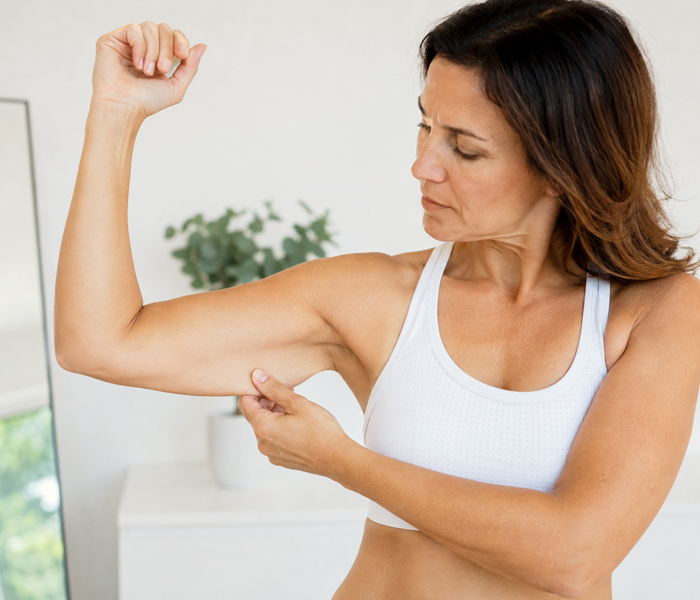
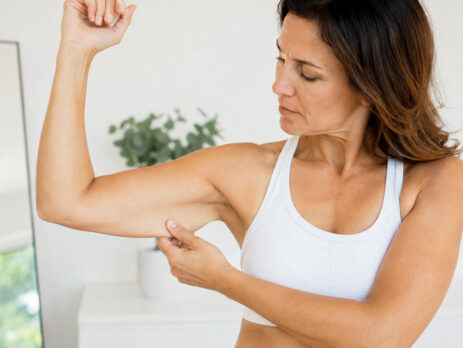
Losing weight can be a significant change for health, mobility, and a person’s self-perception. However, especially for individuals who lose a large amount of weight or lose it rapidly, the new body appearance may be accompanied by an unexpected problem: arm sagging. Despite the reduction in weight, loose skin extending downwards on the underside of the upper arm can create what some people describe as “bat wings”.
So, why do arms sag after weight loss? The primary reason is not solely the reduction of fat tissue. The skin’s expansion over years, the properties of collagen and elastin structure, age, the amount of weight lost, the speed of weight loss, genetic factors, and residual skin laxity all play a combined role. When fat tissue shrinks, the skin that previously enveloped this volume may not always shrink at the same rate.
Especially after a significant amount of weight loss, the skin in the upper arm area may not be able to fully recover on its own. In such cases, while muscle development through exercise can improve the overall shape of the arm, it does not truly eliminate excess skin. Depending on the degree of sagging, different approaches can be considered, and in cases of significant excess skin, arm aesthetics and arm lift options may come into question.
At Op. Dr. Şükrü İşler Aesthetic Clinic, the cause of sagging in the arm area, skin quality, amount of fat, history of weight loss, and the patient’s expectations are all evaluated together. The initial examination or consultation is free of charge. This allows you to have your arm structure personally assessed before deciding on a surgical or different approach.
What is the Main Cause of Arm Sagging After Weight Loss?
The shape of the arms consists of skin, subcutaneous fat tissue, connective tissues, and muscles. When weight is gained, the volume of fat cells increases, and the surrounding skin expands over time. When weight is lost, the volume of fat tissue decreases, but the skin cannot always fully return to its original size.
It is possible to compare the skin’s ability to retract to the elasticity of a rubber band. Healthy and elastic skin can recover after stretching to a certain extent. However, if the skin has been severely stretched for a long time, if age has advanced, or if the elastic properties of the connective tissue have weakened, its retraction capacity may be limited.
For this reason, even if two individuals lose the same amount of weight, one may have quite firm-looking arms while the other may experience significant skin sagging.
Does Rapid Weight Loss Cause More Arm Sagging?
After rapid weight loss, it can be difficult for the skin to adapt to the new body volume. However, it is not correct to attribute arm sagging solely to the speed of weight loss. The total amount of weight lost, the person’s initial weight, the duration of obesity, age, genetic structure, and skin quality are also extremely important.
Especially after bariatric surgery or significant weight loss, excess skin may be observed in different areas of the body. The abdomen, chest, back, thighs, and arms are among the areas where these changes can become prominent. Therefore, if the problem is limited to the arms, a local evaluation is performed, whereas if sagging occurs in multiple areas, a more comprehensive body aesthetics plan may be required.
Why Does a “Bat Wing” Appearance Form Under the Arms After Weight Loss?
The skin on the upper arm, especially in the inner and back-lower sections, can sag downwards due to the effect of gravity. When the arms are opened to the side, the excess skin becomes more prominent. This appearance is commonly referred to as “bat arm” or “bat wing” among the public.
The severity of the appearance varies from person to person. While some individuals may only have mild laxity, others may develop significant excess skin extending towards the elbow. In cases of advanced weight loss, the laxity can also continue towards the armpit and the side wall of the chest.
Therefore, a general description such as “my arm is sagging” is not sufficient for choosing a treatment. It is necessary to examine where the sagging begins, how far it extends, and how much fat is present under the skin.
Why Doesn’t Skin Self-Correct After Weight Loss?
Among the structures that provide the skin’s elasticity and resilience are collagen and elastin fibers. During weight gain, the skin can expand for a long time. Especially if this expansion has continued for years, after weight loss, the skin may not fully return to its previous dimensions.
The main factors that can affect skin recovery are:
- The total amount of weight lost,
- How long the weight remained high,
- The person’s age,
- Genetic skin structure,
- Sun exposure,
- Smoking,
- Nutritional status,
- Rate of weight loss,
- The amount of remaining fat tissue,
- Pregnancy and hormonal changes,
- The person’s general health status.
Therefore, there is no single cause for arm sagging. All these variables should be considered together during evaluation.
Does Age Affect Arm Sagging?
Yes. As age progresses, the skin’s elastic structure can change, and the tissues’ recovery capacity may decrease. For this reason, skin laxity may be more pronounced in individuals who lose a significant amount of weight at older ages.
However, being young does not mean that arm sagging will definitely not occur. Losing a very high amount of weight or having the skin expanded for many years can also cause significant sagging in young individuals.
How Much Weight Loss Causes Arms to Sag?
There is no definitive kilogram limit at which arm sagging will occur. There is no scientific threshold, valid for everyone, like ‘if 20 kilos are lost, it sags; if 10 kilos are lost, it doesn’t sag’.
An individual’s starting weight, body fat distribution, skin elasticity, and weight loss process are all different. For example, a person who loses 20 kilograms may not experience significant sagging, while another person might develop looseness with less weight loss.
Especially with very high amounts of weight loss, the likelihood of excess skin may increase. It is also reported in academic literature that upper arm contour deformity and excess skin after massive weight loss are among the important topics of body contouring surgery.
Can Exercise Tighten Sagging Arms?
This question is one of the most frequently researched topics by individuals who experience arm sagging after weight loss. Exercise is extremely valuable, but the effect of exercise and the removal of excess skin are different matters.
Resistance exercises can develop triceps, biceps, and shoulder muscles. Increased muscle volume can contribute to the arm looking more athletic and sculpted. However, exercise does not physically eliminate truly excess skin tissue.
In individuals with mild skin laxity, muscle development and natural skin recovery over time can improve the appearance to a satisfactory extent. However, if there is a significant amount of excess skin sagging visibly downward when the arms are extended sideways, expecting it to be completely eliminated by exercise alone may not be realistic.
Furthermore, a decrease in muscle mass may also occur after significant weight loss. In this situation, it is important to consider muscle loss along with the aesthetic evaluation. On this topic, you can also review the content titled how is body aesthetics planned after muscle loss?
Arm Sagging: Is it Fat or Skin? How to Tell?
The reason for arm thickness is not always the same. In some people, the main problem is excess fat. In others, despite having a small amount of fat, there is significant skin laxity. In a third group, both excess fat and skin sagging may be present together.
This distinction forms the basis of the treatment plan.
- Fat-dominant arm: Skin elasticity is relatively good, but there is significant fat tissue under the skin.
- Skin-dominant arm: The arm may be thin, but the skin is sagging downwards.
- Arm with both excess fat and skin: There is both volume and laxity.
Treating these three conditions with the same procedure may not be appropriate. During a plastic surgery examination, a more personalized plan is created by evaluating skin elasticity, skin amount, fat layer, and the distribution of sagging.
Does Liposuction Correct Sagging Arms?
Liposuction is primarily a body contouring method aimed at reducing localized fat tissue. It is not a procedure that removes excess skin by cutting it.
Therefore, if skin elasticity is good and the main problem is excess fat, liposuction can be considered for suitable patients. However, if there is severely sagging and inelastic skin, merely reducing fat may not provide the expected tightening. In some patients, it is even possible for the excess skin to become more prominent.
This distinction is one of the most fundamental differences between liposuction and lift surgeries. In connection with this topic, you can also review the guide on whether fats reappear after liposuction.
What is Arm Lift Surgery?
Arm lift surgery, or medically known as brachioplasty, is a plastic surgery procedure that aims to create a smoother arm contour by reducing excess and sagging skin tissue in the upper arm.
The scope of the procedure may vary according to the individual’s anatomy. In some patients, excess skin may be present only in a small area near the armpit, while in individuals who have experienced massive weight loss, the excess may extend from the armpit towards the elbow. Accordingly, the surgical technique used and the length of the resulting scar may also vary.
The brachioplasty assessment on NCBI Bookshelf also states that the procedure can be used for excess skin and subcutaneous tissue in the upper arm resulting particularly from massive weight loss, aging, or a combination of these factors: NCBI – Brachioplasty.
When to Consider Arm Lift for Arm Sagging After Weight Loss?
Arm lift is not necessary for every minor looseness. It is generally considered for individuals with significant and persistent skin excess.
The following conditions may make a plastic surgery evaluation meaningful:
- Significant excess skin under the arms after weight loss,
- Sagging becoming more pronounced when arms are lifted sideways,
- Excess skin making clothing difficult to wear,
- Excess skin persisting despite exercising,
- Friction or discomfort occurring in the armpit,
- The individual’s weight becoming stable,
- Arm contour appearing disproportionate to the rest of the body.
In a systematic review published in 2025, it was shown that there are different surgical methods for arm contouring in patients with massive weight loss and that the approach can vary according to skin-fat distribution: Plastic and Reconstructive Surgery Global Open – Arm Contouring in Patients With Massive Weight Loss.
Can Arm Lift Be Performed While Still Losing Weight?
Weight stability is an important consideration in the timing of body contouring operations. If a person continues to lose a significant amount of weight, tissues may change again after the operation, and new skin laxity may emerge.
Therefore, approaching the target weight and maintaining stable weight for a certain period is one of the important parts of planning for most patients. However, the right timing is not the same for everyone. In individuals who have undergone bariatric surgery, additional factors such as nutritional status, protein levels, and vitamin and mineral deficiencies may also need to be evaluated.
How Long Do Arms Recover After Weight Loss?
Immediately evaluating the skin’s final appearance can be misleading. After weight loss, it can take time for tissues to adapt to the new volume. Especially in cases of mild to moderate laxity, a certain degree of recovery may be observed.
However, it cannot be guaranteed that severe skin excess will completely disappear over months. The extent of sagging and skin elasticity are crucial factors here.
Therefore, if a person is still at the beginning of their weight loss journey, it may be more meaningful to make the final arm aesthetics plan after weight has become stable.
Can Arm Lift and Liposuction Be Performed Together?
Since both skin and fat tissue excess are found in some patients, arm lift and liposuction techniques can be considered parts of the same treatment plan. However, it cannot be said that this is necessary or appropriate for every patient.
A 2018 study examined standard brachioplasty and liposuction-assisted brachioplasty techniques for arm contouring after massive weight loss. The study shows that different anatomical conditions may require different techniques: PubMed – Arm Contouring After Massive Weight Loss.
Therefore, instead of assuming that a method seen on the internet is directly suitable for an individual, the skin and fat tissue should be evaluated together through examination.
Does Arm Lift Leave a Scar?
In all procedures where excess skin is surgically removed, scar formation is expected. One of the most important considerations for arm lift surgery is the balance between a tighter arm appearance and the acceptability of the resulting scar.
The length and location of the scar depend on the extent of the procedure. While the incision can be kept close to the armpit for very limited skin excess, the scar may be longer along the upper arm in cases of advanced sagging.
Scars may be more prominent in the early period and can mature over time, changing their appearance. However, a promise like “arm lift is performed completely without a scar” is not realistic.
Can Arm Sagging Be Corrected Without Surgery?
Mild skin laxity must be distinguished from advanced skin excess. Non-surgical methods can be considered in some individuals to support skin quality and a firmer appearance. However, non-surgical methods should not be expected to eliminate actual skin excess that sags downwards in folds to the same extent as surgical skin removal.
Therefore, when encountering claims such as “non-surgical arm lift,” “eliminating sagging in a single session,” or similar statements on the internet, the degree of sagging should be taken into consideration.
Individuals with mild laxity can get general information about non-surgical aesthetic procedures; however, which method is applicable should be decided based on the clinical evaluation.
Is Arm Lift Permanent After Weight Loss?
The skin tissue removed during an arm lift does not regenerate. However, the human body continues to age and change. Advancing age, gravity, changes in skin quality, and especially regaining and losing significant weight can lead to changes in the arm contour over time.
Therefore, maintaining a stable weight provides a significant advantage in preserving the operation’s result long-term. Healthy lifestyle habits, avoiding smoking, balanced nutrition, and avoiding large weight fluctuations can contribute to maintaining overall tissue quality.
If Weight is Regained and Then Lost Again, Will the Arms Sag Again?
Significantly gaining and then losing weight again can cause the skin to expand and contract repeatedly. This situation can lead to changes in arm contour even in individuals who have previously undergone an arm lift.
Therefore, in aesthetic body contouring operations, not only the current weight but also future weight plans are evaluated.
Does the Way Weight is Lost Affect Arm Sagging?
Weight can be lost through dietary and exercise changes, bariatric surgery, or certain medical treatments used under a physician’s supervision. From the perspective of arm sagging, the main issue is how much the skin can retract after a reduction in fat tissue volume.
Following significant weight loss achieved with GLP-1 receptor agonists in recent years, skin laxity and body contour changes have also started to be discussed more frequently in aesthetic medicine literature. For a scientific review addressing this topic, the publication The Role of GLP-1 Agonists in Esthetic Medicine can be examined.
However, regardless of the method used for weight loss, the degree of sagging is unique to each individual.
After Massive Weight Loss, Do Only Arms Sag?
No. When a significant amount of weight is lost, excess skin can be observed in multiple areas of the body. The abdomen, breasts, back, waist, buttocks, thighs, and arms are among the frequently evaluated areas.
In this case, treatment may need to be planned not just for a single area, but based on overall body proportions. For this reason, body contouring procedures after massive weight loss are considered a comprehensive field in scientific literature. The NIH/PubMed Central review on this topic can be accessed via Body Contouring Following Massive Weight Loss.
Information on abdominal, leg, and other body contouring procedures, in addition to arm lift, can also be found on Şükrü İşler Aesthetic Clinic’s body aesthetics page.
How is the Right Time for Arm Aesthetics Determined?
The right time is not determined by the calendar alone. Weight stability, general health status, smoking habits, medications used, nutritional status, previous surgeries, and the individual’s daily life plan are evaluated together.
It is particularly important to thoroughly assess one’s health status before planned plastic surgery. For more comprehensive information about the pre-operative process, you can review the guide on preparations required before plastic surgery.
What is the Recovery Process Like After Arm Lift?
The recovery period varies depending on the scope of the procedure performed and individual characteristics. After surgery, swelling, tightness, tenderness, and bruising may be observed. The surgeon may recommend the use of a special garment or corset.
It is important not to overexert the arms, to protect the incision areas, and not to miss follow-up appointments. The timing for returning to work and starting exercise is personalized according to the scope of the procedure performed.
Especially for heavy lifting or exercises that strain the upper body, the surgeon’s approval should be awaited.
Are There Risks Associated with Arm Lift Surgery?
As with any surgical operation, arm lift surgery also has potential risks. These may include bleeding, infection, wound healing problems, prominent scarring, asymmetry, fluid accumulation, temporary or permanent sensory changes, and the need for revision.
A systematic review from 2025 evaluated the outcomes and complications of different brachioplasty techniques, highlighting the importance of patient selection and surgical technique: Arm Contouring in Patients With Massive Weight Loss: A Systematic Review.
The individual level of risks can only be determined after examination and medical evaluation.
What Is Looked For During the Initial Examination for Arm Sagging?
During the initial assessment, a decision is not made solely by looking at a photograph of the arm. The plastic surgeon typically evaluates the following points:
- Amount and duration of weight loss,
- Whether the current weight is stable,
- Degree of excess skin on the upper arm,
- Skin elasticity,
- Amount of remaining fat tissue,
- Whether the sagging extends to the armpit or side of the chest,
- Muscle structure,
- Previous surgeries,
- Smoking habit,
- Chronic diseases and medications used,
- The patient’s expectations and the amount of scarring they can accept.
Thanks to this analysis, it can be assessed whether only liposuction, arm lift, or a different body contouring approach would be more suitable.
First Examination or Consultation is Free at Op. Dr. Şükrü İşler Aesthetic Clinic
The solution for arm sagging that occurs after weight loss is not the same for everyone. While one person’s main problem might be fat tissue, another might have significant excess skin. Therefore, it is important to have a personal assessment instead of making decisions based on photos seen online or the experiences of other patients.
The first examination or consultation at Op. Dr. Şükrü İşler Aesthetic Clinic is free. During the examination, the skin and fat tissue in the arm area can be evaluated to determine the degree of sagging, and options suitable for the patient’s expectations can be discussed.
Especially if you have experienced significant weight loss, not only the arms but also other areas of the body can be evaluated as a whole. This way, a more balanced body contour can be aimed for instead of correcting just one area.
Why Do Arms Sag After Weight Loss? Short Answer
The main reason for arm sagging after weight loss is that despite the shrinking of fat tissue, the previously stretched skin cannot retract to the same extent. The amount of excess weight, rate of weight loss, age, genetic characteristics, skin elasticity, and how long a person remained overweight can affect the degree of sagging.
Slight looseness might improve over time and with muscle development. However, if there is a significant amount of excess skin, exercise or fat-reduction procedures alone may not eliminate the actual skin redundancy. In such cases, arm lift surgery may be considered for plastic surgery evaluation.
Frequently Asked Questions
Is arm sagging after weight loss normal?
Yes. It is possible to see skin laxity in the upper arms, especially after significant weight loss. How well the skin adapts to the new body volume varies from person to person.
Do arms tighten up on their own after weight loss?
In cases of mild skin laxity, there might be some degree of improvement. However, if there is a significant amount of excess skin, it might not fully resolve on its own.
Can exercise eliminate the bat wing appearance?
Exercise can improve the appearance by developing arm muscles, but it does not eliminate actual excess skin tissue. Whether the sagging is mild or advanced is one of the important factors determining the outcome.
Does weight training tighten arm skin?
Weight exercises can increase muscle volume and support arm contour. However, building muscle is not the same as removing excess skin.
Is arm lift surgery necessary after weight loss?
No. Not every arm sag requires surgery. Slight looseness, excess fat, and advanced skin sagging should be distinguished from each other. The appropriate method is determined during the examination.
Is excess skin removed in arm lift surgery?
Yes. One of the main goals of brachioplasty is the surgical reduction of excess skin tissue in the upper arm and the reshaping of the arm contour.
Does liposuction fix arm sagging?
Liposuction reduces fat tissue but does not remove excess skin. It can be considered for individuals with good skin elasticity and whose primary concern is excess fat. It may not be sufficient alone for advanced skin sagging.
Does arm lift surgery leave scars?
Yes. Incision scars form in procedures where excess skin is surgically removed. The length and location of the scar may vary depending on the amount of excess skin and the surgical technique used.
When is an arm lift performed after significant weight loss?
Generally, it is important that weight loss is largely complete and weight has stabilized. However, the ideal timing should be determined by a plastic surgeon based on the individual’s health status and weight loss history.
Does arm sagging occur after gastric reduction surgery?
It can. Significant weight loss after bariatric surgery can lead to excess skin in the upper arms, abdomen, breasts, thighs, and other areas.
Can arms sag after losing weight with GLP-1 medications?
Regardless of the method used to achieve significant weight loss, skin laxity due to volume reduction can occur. The degree of sagging depends on the total weight loss and the individual’s skin characteristics.
Can arm lift and liposuction be performed simultaneously?
In suitable patients, two methods can be considered in the same treatment plan. However, whether this is necessary is determined by skin quality, fat tissue, and general health condition.
Will there be sagging again after arm aesthetics?
The removed skin does not return, however, aging, gravity, and significant weight changes can cause changes in arm contour over time. Maintaining a stable weight contributes to preserving the result.
Which doctor should be consulted for arm sagging after weight loss?
For the evaluation of significant skin excess from an aesthetic surgery perspective, a plastic, reconstructive, and aesthetic surgery specialist can be consulted.
How can one determine if arm sagging is due to fat or skin?
During the examination, skin thickness, elasticity, the amount of subcutaneous fat, and the distribution of the sagging tissue are evaluated. The same external appearance can result from different anatomical reasons in different individuals.
Is the first consultation for arm aesthetics chargeable?
The first examination or consultation at Op. Dr. Şükrü İşler Aesthetic Clinic is free of charge. The degree of arm sagging, skin quality, weight changes, and suitable options can be evaluated during this consultation.
Post-Weight Loss Arm Sagging Should Be Evaluated Individually
Arm sagging after weight loss does not mean that the weight loss was unsuccessful. Most of the time, the problem is not so much the amount of fat, but rather the inability of the previously stretched skin to fully adapt to the new body volume.
If the degree of sagging is mild, time, exercise, and weight stability can improve the appearance. In cases of significant skin excess, surgical methods such as arm lift can be considered. Liposuction, on the other hand, focuses on a different problem, namely excess fat, so it is not a solution for every sagging case.
The most important point is that the solution is determined according to the individual’s anatomy. It is not possible to determine the correct method without jointly evaluating the skin quality of the arm, the amount of fat, the history of weight loss, age, general health status, and expectations.
At Op. Dr. Şükrü İşler Aesthetic Clinic, the initial examination or first consultation is free of charge. A personal examination can be planned to ascertain the degree of arm sagging that occurs after weight loss and to evaluate the aesthetic options that may be suitable for you.
This content has been prepared for general informational purposes. It does not substitute for diagnosis, treatment, or personal medical advice. Expert physician evaluation is required before making any decision regarding surgical or medical procedures.