
Is Tummy Tuck Performed on Men? | Male Abdominoplasty
Is Tummy Tuck Performed on Men?
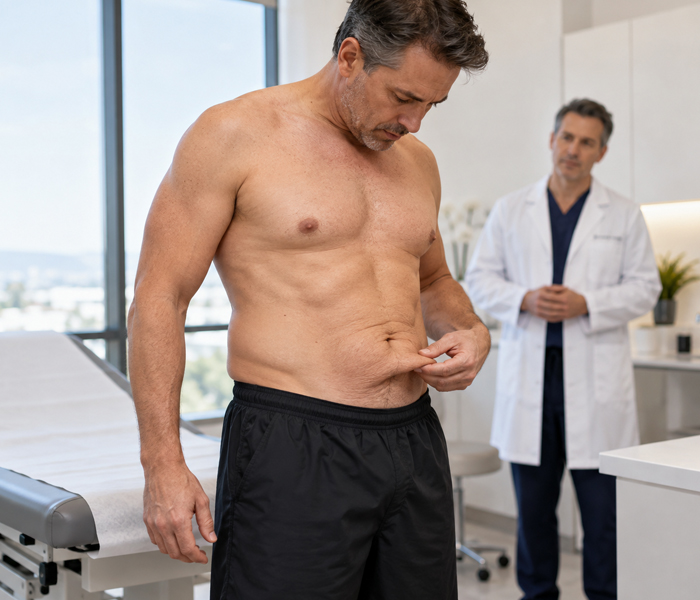
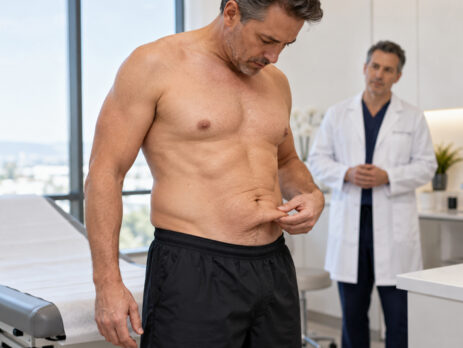
Yes. Tummy tuck surgery is not an aesthetic surgical procedure performed only on women. In men, skin laxity and sagging can also occur in the abdominal area as a result of weight loss, aging, genetic characteristics, or weight changes over many years. Especially after significant weight loss, excess skin remaining in the abdominal area may not tighten on its own, despite regular exercise and approaching ideal weight. In such cases, tummy tuck surgery, or abdominoplasty, is one of the surgical options that can be considered.
The important point in planning a tummy tuck for men is that the procedure is performed according to male body anatomy and the individual’s targeted body appearance. The goal in men is not always just to reduce the size of the abdominal area. Making the abdominal wall appear smoother, reducing excess skin in the lower abdomen, naturally preserving the transition between the torso and waist, and creating a more masculine body contour whenever possible, can be parts of the planning.
In scientific literature, male abdominoplasty is considered a distinct topic. A recent review published on PubMed, titled The Male Abdominoplasty, emphasizes that body contouring surgery in men has unique characteristics in terms of anatomical structure, patient selection, surgical technique, and postoperative outcomes.
Therefore, while the short answer to the question “Is tummy tuck performed on men?” is yes, the truly important question is whether the individual is a suitable candidate for a tummy tuck.
What is Tummy Tuck Surgery in Men?
Tummy tuck, or abdominoplasty as it is medically known, is a surgical procedure that aims to remove excess and lax skin from the abdominal area, tighten the abdominal wall laxity in suitable patients, and reshape the abdominal contour.
As stated on Op. Dr. Şükrü İşler Aesthetic Clinic’s tummy tuck surgery page, abdominoplasty does not solely mean fat removal. Therefore, liposuction and tummy tuck should not be considered as alternatives to each other.
While liposuction is primarily performed to reduce subcutaneous fat tissue in specific areas and to sculpt body contours, tummy tuck is planned for a different problem in cases where there is significant skin excess and laxity.
While liposuction alone may be sufficient for some men, others may require a tummy tuck due to skin sagging. In some patients, both methods can be planned together based on the surgeon’s assessment.
Those who wish to examine this distinction in more detail can also review the content Tummy Tuck or Liposuction?.
Why Does Abdominal Sagging Occur in Men?
The appearance of the abdominal region in men is not solely determined by the amount of fat. Skin elasticity, an individual’s past weight, amount of weight lost, age, genetic characteristics, the condition of muscle and connective tissues, and the distribution of fat in the body should all be evaluated together.
One of the most important causes of sagging in the abdominal area is the excess skin tissue that remains after significant weight loss. When an individual remains overweight for a long time, the abdominal skin can expand. If a substantial amount of weight is then lost, the skin cannot always fully adapt to the new body volume.
Consequently, even if an individual is satisfied with their weight, folds or loose skin may be observed under the abdomen.
As age progresses, changes in the skin’s elastic properties can also make laxity in the abdominal region more prominent. Weight gain and loss cycles can further exacerbate this appearance.
Therefore, even in a man who exercises and keeps his weight under control, excess skin may be present.
Is Tummy Tuck Performed on Men Who Have Lost a Lot of Weight?
Yes. Men who have experienced significant weight loss, in particular, are one of the important patient groups for whom body contouring surgery is considered.
In individuals who have lost a significant amount of weight after obesity treatment, bariatric surgery, or lifestyle changes, excess skin can occur not only in the abdomen but also around the waist, flanks, chest, and back.
In scientific literature, male body contouring operations after massive weight loss have been examined in detail. The study titled Enhancing Masculine Features After Massive Weight Loss, published in the PubMed Central database of the U.S. National Library of Medicine, addresses the reshaping of body contour in male patients after significant weight loss.
However, not every patient who has lost a significant amount of weight is subjected to the same abdominoplasty technique. Whether the skin excess is only in the lower abdomen, if it extends to the upper abdomen and flanks, whether there are old surgical scars, and whether the person’s current weight is stable can all alter the surgical plan.
What is the Difference Between Abdominoplasty and Liposuction in Men?
The difference between these two procedures is particularly important in male patients.
If there is significant skin excess and sagging when you grasp the abdominal skin with your hand, reducing only fat tissue will not eliminate the skin. On the contrary, in some individuals with insufficient skin elasticity, reducing volume can make existing laxity appear more pronounced.
Liposuction primarily targets localized fat tissue beneath the skin.
Abdominoplasty, on the other hand, is a more comprehensive operation that addresses excess skin, abdominal contour, and, if necessary, the structure of the abdominal wall.
Therefore, it is more accurate to consider the following:
- If there is significant fat excess but good skin quality, liposuction may be considered.
- If there is significant skin excess and sagging, abdominoplasty may be considered.
- If there is both skin excess and localized fat, a combined approach may be considered.
- If a significant portion of the abdominal size is due to intra-abdominal fat, abdominoplasty or liposuction will not eliminate this fat tissue.
The last point is particularly important in male patients.
Is Visceral Fat (Internal Organ Fat) the Same as Subcutaneous Fat in Men?
No. One of the reasons for a large appearance of the abdominal region in men can be visceral, i.e., intra-abdominal fat.
Abdominoplasty does not eliminate visceral fat tissue located around the organs within the abdominal cavity. Liposuction is also not applied to this area.
Therefore, even if the abdominal skin is taut, if the abdomen prominently protrudes forward and the main problem is intra-abdominal fat, the expected change from aesthetic surgery may be limited.
In scientific publications examining male abdominoplasty, it is specifically stated that intra-abdominal fat distribution in men is an important factor in surgical planning. Furthermore, in the study The Male Abdominoplasty, which is an older but fundamental publication in terms of male anatomy, attention is drawn to the fact that submucosal/intra-abdominal fat accumulation in men can play a significant role in abdominal girth.
Therefore, an automatic approach before surgery like “The abdomen looks big, therefore a tummy tuck is needed” is not correct.
Is Male Abdominoplasty Planned Differently from Female Abdominoplasty?
Generally, yes.
The aesthetic goals for male and female body contours are not entirely the same. For a male patient, it is important to preserve the abdomen-waist-torso transition in a manner appropriate to the individual’s existing anatomy.
While some male patients desire as flat an abdomen as possible, others aim for a more athletic appearance. For some, the main complaint is merely excess skin that folds over their trousers after weight loss.
Therefore, the surgical plan should be made according to the patient’s expectations.
The aim of aesthetic surgery is not to create a uniform body, but to provide a more balanced contour, taking into account the existing anatomy.
Does Male Abdominoplasty Reveal Abdominal Muscles?
Abdominoplasty is not directly a “six-pack creation surgery”.
As a result of correcting excess skin and some superficial tissues in the abdominal area, existing body lines may become more prominent. However, the visibility of abdominal muscles depends on muscle development, subcutaneous fat percentage, genetic makeup, and the individual’s overall body composition.
Surgery does not replace exercise and muscle development.
Therefore, it is important to realistically determine expectations from the surgery.
Can a Tummy Tuck Slim the Waist in Men?
In some patients, the waist and abdomen transition may appear smoother and slimmer after a tummy tuck. However, the surgery is not directly a waist-slimming operation.
The extent to which the result will change depends on the person’s bone structure, fat distribution, excess skin, and the surgical technique applied.
For more detailed information on this topic, you can refer to the content titled Can a Tummy Tuck Slim the Waist?.
Who Might Be Suitable for a Tummy Tuck in Men?
The decision for a tummy tuck is not made solely based on a photograph or the person’s weight. An examination is required.
Generally, individuals who may be considered include:
- Men with excess skin in the abdominal area after significant weight loss,
- Those with significant sagging in the lower abdominal area,
- Individuals whose weight is relatively stable,
- Those who continue to have excess skin despite exercise and weight control,
- Individuals with realistic expectations about what the surgery can achieve,
- Patients whose general health condition is suitable for surgery.
The American Society of Plastic Surgeons also highlights factors such as good general health, stable weight, realistic expectations, and non-smoking status in tummy tuck candidate evaluations: American Society of Plastic Surgeons – Tummy Tuck Candidates.
The final decision on suitability can only be made after a medical examination.
Is Mini Tummy Tuck Performed in Men?
Mini tummy tuck can be considered in suitable patients.
Mini abdominoplasty is generally a method considered for individuals where excess skin is mostly limited to the area below the navel. However, it should not be thought of as “better for everyone because it’s a smaller surgery.”
If skin laxity extends to the upper abdomen, mini abdominoplasty may not be sufficient.
The method to be applied is determined during the examination by evaluating the location and amount of excess skin.
Does Abdominoplasty Leave Scars in Men?
Yes. Since abdominoplasty is a surgical procedure that requires an incision, scars will form.
In surgical planning, the aim may be to position the scar at a level where it can be hidden as much as possible under underwear or swimwear. However, the length and location of the scar depend on the amount of skin to be removed and the technique applied.
As the amount of excess skin increases, the required incision length may also change.
How the surgical scar will look over time can be influenced by the individual’s wound healing characteristics, genetic predisposition, smoking habits, post-operative care process, and various individual factors.
Therefore, scars seen on other patients online are not a direct indication of the scar that will form after one’s own surgery.
Does the Appearance of the Navel Change?
In full abdominoplasty surgeries, a surgical procedure around the navel may be necessary.
What is important here is to plan the natural appearance of the navel to be in harmony with the individual’s abdominal structure.
In more limited methods like mini abdominoplasty, the approach to the navel may vary depending on the technique applied.
How Much Skin is Removed After Abdominoplasty in Men?
There is no standard answer in terms of kilograms or centimeters for this.
The goal is not to remove the maximum possible amount of skin. The goal is to reduce the necessary excess skin within safe limits, without creating unnecessary tension, and by appropriately shaping the abdominal contour.
The amount of skin that can be removed can vary significantly from patient to patient.
Therefore, it is not correct to evaluate the success of the operation as “how many kilograms of skin were removed?”
Can Abdominal Muscle Separation Occur in Men Too?
Yes. The separation between the rectus muscles is not a condition that only occurs in women after pregnancy.
Weight changes and various anatomical factors can also affect the structure of the abdominal wall in men.
However, muscle repair is not mandatory for every tummy tuck patient. During the examination, the condition of the abdominal wall is evaluated to decide whether it is necessary.
Scientific reviews examining treatment options for rectus diastasis state that surgical and non-surgical approaches should be evaluated according to patient characteristics. One of the academic sources on this topic is the review titled Treatment Options for Abdominal Rectus Diastasis.
Does Tummy Tuck Surgery Cause Weight Loss in Men?
A tummy tuck is not a weight loss operation.
While a certain amount of skin and tissue is removed during the operation, leading to a change on the scale, the primary goal of the surgery is not to cause weight loss but to correct body contour.
It is not correct for an overweight person to consider tummy tuck surgery as a weight loss method.
For many patients, the ideal approach is to first achieve sustainable weight control, and then evaluate the remaining skin excess.
Should a Tummy Tuck Be Done Before or After Weight Loss?
If a person plans to lose a significant amount of weight in the near future, this situation may affect the surgical plan.
Significant weight loss after surgery can lead to renewed skin laxity. Similarly, significant weight gain after surgery can also alter the achieved body contour.
Therefore, approaching the target weight and maintaining a stable weight for a certain period can, in most cases, help in planning more predictable outcomes.
Especially if a tummy tuck is being considered after bariatric surgery, the course of weight loss, nutritional status, and overall health should be further evaluated.
When Can Men Exercise After a Tummy Tuck?
Heavy exercise should not be resumed immediately after surgery.
In the early stages of recovery, short and controlled walks can be important for circulation, but exercises that strain the abdominal muscles, weight training, and intense sports activities require the surgeon’s permission.
The recovery period may vary depending on the scope of the procedure, the individual’s health status, and whether different procedures were performed in the same session.
Therefore, instead of accepting standard weeks mentioned online as a definitive timeline, a personalized follow-up program should be adhered to.
Will the Abdomen Sag Again After a Tummy Tuck?
The skin removed during surgery does not grow back, but the body continues to change throughout life.
Significant weight fluctuations, aging, and changes in skin elasticity can affect the appearance of the abdomen over the years.
One of the most important factors that can help maintain the result for a long time is keeping the weight as stable as possible.
Is Tummy Tuck Risky for Men?
A tummy tuck is a serious surgical operation and is not without risk.
The American Society of Plastic Surgeons states that complications such as bleeding, infection, seroma (fluid accumulation), wound healing problems, sensory changes, scarring issues, asymmetry, and deep vein thrombosis are among the risks associated with tummy tuck surgery: Tummy Tuck Risks and Safety – American Society of Plastic Surgeons.
It is important to evaluate personal risk factors before surgery, especially due to the risk of venous thromboembolism.
Academic reviews on abdominoplasty safety also report that the risk of thromboembolism can vary according to patient and operation characteristics. For a detailed academic source, the study A Primer on Abdominoplasty Safety can be examined.
The purpose of this information is not to frighten the patient, but to remind them that aesthetic surgery is a medical procedure.
Does Smoking Affect Tummy Tuck Surgery?
Smoking and nicotine use are important considerations for surgical planning.
Since nicotine can negatively affect tissue blood supply and wound healing, the use of cigarettes, e-cigarettes, and other nicotine products must be reported to the physician during pre-operative assessment.
If smoking cessation is required, the duration for which it should be stopped must be determined by the physician based on the individual and the operation plan.
Concealing information about use is not advisable from a safety perspective.
Can Tummy Tuck and Gynecomastia be Performed Simultaneously in Men?
After significant weight loss, some men may have both excess skin in the abdominal area and sagging or a gynecomastia-like appearance in the chest area.
Theoretically, it may be possible to combine various body contouring procedures. However, the scope of operations that can be performed in the same session should be determined based on the patient’s general health, the duration of the surgery, and a safety assessment.
Individuals researching options for the male chest area can also get information about gynecomastia procedures.
There is no general rule that every procedure must be performed in the same session.
When Are Results Seen After Tummy Tuck Surgery in Men?
Although changes in the abdominal contour start to be noticed after the operation, it is normal to have swelling in the initial period.
Therefore, the appearance a few days after the surgery is not the final result.
The reduction of swelling, the adaptation of tissues to their new position, and the maturation of surgical scars require time. The final appearance emerges over a process that varies from person to person.
The speed of healing can be affected by age, general health status, the extent of the operation performed, smoking, and the patient’s compliance with post-operative recommendations.
Does Male Tummy Tuck Look Natural?
A natural appearance is one of the important goals of surgical planning.
In male patients, instead of just creating “as thin a waist as possible,” the individual’s shoulder, chest, waist, hip, and overall torso proportions should be evaluated together.
It is important that the abdominal area does not appear overly taut or inconsistent with the rest of the body.
Therefore, a male tummy tuck plan should be based on the patient’s own anatomy, not on a standard template.
To examine different body contouring applications of Op. Dr. Şükrü İşler Aesthetic Clinic, the Body Aesthetics page can also be visited.
What is Examined During a Consultation Before Male Tummy Tuck?
During the examination, not only the amount of sagging in the abdomen is evaluated.
Skin elasticity, the amount and distribution of subcutaneous fat tissue, the abdominal wall, the navel area, old surgical scars, fat accumulation in the waist and flank regions, the individual’s weight, and general body proportions can be examined together.
Additionally, information such as the person’s existing medical conditions, medications used, previous surgeries, and smoking and nicotine use is important for surgical safety.
What the patient expects is just as important as the physical examination.
While one person’s desired outcome might be a flatter abdomen, another’s main problem could be skin folding over their pants.
The surgical plan for these two patients does not have to be the same.
Is the First Examination or Consultation Free?
The first examination or initial consultation at Op. Dr. Şükrü İşler Aesthetic Clinic is free of charge.
When considering a tummy tuck for men, the most accurate approach is to have the abdominal area evaluated by a specialist physician, rather than making a decision based solely on photographs or general information found online.
During the initial consultation, it can be discussed whether a tummy tuck is necessary, if liposuction would be more suitable, whether the two methods can be evaluated together, and to what extent the person’s expectations align with their current anatomy.
For appointments and detailed information, you can visit the contact page.
Frequently Asked Questions About Tummy Tuck for Men
Can men undergo tummy tuck surgery?
Yes. Tummy tuck can also be performed on men when appropriate patient selection is made. Excess skin remaining after weight loss is one of the important reasons for seeking this procedure.
Does a tummy tuck result in a completely flat abdomen for men?
The result depends on the individual’s excess skin, subcutaneous and intra-abdominal fat amount, abdominal wall, and anatomy. A completely flat abdomen cannot be guaranteed for every patient.
Does a tummy tuck create six-pack abs in men?
No. A tummy tuck does not create abdominal muscles. Muscle visibility depends on many factors, including muscle development and fat percentage.
Is a tummy tuck necessary for men who exercise?
Exercise can develop muscles and help reduce body fat percentage, but it cannot always eliminate excess skin that has lost its elasticity. If there is significant excess skin, a surgical evaluation can be performed.
Can sagging belly in men be fixed with exercise?
If the problem is primarily due to fat, weight management and exercise can be effective. However, significant skin excess may not completely disappear with exercise.
Is abdominoplasty or liposuction better?
It cannot be generally said that one is better than the other. The two methods address different problems. The decision should be made by evaluating excess fat, skin sagging, and skin elasticity.
Can mini abdominoplasty be performed on men?
Yes, but it can only be considered in patients with suitable anatomical characteristics. The distribution of skin excess is decisive in choosing the method.
Will an abdominoplasty scar be noticeable in men?
Since the surgery requires an incision, a scar will remain. The length and location of the scar vary according to the technique to be applied and the amount of skin to be removed.
Does abdominoplasty surgery make you lose weight?
No. Abdominoplasty is not an obesity or weight loss treatment. Its primary purpose is to correct excess skin and problems with abdominal contour.
Can abdominoplasty be performed immediately after losing weight?
Timing should be evaluated based on whether the person’s weight loss is ongoing, their current weight, nutritional status, and overall health characteristics. Generally, stable weight is important for surgical planning.
Can men regain weight after abdominoplasty?
Yes. The surgery does not change metabolism or the weight gain mechanism. Significant weight changes can negatively affect the surgical outcome.
When can one return to work after abdominoplasty?
The time to return to work depends on the scope of the operation and the physical intensity of the work performed. The recovery time for someone with an office job may not be the same as for someone performing heavy physical labor.
Can I exercise after a tummy tuck?
Yes, a gradual return to exercise is possible as recovery completes. However, activities that strain the abdominal muscles, in particular, should not be started early without the surgeon’s approval.
Can tummy tuck and liposuction be performed together in men?
In suitable patients, they can be evaluated together depending on the surgical plan. Whether this is necessary and safe is determined during the examination.
Is visceral fat removed with a tummy tuck?
No. Visceral fat around the abdominal organs is not removed with a tummy tuck or classic liposuction. Therefore, evaluating intra-abdominal fat, especially in men, is important.
Are male tummy tuck surgeries different from those for women?
While the basic surgical principles are similar, planning should be individualized because men’s fat distribution, abdominal anatomy, and desired torso contour can differ.
Is the result permanent after a tummy tuck in men?
The excess skin removed does not grow back, but aging and weight changes continue to affect the body. A stable weight can help preserve the result.
Is tummy tuck surgery risky for men?
Like any surgical procedure, a tummy tuck carries risks of complications. These include bleeding, infection, seroma, wound healing problems, and thromboembolic complications. The individual risk level should be assessed before surgery.
Is there an ideal age for a tummy tuck in men?
Age alone is not the determining factor. General health, weight stability, skin structure, expectations, and surgical risks are evaluated together.
Is the first examination free of charge?
The first examination or consultation at Op. Dr. Şükrü İşler Aesthetic Clinic is free of charge. The suitability of a tummy tuck, liposuction, or a different approach can be discussed after evaluating the individual’s abdominal structure.
Why is Personalized Planning Important for Tummy Tuck in Men?
The success of a tummy tuck surgery in men should not be evaluated solely by the removal of excess skin. The goal should be to create an abdominal contour that is harmonious with the entire body, natural, and consistent with the individual’s expectations.
While one man may only have excess skin in the lower abdomen, another individual might have laxity in a wider area, including around the navel, waist, flanks, and chest. Similarly, while one patient’s abdominal size might be due to subcutaneous fat tissue, in another patient, visceral fat accumulation might be predominant.
Therefore, standard surgery photos seen on the internet or methods applied to another person do not indicate what an individual’s own treatment should be.
The most appropriate approach for a tummy tuck in men is a detailed physical examination and a joint evaluation of personal goals.
Thanks to the free initial examination or consultation at Op. Dr. Şükrü İşler Aesthetic Clinic, you can get detailed information about which method might be suitable for you after evaluating the current structure of your abdominal area.
Before deciding between a tummy tuck, liposuction, or a different body contouring procedure, a professional evaluation based on personal anatomy is important for both forming realistic expectations and ensuring surgical safety.
This content has been prepared for general informational purposes. Whether abdominoplasty is suitable for you, the surgical technique to be applied, and personal risks can only be determined after a doctor’s examination.