

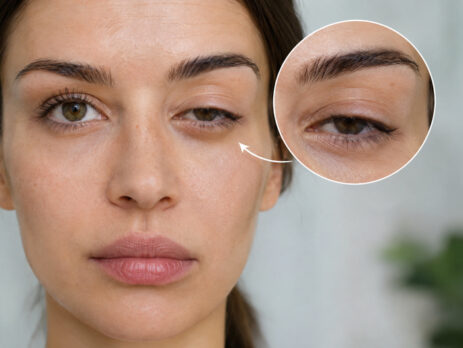
Why Does Eyelid Ptosis Occur After Botox?
What is Eyelid Drooping After Botox?
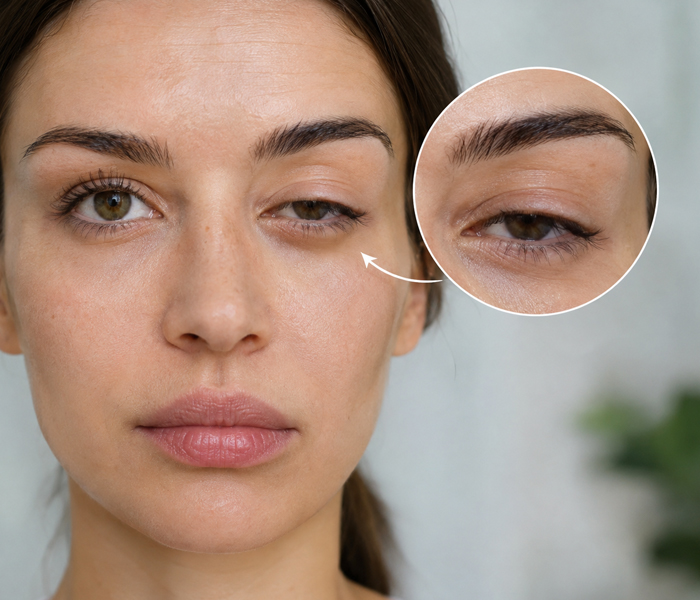
A few days after a Botox application, you might notice one of your eyes appearing more closed than the other. This change could be eyelid ptosis, which develops due to the temporary weakening of the muscle that lifts the upper eyelid. Not all asymmetry means the same thing: Sometimes it’s not the eyelid but the eyebrow that has shifted downwards. Distinguishing between these two conditions determines the correct approach.
Short answer: The spread of botulinum toxin beyond the targeted muscles can temporarily affect the function of the muscle that lifts the upper eyelid. In most cases, improvement occurs spontaneously; however, new-onset drooping must be evaluated by a physician.
Why Does Eyelid Drooping Develop?
Botulinum toxin temporarily reduces the movement signals sent from nerves to muscles. In applications performed to soften wrinkles between the forehead and eyebrows, the aim is only to affect selected facial mimic muscles. If the toxin unintentionally reaches the levator palpebrae superioris muscle, which lifts the upper eyelid, the eyelid may drop below its normal level.
Factors that can influence this possibility include the injection point and depth, the dose used, muscle placement, individual anatomical differences, and pre-existing eyelid ptosis. While choosing an experienced practitioner helps reduce the risk, no procedure can guarantee zero complications. You can find details regarding pre-procedure evaluation on our clinic’s Botox application page.
An anatomical review published in the Journal of Cosmetic Dermatology comprehensively explains the spread of the toxin to adjacent structures and possible risk factors.
Are Eyebrow Ptosis and Eyelid Ptosis the Same?
No. In true eyelid ptosis, the upper eyelid margin lowers and can cover a portion of the pupil. In eyebrow ptosis, however, the position of the eyebrow changes; the skin under the eyebrow accumulates on the eyelid, creating a heavier look. Excessive relaxation of the forehead muscles can contribute to the latter condition.
The difference can be felt more clearly, especially in individuals who previously had eyebrow asymmetry or excess skin on the upper eyelid. For this reason, comparison with photographs and examination of facial muscles are important. You can also review our pages on eyebrow lift and eyelid aesthetics; however, temporary drooping due to Botox should not be considered a condition directly requiring surgery.
Can Swelling in the First Days Be Confused with Ptosis?
Yes. Temporary edema or bruising that occurs in the application area can create a feeling of heaviness, especially around the eyes. In contrast, in true ptosis, the position of the upper eyelid margin changes. The appearance varying throughout the day, pre-existing eyelid asymmetry, or a lowered eyebrow can make assessment difficult. Therefore, it is not correct to make a definitive decision about the cause by simply looking at the reflection in the mirror. During examination, eyelid height, eyebrow movements, and the function of the muscles that open the eye can be examined together.
When Do Symptoms Begin, How Long Do They Last?
Eyelid drooping due to botulinum toxin usually becomes noticeable 3–14 days after the procedure. It can be more severe on one side or appear in both eyes. A feeling of heaviness in the eyelid, decreased eye opening, and asymmetry in photographs are frequently observed findings. Due to the gradual onset of the effect, a result that appears normal on the first day may change in subsequent days.
In most cases, improvement begins within a few weeks and often becomes noticeable in 3–4 weeks; in some individuals, recovery may take longer. This period should not be confused with the total duration of effect of the product used. Our article on how many days botox settles in provides additional information about the onset of botox effect. It cannot be definitively stated when the eyelid will return to normal without an examination.
How to Correct Eyelid Drooping?
The first step is to determine whether the problem is truly related to the toxin and if it is caused by eyebrow position. In mild cases, observation may be sufficient. In suitable patients, some prescription drops evaluated by an ophthalmologist can help temporarily raise the eyelid slightly. However, these products do not completely eliminate the effect of botox and are not suitable for everyone.
An analysis of randomized studies published in JAMA Ophthalmology reported that an ophthalmic solution containing oxymetazoline could improve eyelid height and the superior visual field in some cases of acquired ptosis. These findings do not mean that the same result will be achieved in every botox patient. Without a doctor’s recommendation, eye drops, additional botox application, or a different treatment should not be tried.
What Should Be Done at Home, What Should Be Avoided?
- Contact the physician who performed the procedure; report the day the symptoms started and the course of the change.
- Document the change with photos taken from the front, under the same lighting conditions.
- Do not vigorously massage around the eyes; do not attempt to correct the eyelid by forcing it.
- Do not use drops prescribed to someone else or mixtures recommended on the internet.
- If your field of vision is affected, postpone tasks requiring attention, such as driving.
If sudden eyelid drooping is accompanied by double vision, severe headache, difference in pupil size, speech disorder, weakness in an arm or leg, or difficulty breathing and swallowing, do not consider it a common aesthetic side effect; seek urgent medical attention.
How Can Risk Be Reduced?
Before the procedure, the natural level of the eyelid, the position of the eyebrows, the strength of the forehead muscles, and past Botox experiences should be evaluated. If eyelid ptosis has occurred before, it must be shared. Reporting medications used, neuromuscular diseases, and existing eye-related problems also contributes to safe planning.
A scientific publication examining the anatomy and management of botulinum toxin-induced ptosis emphasizes the importance of application technique and anatomical awareness. A personalized approach should aim not only for wrinkle reduction but also for the preservation of eyebrow and eyelid balance.
At Şükrü İşler Aesthetic Clinic, the First Examination or Consultation is Free
At Op. Dr. Şükrü İşler Aesthetic Clinic, serving in Bursa, the first examination or consultation is free. You can benefit from this consultation to evaluate facial anatomy, identify existing asymmetries, and discuss expectations before Botox. If a new eyelid drooping develops after the procedure, it is important to seek appropriate medical evaluation instead of waiting.
To get information or create an appointment request, you can use our online appointment and contact pages.
Frequently Asked Questions
Is eyelid drooping permanent after Botox?
Mostly, it is not permanent. As the effect of botulinum toxin diminishes, the eyelid’s movement usually returns to normal. However, in prolonged or worsening cases, different causes need to be investigated.
Can drooping occur in only one eye?
Yes. Due to muscle strength, application area, and anatomical differences, only one eye may be affected. The degree of difference between the two sides can be measured by the physician.
Does massaging or applying a warm compress help?
It is not a proven home remedy for correcting eyelid drooping. Strong massage should be avoided, and the treatment decision should be made based on examination.
Is Botox applied again for eyelid drooping?
Re-injection is not recommended as a routine solution. In some selected cases, different techniques may be evaluated by specialists; additional application to the wrong area may increase asymmetry.
When should I consult a doctor?
Inform your physician about any new, significant eyelid drooping. If accompanied by vision changes, double vision, or neurological symptoms, urgent evaluation is required.
This content is for general informational purposes only; it does not substitute for personal diagnosis or treatment recommendations.