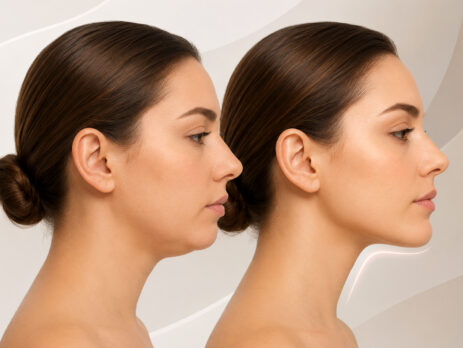
Does Chin Filler Make the Face Appear Slimmer?
Does Chin Filler Make the Face Look Slimmer?
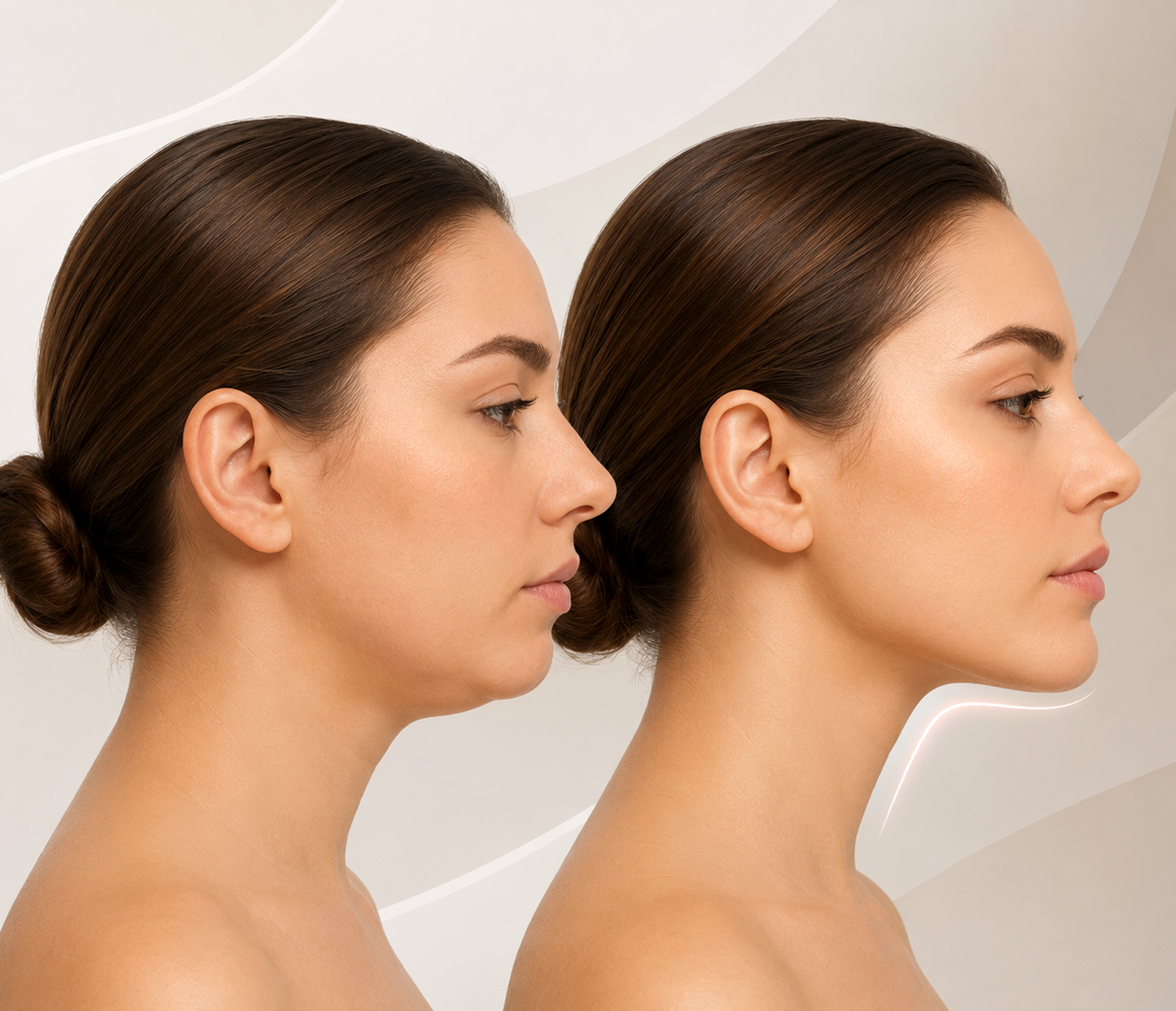
Chin filler, when planned correctly, can be an aesthetic procedure that makes the face appear more balanced, more proportionate, and, in some individuals, slimmer. However, the critical point here is this: Chin filler does not create the same effect in everyone. In some faces, because the chin tip is set back, the lower face appears short, round, or undefined. In such cases, a small and controlled filler application can bring the lower part of the face forward, refining the profile, defining the jawline, and making the overall facial expression more elegant.
On the other hand, chin filler is not a procedure done solely “to look slim.” The goal is not to artificially lengthen or harden the face, but to establish balance between the chin, lips, nose, cheeks, and neck line. When this balance is correctly achieved, an individual can achieve a more defined, more regular, and from some angles, a slimmer facial expression in the mirror, instead of a more full lower face.
The first examination or preliminary consultation at Op. Dr. Şükrü İşler Aesthetic Clinic is free of charge. Therefore, if you are considering chin filler, whether your face is truly suitable for this procedure, how much filler is needed, and which result would look more natural can be clarified with a free evaluation.
Why Can Chin Filler Make the Face Look Slimmer?
A face appearing thinner is often not about actual weight loss, but about optically balancing facial proportions. In individuals with a recessed chin, the angle between the neck and chin can be less defined. The lower face area may appear closed, short, or soft. When chin filler supports this area forward and downward in a controlled manner, the jawline becomes more discernible.
This effect is particularly noticeable when viewed from the profile. Moving the chin slightly forward creates a more harmonious silhouette between the nose-lip-chin line. Thus, the lower part of the face appears more refined. In some individuals, this can even lead to the face being perceived as thinner in photographs. Because a defined chin makes the jawline more visible, which reduces a “disorganized” appearance in the lower part of the face.
However, a face appearing thin and a chin becoming excessively prominent are not the same thing. In a good application, the aim is not to create excessive projection, but to establish a natural and elegant balance. For this reason, an experienced physician evaluates not only the chin tip, but also the jawline structure, the submental (double chin) area, cheek volume, and the overall form of the face together.
On Which Faces Is the Effect More Pronounced?
Chin filler creates a more pronounced “slimmer and more defined” effect in some face types. Particularly in individuals with a recessed chin, a short lower face, weak facial proportions in profile, and an undefined jawline, the results can be more visible. Even a small volume enhancement in these individuals can change the overall perception of the face.
Chin filler can also be beneficial with the right technique in individuals with round faces. Because when the lower jawline is defined in round faces, the face appears more balanced. However, if too much volume is added here, the opposite effect can occur. If the chin tip is extended more than necessary, the face may be perceived as longer, heavier, or more artificial.
In thinner and narrower faces, chin filler should be applied very carefully. Because in already thin faces, excessive projection might only emphasize the chin instead of making the face appear slimmer. Therefore, the same amount or the same plan is not suitable for every patient. A slim appearance of the face can sometimes be achieved with a millimeter-level touch.
In Which Cases Might Chin Filler Not Make the Face Appear Slimmer?
Chin filler does not always make the face appear slimmer. In fact, when planned incorrectly, it can disrupt facial proportions. The most common mistake is applying too much filler, which is not suitable for the person’s facial structure. If the chin tip is projected too much, the face can become elongated, hardened, or take on a form that attracts undue attention. This creates an artificial result instead of a natural and elegant look.
Another important point is that the problem might not only be with the chin. If the primary problem in the lower face is the submental area (double chin), submandibular fat accumulation, neck laxity, or an anatomical condition related to occlusion, then chin filler alone may not be sufficient. In this case, while the person expects more definition in the jawline, they actually realize there is a need for a more comprehensive plan.
Therefore, the correct answer to the question ‘Does chin filler make the face appear slimmer?’ is: Yes, when applied to the right patient and in the correct amount, it can make the face appear slimmer and more balanced. However, it is not a miracle solution on its own and can create an undesirable appearance if over-applied.
How Does Chin Filler Change Facial Proportions?
In facial aesthetics, proportion is as important as volume. In individuals with a recessive chin, the nose may appear larger than it is, the cheeks wider, or the face shorter. Chin filler reduces this optical effect. When the lower face is brought forward, the vertical balance of the face changes, the profile line is refined, and a more harmonious transition between the lower and mid-face is created.
This situation is especially noticeable in profile. A strong jawline makes the lower part of the face appear more defined. The boundary between the jaw and the neck becomes more distinct. This often reinforces the impression that the person has a more energetic, fitter, and better-defined facial contour.
From the perspective of facial proportions, chin filler doesn’t just change the lower face; it also affects the perception of the nose, lips, and neck. For example, a recessed chin can make the nose appear more prominent. Therefore, even a very small chin augmentation can sometimes make the entire face appear more balanced. Thus, the person appears as if their entire face has been refined, rather than just a part of it reduced.
What Is Evaluated During the Initial Examination?
In chin filler, the most critical stage is not the application, but the planning. During the initial consultation, the front, side, and semi-profile angles of the face are evaluated. The chin tip, jawline, double chin, lip position, nasal projection, and the lower third of the face are examined together. Because the aesthetic result comes from establishing overall balance, not just enlarging a single point.
In this consultation, the patient’s expectations are also clarified. Some patients want their chin to appear more elegant, some seek a sharper jawline, while others aim for their face to look slimmer in photos. Not every expectation is met with the same technique. Therefore, the free initial examination is the most important step in reducing the risk of an incorrect procedure.
During the examination, other options besides chin filler may also be considered. For example, if the double chin area is prominent, a different approach might be necessary. If jawline support is weak, jawline filler can be planned along with chin filler. If there is facial laxity, non-surgical facelift methods can also be discussed. Thus, the patient receives a personalized facial plan, not just a product.
How Is the Procedure Applied?
Chin filler is generally a quick, non-surgical procedure that allows for a fast return to daily life. Before the procedure, the area is evaluated, measurements are taken if necessary, and the appropriate amount of filler is determined. During the application, a fine-tipped needle or cannula may be preferred. The product used is mostly hyaluronic acid-based; because this structure offers both a shaping and, if necessary, a reversible option to support facial contours.
The duration of the procedure is short for most people. However, its brevity does not mean the procedure is simple. Since the chin area is at the very center of the face, even a small mistake can affect the perception of the entire face. Therefore, the practitioner performing the application must be proficient in facial anatomy. Application performed with the correct angles and the right amount yields results that make the face appear more balanced, not “thinner”.
What to Expect After Chin Filler?
Changes in the jawline are noticeable immediately after the procedure. However, there may be slight swelling or sensitivity in the first few hours. Due to this temporary condition, the final result should not be evaluated immediately. Within a few days, the swelling will decrease, and the new proportions of the face will be more clearly visible.
Most patients quickly return to their social lives during the recovery process. Since chin filler is not a surgical procedure, the recovery time is short. Nevertheless, it is important not to press the area too much in the first few days, avoid excessively hot environments, and follow the recommendations given by the physician. This approach helps the result settle more smoothly.
The effect obtained with chin filler is temporary. The duration of the filler’s permanence may vary depending on the structure of the product used, the amount applied, and the individual’s metabolism. Therefore, regular check-ups are important. If needed over time, touch-ups can be renewed or the plan can be revised.
Does Chin Filler Make the Face Look More Sculpted and Defined?
Many patients’ main expectation is not to “look thin,” but for their face to appear more fit and toned. Chin filler can be effective in this regard. When the lower facial line becomes clearer, the chin-neck transition becomes more defined, and facial proportions are balanced, a person’s face is perceived as more dynamic.
This effect is particularly noticeable in photographs and from a profile view. When the lower part of the face is refined, the person can appear not only slimmer but also younger and more well-groomed. For this reason, chin filler is often not considered in isolation, but as part of the overall aesthetic balance of the face.
What is the Difference Between Jawline Filler, Double Chin Treatment, and Chin Filler?
While chin filler brings the chin tip forward, jawline filler focuses on defining the jawline from start to finish. Double chin treatment, on the other hand, targets fat accumulation, laxity, or contour loss under the chin. In other words, all three procedures concern the lower facial area, but their objectives are different.
If the only problem is a recessed chin tip, chin filler may be sufficient. If the jawline is indistinct but the chin tip is normal, jawline filler might be more appropriate. If there is fullness under the chin, a method targeting the double chin area should be considered instead of just applying filler. Therefore, accurate diagnosis is the foundation for the correct outcome.
For more detailed information on these topics, the Facial Aesthetics, Non-Surgical Aesthetics, What is Jawline Filler?, Non-Surgical Facelift, and Neck and Double Chin Lift Aesthetics pages can also be reviewed.
What Should Be Considered for a Natural Look?
The most important rule for a natural result is not to overdo it. It doesn’t mean that the less chin filler, the better; however, the logic that more filler means a more pronounced look is also incorrect. The correct dose is the one that is harmonious with the rest of the face. Chin filler should not overpower other facial features; on the contrary, it should support them.
For a natural result, the patient’s expectations are as important as the physician’s evaluation. Sometimes a person might request very sharp jawlines they’ve seen on social media. However, this look doesn’t appear natural on every face. Controlled application is much more successful, especially for individuals with slender faces and soft facial features. The perfect result is one that suits the patient’s character.
Who Might It Not Be Suitable For?
Chin filler is not the first option for everyone. If there is an active infection, uncontrolled skin problem, severe anatomical asymmetry, malocclusion, or underlying structural issues, a detailed evaluation is required first. Additionally, unplanned procedures done solely to make “my face look thinner” are also not suitable.
If there are very advanced structural deficiencies in the chin area, surgical options or combined treatments might be more appropriate than fillers. This decision becomes clear during the free initial consultation. What is important here is not a short-term change, but achieving a long-term result that is harmonious with the face and safe.
Why Is Chin Filler Scientifically Important?
The chin is a critical point in facial aesthetics. Chin projection affects the perception of facial attractiveness, lower facial proportions, and profile balance. Published studies on this topic show that chin augmentation can significantly contribute to facial balance, and hyaluronic acid fillers offer an effective and safe option in suitable patients.
Systematic reviews and clinical studies, in particular, show that fillers applied to the chin and jawline area can increase patient satisfaction and improve facial harmony when applied with correct anatomical knowledge. Therefore, the procedure is not just about “adding volume,” but an approach to rebalance facial architecture.
Frequently Asked Questions
Does chin filler really make the face look thinner?
Yes, in some individuals when planned correctly. Especially in people with a recessed chin and an indistinct lower face line, the face can be perceived as more balanced and slender.
Does every face get the same effect?
No. The effect differs in individuals with thin faces, round faces, and short lower faces. The application must always be planned individually for each person.
Does chin filler or jawline filler make the face look thinner?
This depends on the individual’s needs. If the chin is recessed, chin filler; if the jawline is indistinct, jawline filler might be more appropriate.
Is the chin filler procedure painful?
For most patients, the procedure is tolerable. Comfort increases when appropriate preparation is made before the application.
How long do the results take to appear?
The change is noticeable immediately after the procedure; however, the results become clearer as the swelling subsides.
Is chin filler permanent?
No, it is temporary. The duration of permanence varies depending on the product used and the individual’s characteristics.
Can chin filler make the face look longer?
Yes, with excessive or inappropriate application, it can appear longer. Therefore, dosage and technique are very important.
Is the first examination charged?
No. At Op. Dr. Şükrü İşler Aesthetic Clinic, the first examination or preliminary consultation is free of charge.
Academic Resources
- Nonsurgical Chin Augmentation Using Hyaluronic Acid
- Hyaluronic Acid Filler VYC-25L for Jawline Restoration Yields High Satisfaction
- Chin Augmentation Techniques: A Systematic Review
- Role of Nonsurgical Chin Augmentation in Full Face Rejuvenation
Chin filler, when applied by the right hands, is a procedure that can make the face appear slimmer, more balanced, fitter, and more lifted. However, what is crucial here is not the amount of filler; but rather its appropriate planning for the entire face. While a very small touch can make a big difference in some faces, in others, chin filler alone is not sufficient and needs to be considered along with jawline, double chin, or other supporting procedures.
If your goal is a natural result that makes your face appear clearer, more elegant, and slimmer without hardening its features, the most accurate starting point is a free initial examination. During this consultation, your facial proportions are evaluated, your expectations are clarified, and the most suitable aesthetic roadmap for you is determined.