
Postpartum Body Contouring: Which Procedures Are Needed?
Which Procedures Are Needed for Postpartum Body Contouring?
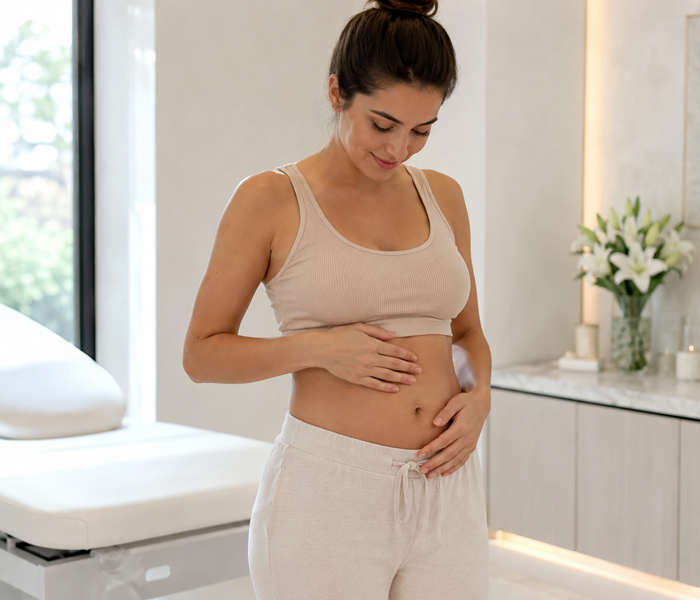
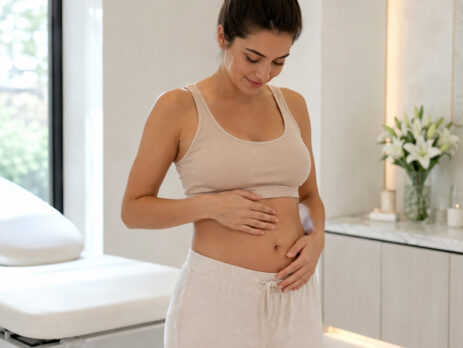
Pregnancy and childbirth do not only cause weight changes in a woman’s body. Stretching of the abdominal skin, separation of abdominal muscles, fat accumulation in the waist and hip area, loss of volume or sagging in the breasts, decreased skin elasticity, and changes in body proportions are among the changes that can be observed after childbirth. Therefore, when referring to postpartum body contouring, it is not correct to talk about a single aesthetic procedure that can be applied to everyone.
While the main problem for one person might be excess skin in the abdominal area, for another, only localized fat accumulation might be prominent. In some women, breast volume may decrease, while in others, breast tissue may sag. In some individuals, changes in the abdomen, waist, breasts, and other body areas may be observed simultaneously.
Therefore, the approach of postpartum body contouring, often searched online as “Mommy Makeover”, is not actually the name of a single surgery. It is a personalized aesthetic surgery plan created according to the individual’s anatomical structure, changes occurring after childbirth, weight, skin elasticity, breast structure, future pregnancy plans, and expectations.
The first examination or consultation at Op. Dr. Şükrü İşler Aesthetic Clinic is free of charge. During this consultation, the areas that bother you after childbirth can be evaluated, and a personal assessment can be made regarding whether a single procedure or multiple procedures would be more suitable. The definitive operation plan should only be created after an examination.
Why Do Changes Occur in the Body After Childbirth?
Throughout pregnancy, the growing uterus creates significant tension on the abdominal wall, muscles, and skin. During the same period, hormonal changes, weight gain, and growth in breast tissue due to preparation for breastfeeding can affect many parts of the body.
Even if weight is lost after childbirth and the breastfeeding period, some tissues may not fully return to their pre-pregnancy state. Factors such as skin elasticity, genetic characteristics, number of pregnancies, amount of weight gained, baby’s size, multiple pregnancies, age, smoking, and the individual’s connective tissue properties can particularly influence the outcome.
The most common aesthetic changes encountered after childbirth may include:
- Loose and sagging abdominal skin,
- Excess skin in the infraumbilical region,
- Separation or laxity of abdominal muscles,
- Stubborn fat accumulation around the waist and abdomen,
- Contour changes in the hip and thigh area,
- Loss of breast volume,
- Breast sagging,
- Downward pointing nipple position,
- Increased prominence of breast asymmetry,
- Increased prominence of stretch marks,
- Looseness in the arms or legs,
- Changes in volume and shape in the hip area.
Not all of these changes necessarily occur in the same person. Therefore, in postpartum aesthetic planning, instead of asking ‘which surgery should I have?’, one should first answer the question ‘which tissues in my body have changed, and what is the main problem bothering me?’
Is Postpartum Body Contouring a Single Surgery?
No. Postpartum body contouring or Mommy Makeover is not a single standard surgery. One or several of the following operations may be considered for suitable patients: tummy tuck, liposuction, breast lift, breast augmentation, breast reduction, or other body contouring procedures.
For instance, in a person who has excess skin in the abdominal area and breast sagging after childbirth, abdominal aesthetics and breast lift may be considered. However, for another person who does not have skin sagging but has localized fat in the waist and abdominal area, the surgical plan may be completely different.
For this reason, instead of an automatic approach like ‘I had a baby, I should get a Mommy Makeover’, a detailed evaluation that determines the individual’s needs should be performed.
Is a Tummy Tuck Necessary for Postpartum Abdominal Sagging?
One of the most important aspects of postpartum aesthetic considerations is the abdominal area. As a result of the prolonged stretching of the abdominal skin during pregnancy, the skin may not fully return to its former firmness. Especially the excess skin below the navel may persist despite weight loss and exercise.
Tummy tuck surgery, or abdominoplasty; can be performed in suitable patients to remove excess and loose abdominal skin, reshape the abdominal contour, and, if deemed necessary, tighten the laxity in the abdominal wall.
The important distinction here is: A tummy tuck is not a weight-loss surgery. Even if a person is close to their ideal or target weight, this surgery may be considered due to excess skin remaining after childbirth and laxity in the abdominal wall.
It should be determined during examination whether the problem in the abdominal region is solely due to fat accumulation or due to skin and abdominal wall laxity. For detailed information on this subject, you can also review the content Tummy Tuck or Liposuction?.
What is Postpartum Abdominal Muscle Separation?
The increase in the distance between the rectus abdominis muscles due to a growing abdomen during pregnancy is called rectus diastasis or diastasis recti. This condition can especially be seen in individuals who have had multiple pregnancies. However, not every abdominal bulge means rectus diastasis, and the diagnosis must be made by a physician’s evaluation.
Scientific studies published on the evaluation of rectus diastasis and surgical treatment options in postpartum women show that this condition may not only be related to appearance; it can also be evaluated in terms of abdominal wall function in appropriately selected patients. You can access one of the current scientific evaluations on this topic via PubMed.
Not every rectus diastasis requires surgery. Postpartum physiotherapy and appropriate exercise programs may be the initial approach for some individuals. The necessity for surgery should be determined by evaluating the degree of diastasis, accompanying skin laxity, functional complaints, and the individual’s general condition together.
When Might Postpartum Liposuction Be Necessary?
Even after postpartum weight loss, localized fat deposits may persist in areas such as the waist, abdomen, hips, back, or thighs. In suitable individuals where skin elasticity is adequate and the main problem is localized fat accumulation, liposuction may be considered for body contouring.
The fundamental difference between liposuction and a tummy tuck is skin excess. While liposuction focuses on fat tissue, it is not a method designed to remove significantly sagging skin. Therefore, in individuals with severe skin laxity, merely removing fat may not provide the expected recovery.
If there are multiple contour problems in the postpartum waistline, abdomen, hips, and other areas, a body aesthetics approach that evaluates all body proportions together becomes important.
Why Do Breasts Sag Postpartum?
During pregnancy, breast tissue may grow due to hormonal effects. After childbirth and breastfeeding, while breast volume decreases again, the skin and supporting tissues may not recover at the same rate. As a result, breasts may appear deflated, with volume loss in the upper pole, or sagging.
Scientific research shows that it is not accurate to attribute changes in breast appearance solely to breastfeeding. Factors such as the number of pregnancies, age, body mass index, pre-pregnancy breast size, and smoking have also been reported to be associated with breast ptosis (sagging). You can review the published study on PubMed.
Therefore, in postpartum breast aesthetics, breast volume, nipple position, excess skin, and the degree of sagging should first be evaluated.
Who Can Be Considered for Postpartum Breast Lift?
In individuals where there is sufficient breast volume but the breast tissue and nipple have shifted downwards, breast lift surgery can be considered.
The primary goal of breast lift is not merely to make the breast appear larger. The aim is to reposition the breast tissue higher by adjusting excess skin and to recreate the breast form.
However, after childbirth, some individuals may also experience significant volume loss along with sagging. In such a case, a lift alone may not be sufficient, nor is it necessary to apply implants to every patient. The amount of existing breast tissue and the desired volume of the person are decisive factors in the decision.
May Postpartum Breast Augmentation Be Necessary?
If there is a significant reduction in breast volume after pregnancy and breastfeeding, but no severe sagging, breast augmentation options may be considered.
For breast augmentation, implants or, in suitable individuals, methods using the person’s own fat tissue can be considered. Detailed information about the method using one’s own fat can be obtained from the fat injection to breast page.
If both volume loss and sagging are present in the breast, it may be necessary to consider a combination of lifting and volume restoration. “Augmentation or lift?” The answer to this question cannot be definitively given by looking at a photograph or solely relying on the person’s own assessment. Nipple position, skin quality, and existing breast tissue must be examined.
May Postpartum Breast Reduction Be Necessary?
Not every postpartum breast problem is volume loss. In some individuals, breast tissue that grows during pregnancy may remain large after childbirth. Large and heavy breasts can be accompanied by complaints such as sagging, discomfort in the shoulder and back area, or irritation under the breast.
In this case, breast reduction surgery can be considered. Breast reduction is a surgical procedure aimed not only at reducing breast volume but also at making the breast form more harmonious with body proportions.
It is especially important for women planning future pregnancies and breastfeeding to share this information with their surgeons. The relationship between the technique of breast surgery and future breastfeeding capacity can vary from person to person and according to the method applied.
Are Procedures Necessary for Postpartum Arm and Leg Sagging?
In individuals experiencing significant weight changes during or after pregnancy, the problem may not be limited to only the abdominal and breast areas. Looseness in the inner part of the arms or excess skin in the thigh area may be observed.
The problem in the arm area can be aging, skin laxity, or a combination of both. In suitable individuals with significant excess skin, arm aesthetics and arm lift options can be considered.
For changes in the thigh, knee area, or leg contour, different methods can be considered within the scope of leg aesthetics. However, it is not always necessary to perform procedures on every area for postpartum body recovery. Priority should be given to the areas that bother the individual the most and where the most significant anatomical changes are present.
Do Postpartum Stretch Marks Completely Disappear with Tummy Tuck?
Tummy tuck surgery is not a treatment for stretch marks. However, some stretch marks located on the excised skin can be removed along with the excess skin. Stretch marks outside the operation area should not be expected to disappear completely.
Therefore, the idea that “if I have a tummy tuck, all my pregnancy stretch marks will disappear” is not correct. The location, extent of the stretch marks, and the amount of skin that can be removed should be evaluated during the examination.
Furthermore, the way scars heal after surgery can vary from person to person. For options regarding scars and scarring, the scar treatment page can be reviewed.
Which Procedures Can Be Performed Together in a Mommy Makeover?
Among the frequently researched combinations in a postpartum body contouring plan is the simultaneous performance of a tummy tuck and breast aesthetics. However, the technical feasibility of performing two operations together does not mean that it is the right approach for every patient.
There are numerous studies in academic literature evaluating the combined performance of tummy tuck and breast surgeries. While some research indicates that a combined approach can yield acceptable results in carefully selected patients, other studies based on large databases show that the risk of complications should also be considered as the number of procedures increases.
You can access the safety evaluation of combined breast surgery and abdominoplasty published in 2025 via PubMed. Furthermore, a large-scale scientific study evaluating risk factors in abdominoplasty and combined procedures can be reviewed here.
Therefore, the number of procedures that can be performed in the same session should be determined by considering factors such as the person’s age, body mass index, smoking habits, existing diseases, previous operations, the estimated duration of the surgery, and the scope of the procedures to be applied. In some patients, it may be more appropriate to perform the procedures at different times.
How Long Should One Wait for Postpartum Aesthetics?
Planning aesthetic surgery immediately after childbirth is generally not the right approach. The body enters a significant recovery period after childbirth. The uterus shrinks, weight continues to change, hormonal balance reshapes, and breast volume may continue to change in breastfeeding individuals.
Therefore, for the timing of the operation, the body becoming stable is more important than the calendar. Regarding abdominal aesthetics, the clinic’s current information states that a waiting period of at least approximately six months after childbirth and the completion of the breastfeeding process may be recommended. However, there is no fixed period that can be applied to everyone.
Especially if breast aesthetics are being considered, it may be advisable to wait for the breasts’ volume and shape to settle after breastfeeding is complete. Planning the procedure during a period when the person’s weight is not constantly fluctuating but has become as stable as possible facilitates the evaluation of the results.
Should Aesthetic Surgery Be Postponed If Another Pregnancy Is Planned?
Having undergone a tummy tuck or breast aesthetics does not automatically prevent future pregnancies. However, a new pregnancy can alter the abdominal skin, abdominal wall, and breast tissue again. Therefore, the timing of extensive tummy tuck and breast reshaping surgeries, in particular, should be carefully considered for individuals planning a pregnancy in the near future.
Completing the childbearing plan can help many patients maintain more permanent and predictable body contouring results. Nevertheless, since individual circumstances vary, the decision should be made during the examination.
Is it Necessary to Lose Weight Before Postpartum Aesthetics?
Postpartum body contouring surgeries are not weight loss methods. The purpose of a tummy tuck or liposuction is not to eliminate all excess weight, but to refine body contours in suitable individuals.
In individuals whose weight is still rapidly changing, losing or gaining weight again after surgery can affect the achieved contour. Therefore, approaching a weight that the person can reach and maintain usually ensures healthier planning.
However, there isn’t a single number applicable to everyone, such as “you must definitely drop to this weight first.” Height, weight, body mass index, fat distribution, skin laxity, and overall health status should be evaluated together.
Which Procedure Addresses Which Problem in Postpartum Body Contouring?
| Postpartum Problem | Procedure to Consider |
|---|---|
| Significant skin laxity in the abdomen | Tummy tuck / abdominoplasty |
| Abdominal wall laxity or rectus diastasis | Tummy tuck with abdominal wall repair in suitable patients |
| Localized fat in the waist and abdomen | Liposuction |
| Breast sagging | Breast lift |
| Breast volume loss | Breast augmentation or fat injection in suitable individuals |
| Both breast sagging and volume loss | Combined evaluation of lift and volume restoration options |
| Large and heavy breasts | Breast reduction |
| Significant arm skin sagging | Arm lift |
| Thigh and leg contour problem | Personalized planning within the scope of leg aesthetics |
The procedures in the table are for general informational purposes only. It does not mean that the operation mentioned for a problem is definitely suitable for that person.
What is the Advantage of Postpartum Body Contouring Surgeries?
The main advantage of postpartum body contouring surgeries is that planning can be made for anatomical problems that cannot be directly altered by diet or exercise. Exercise can strengthen muscles and help with weight control; however, severely sagging skin is not expected to be completely eliminated by exercise.
Similarly, liposuction is not designed to eliminate excess skin. A breast implant alone cannot always correct a severely sagging breast. Therefore, the key to successful planning is choosing the right method for the right problem.
Comprehensive reviews published in the plastic surgery literature on postpartum body contouring also emphasize that post-pregnancy abdominal and body changes should be addressed according to different anatomical components. You can access the scientific publication on the subject via PubMed.
Are There Risks in Postpartum Aesthetic Surgeries?
Yes. As with any surgical procedure, aesthetic operations performed for postpartum body contouring also have risks. Risks may vary depending on the planned surgery and the person’s health status.
Generally, risks that can be considered include complications such as bleeding, infection, delayed wound healing, fluid accumulation, asymmetry, scars remaining more visible than expected, changes in sensation, anesthesia-related problems, and blood clot formation in veins.
In cases where multiple procedures are to be performed together, the duration of the surgery and the total surgical load must also be included in the safety assessment. Therefore, a Mommy Makeover should not only be a consultation where aesthetic goals are discussed, but also a surgical planning process where the individual’s health status is thoroughly evaluated.
How Should the Recovery Process Be Planned in Postpartum Aesthetics?
For new mothers, one of the most important aspects of postoperative recovery is childcare. Especially after tummy tuck or breast operations, heavy lifting and strenuous movements may be restricted for a certain period.
Therefore, it is important for individuals with young children to organize daily life support before surgery. Recommendations from the surgeon performing the operation regarding picking up the child, carrying groceries, household chores, and other physical activities should be followed.
The time to return to work and resume normal activities also varies depending on the procedure performed. The recovery period for a more limited procedure applied to a single area is not the same as for a combined tummy and breast operation.
How is a Natural Result Planned in Postpartum Aesthetics?
The goal of postpartum body contouring is not to achieve the same body measurements for everyone. The ideal result should aim to create an appearance consistent with the individual’s height, weight, rib cage, waist-hip ratio, breast structure, and overall anatomy.
Therefore, it is not correct to decide on breast augmentation based solely on “how many cc implants will be used”, on liposuction based on “how many liters of fat will be removed”, or on tummy tuck based on “how much skin will be removed”. The proportions of the entire body should be evaluated together.
Realistic expectations are also an important part of outcome satisfaction. Cosmetic surgery can change the body, but it does not guarantee to fully restore the body to its pre-pregnancy state as if pregnancy never happened.
What is Evaluated During the Free Initial Examination or Consultation?
The first examination or consultation at Op. Dr. Şükrü İşler Aesthetic Clinic is free of charge. This consultation is particularly important for individuals considering postpartum body contouring, as the required procedure cannot be determined solely by looking at photos or general information online.
During the initial evaluation, the following topics can generally be addressed:
- Number of pregnancies and births,
- How much time has passed since birth,
- Whether breastfeeding is ongoing,
- Whether future pregnancies are being considered,
- Whether weight is stable,
- Degree of excess skin in the abdominal area,
- Presence or absence of abdominal wall laxity,
- Regional fat distribution,
- Breast volume and degree of breast ptosis (sagging),
- Position of the nipples,
- Breast asymmetry,
- Skin elasticity,
- Previous surgeries,
- Medications used and general health status,
- The individual’s aesthetic expectations,
- Whether it is appropriate to plan the procedures in the same session or at different times.
Thanks to the free initial examination or consultation, it can be assessed which area truly requires a surgical procedure, which areas do not necessitate surgery, and what the most suitable approach might be for the individual’s expectations.
For appointments and communication, you can visit the contact page of Op. Dr. Şükrü İşler Aesthetic Clinic or use the online appointment form.
Frequently Asked Questions
What is postpartum body contouring?
Postpartum body recovery; it is the evaluation of permanent changes that occur in the abdomen, breasts, waist, hips, or other body areas after pregnancy and childbirth, with personalized aesthetic procedures. It is not a single standard surgery.
What is a Mommy Makeover?
Mommy Makeover is a general term used for postpartum body contouring. It refers to the evaluation of procedures such as tummy tuck, liposuction, breast lift, breast augmentation, or breast reduction, either alone or in combination, according to the individual’s needs.
Does every woman who gives birth need to have a tummy tuck?
No. The needs of a person without excess skin and only mild fat are different. Tummy tuck is especially considered for suitable individuals with excess skin and abdominal wall laxity.
Does liposuction eliminate postpartum abdominal sagging?
Liposuction is primarily a method aimed at reducing localized fat tissue. It does not eliminate significant skin sagging on its own. In individuals with excess skin, different methods such as a tummy tuck may be necessary.
Can postpartum abdominal muscle separation be corrected without surgery?
Physiotherapy and appropriate exercise programs can be evaluated depending on the degree of rectus diastasis. Not every diastasis requires surgery. Surgical options may come into play for individuals with advanced or co-existing anatomical problems.
Is an implant sufficient for postpartum breast sagging?
Not always. Implants can provide volume, but a breast lift may be necessary for individuals with significant breast sagging. In some patients, a lift and volume enhancement can be considered together.
Is breastfeeding the sole cause of breast sagging?
No. Studies show that the number of pregnancies, age, weight, breast size, smoking, and other factors are also associated with breast ptosis.
How soon after childbirth can a Mommy Makeover be performed?
There is no single universal timeline. It is generally recommended to wait for the body to recover postpartum, for breastfeeding to be completed, and for weight to stabilize as much as possible. The exact timing is determined by the individual’s health status and the procedure to be performed.
Can cosmetic surgery be performed while breastfeeding?
Especially for breast aesthetics and comprehensive postpartum body contouring surgeries, it is generally preferred to wait until breastfeeding is completed and the body has stabilized. Personal timing should be determined by a physician’s evaluation.
Will a tummy tuck be compromised if I become pregnant again?
A new pregnancy can re-stretch the abdominal skin and wall, altering the appearance achieved with surgery. It is important for individuals planning a pregnancy in the near future to discuss this with their surgeons.
Can weight be lost with a Mommy Makeover?
No. Mommy Makeover and tummy tuck are not weight loss methods. The goal is to address excess skin, body contour problems, and breast shape changes in suitable patients.
Does a tummy tuck completely eliminate stretch marks from pregnancy?
No. Some stretch marks located on the excised skin may be removed, but a tummy tuck is not a treatment that eliminates all stretch marks.
Can a tummy tuck and breast lift be performed simultaneously?
In suitable patients, their combined application can be considered. However, the decision for combined surgery should be made based on the individual’s general health status, risk factors, and the scope of the operation. For some individuals, performing the procedures at different times might be more appropriate.
Will there be scars in postpartum aesthetics?
Surgical incision scars form in operations where skin is removed, such as tummy tuck, breast lift, breast reduction, and arm lift. The location of the scars is tried to be kept in planned areas as much as possible, but a completely scarless result cannot be guaranteed for any surgical procedure.
Should I lose weight first for postpartum aesthetics?
It is preferred that weight is as stable as possible before surgery. However, there isn’t one ideal weight for everyone. Height, weight, body structure, excess skin, and general health status should be evaluated together.
Is the first examination or consultation charged?
No. At Op. Dr. Şükrü İşler Aesthetic Clinic, the first examination or consultation is free of charge. In this consultation, you can get information about aesthetic options that might be suitable for you by evaluating the areas that bother you after childbirth.
How can I understand which procedure I need?
Whether the problem in the abdominal area is fat accumulation, skin sagging, or laxity in the abdominal wall; and whether there is volume loss or sagging in the breast area should be determined by examination. Therefore, the most accurate starting point is a personal evaluation.
What Should Be the First Step for Postpartum Body Contouring?
If there are multiple changes in your body after childbirth that bother you, do not think that all of them need to be resolved with a single surgery. While some people only desire a procedure for the abdominal area, in others, breast and body contour may be evaluated together. In some cases, it may even be concluded that there is no need for a surgical procedure.
The most accurate approach is to analyze the changes that occur after childbirth individually and then prioritize them according to overall body proportions. This way, unnecessary procedures can be avoided, and a personalized operation plan can be created for actual needs.
The first examination or consultation at Op. Dr. Şükrü İşler Aesthetic Clinic is free of charge. You can benefit from a free initial consultation to find out which of the options, such as tummy tuck, liposuction, breast lift, breast augmentation, breast reduction, or other postpartum body contouring procedures, is suitable for you.
Academic Resources
- Strategies for Aesthetic Reshaping of the Postpartum Patient – PubMed
- Treatment and Outcomes of Rectus Diastasis in Postpartum Women – PubMed
- The Effect of Breastfeeding on Breast Aesthetics – PubMed
- Safety of Combined Versus Isolated Cosmetic Breast Surgery and Abdominoplasty – PubMed
- Abdominoplasty: Risk Factors, Complication Rates, and Safety of Combined Procedures – PubMed
Important Information: This content has been prepared for general informational purposes and does not substitute for diagnosis, treatment, or personalized surgical advice. The appropriate procedure, timing of the operation, potential risks, and expected outcomes for postpartum body contouring should be determined by a plastic, reconstructive, and aesthetic surgery specialist after evaluating the individual’s health status and anatomical characteristics.