How to Preserve a Natural Look in Facial Rejuvenation?
How to Maintain a Natural Look in Facial Rejuvenation?
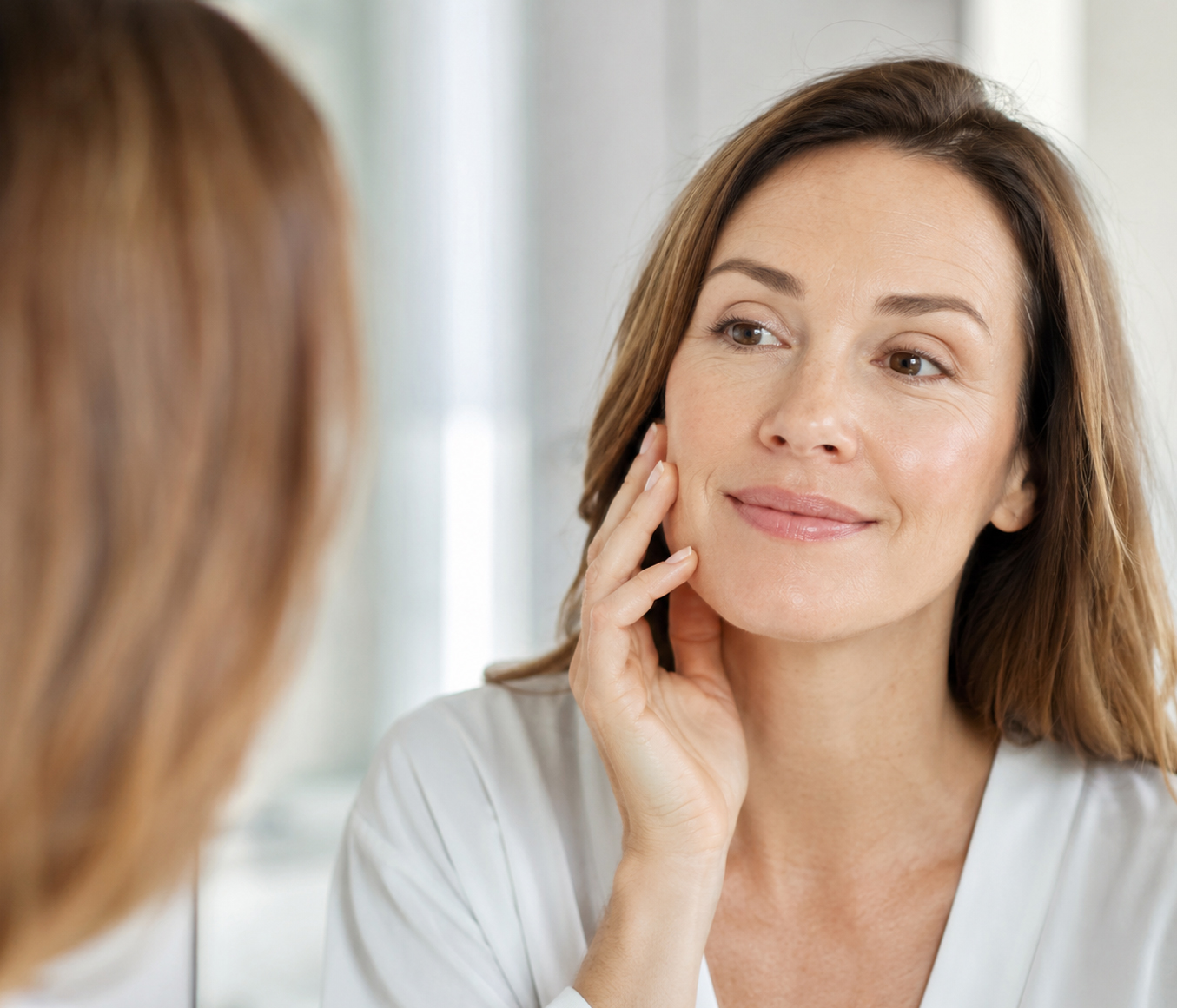
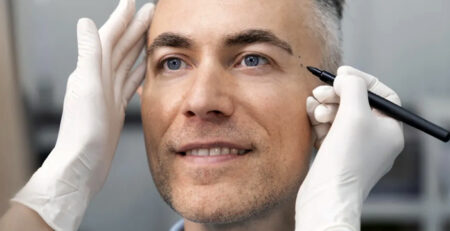
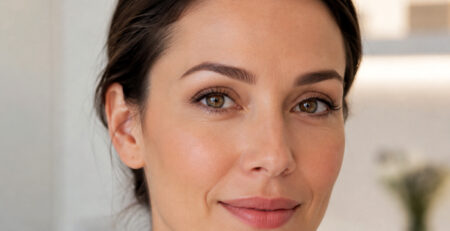
The main expectation of many people considering facial rejuvenation is not just to look younger. The majority of people do not want their facial features to change, their expressions to disappear, or for everyone around them to realize they have had an aesthetic procedure. The real expectation is to preserve a person’s unique facial character while looking more rested, more vibrant, more balanced, and younger.
For this reason, today’s successful facial rejuvenation approach is based on correctly analyzing the anatomical changes that cause aging and intervening only as much as necessary, rather than trying to completely eliminate all signs of aging on the face. The goal is not to completely change the face, but to reveal a more vibrant and balanced version of the person.
One of the most important points for a natural appearance is that facial rejuvenation is not a single procedure. In some individuals, the problem may primarily be expression lines, while in others, mid-face volume loss, jowl sagging, laxity in the jawline, periorbital changes, or a decrease in skin quality may be more prominent. Therefore, applying the same procedure or the same amount of application to everyone is not the correct approach for a natural result.
At Op. Dr. Şükrü İşler Aesthetic Clinic, the initial examination or first consultation is free of charge. During this consultation, the anatomical structures causing the signs of aging on your face, your expectations, and whether surgical or non-surgical options are suitable for you can be evaluated. This way, you can get detailed information about your facial rejuvenation plan before deciding on any procedure.
Short Answer: What is the Secret to a Natural Look in Facial Rejuvenation?
The main secret to maintaining a natural look in facial rejuvenation is to correct age-related changes in a balanced way, rather than altering the person’s face. For this, facial anatomy, expressions, skin quality, volume distribution, facial proportions, jawline, eye area, and tissue sagging should be evaluated together.
For a natural result, it is not necessary to completely erase every wrinkle, fill every area, or make the face as taut as possible. On the contrary, preserving the characteristic features of the face, its natural asymmetries, and its expressive movements often creates a more successful rejuvenated appearance.
Why Is Facial Aging Not Just About Wrinkles?
Facial aging is a multi-layered process. Although wrinkles are the most easily noticeable changes when looking in a mirror, the aged appearance of the face is a combined effect of changes in the skin, subcutaneous fat tissues, connective tissues, muscles, and facial skeleton.
Scientific studies show that facial aging does not occur only on the skin surface. Fat tissues in the face are located in specific anatomical compartments, and over time, these areas may develop volume loss, redistribution, or changes in position. Concurrently, age-related changes can also occur in the ligaments supporting the face, bone structures, and skin quality.
For a scientific evaluation examining the anatomical mechanisms of facial aging, one can refer to the academic publication titled The Science and Theory Behind Facial Aging. The study The Clinical Importance of the Fat Compartments in Midfacial Aging, which addresses the role of fat compartments in midfacial aging, is also one of the sources explaining why anatomical assessment is important in facial rejuvenation.
Therefore, an application that only targets wrinkles cannot always correct the overall aged appearance of the face. For example, if the person’s main problem is the downward displacement of cheek tissues, merely filling the lines might cause unnecessary volume increase instead of making the face look younger.
First Rule in Natural Facial Rejuvenation: Assessing the Face as a Whole
The starting point of natural facial rejuvenation is not to look at individual wrinkles, but to examine the overall architecture of the face. The forehead, eyebrows, eye area, temples, cheeks, midface, lip area, jawline, and neck are not entirely independent regions.
For instance, volume loss in the midface can contribute to the undereyes looking more tired. Downward changes in cheek tissue can be accompanied by the accentuation of nasolabial folds. While laxity in the lower face can blur the jawline, changes in the neck can affect the overall perception of facial age.
Therefore, in facial rejuvenation planning, the areas that most indicate aging on a person’s face should first be identified, and then the relationship between these areas should be evaluated.
For more comprehensive information about surgical options for the facial area, you can review the Facial Aesthetics page.
Can Trying to Eliminate Every Wrinkle Ruin a Natural Look?
Yes, one of the most common misconceptions in facial rejuvenation is thinking that all lines must be completely eliminated. The human face is a dynamic structure. It is normal for various lines to appear when smiling, talking, being surprised, or raising our eyebrows.
The goal in natural rejuvenation is not to make the face completely motionless and line-free; but to appropriately reduce changes that make a person look more tired, angry, or older than they are.
Especially in applications targeting mimic muscles, the person’s muscle structure and muscle activity should be evaluated. In scientific consensus studies regarding botulinum toxin applications, the importance of planning treatment based on muscle anatomy, muscle strength, and individual facial features, rather than applying a single protocol to everyone, is emphasized.
For detailed academic information on this topic, the consensus study titled Tailored Botulinum Toxin Type A Injections in Aesthetic Medicine can be reviewed.
For clinical information regarding botulinum toxin application, you can also check the Botox page.
Why Is Preserving Facial Expressions Important?
In people recognizing each other, not only the fixed shape of the face but also facial expressions play a significant role. The movement of the eyebrows, the expression around the eyes, the position of the cheeks during a smile, and the movements around the mouth form the character of the face.
Therefore, in natural facial rejuvenation, instead of immobilizing the person’s face, the goal can be to controllably reduce noticeably prominent dynamic lines.
An approach that preserves facial expressions is especially important for individuals who say, “I don’t want it to be obvious that I’ve had aesthetic work done.” A successful outcome often leads people around them to think the person looks more rested or more vibrant, rather than guessing what procedure was performed.
How to Preserve a Natural Look in Filler Applications?
One of the most important aspects of preserving a natural look in filler applications is that the filler is evaluated not for the purpose of “filling the face” but for providing support in anatomically needed areas.
Volume loss in the face does not occur uniformly in every region. With aging, while volume may decrease in some deep fat compartments, the position of some superficial tissues may change. Therefore, merely filling under a visible line on the surface may not always address the true cause of aging.
When planning fillers, the individual’s bone structure, existing facial volume, cheek projection, jawline, eye area, lip, and mid-face proportions should be evaluated together.
An international consensus study published in 2026 emphasizes that natural outcomes in filler applications are not limited to appearance alone; different dimensions such as the face looking natural, feeling natural to the touch, preserving one’s identity, and moving naturally during expressions should be evaluated together. You can access the relevant academic publication via the link See, Touch, Feel, and Express: Achieving Safe and Natural Outcomes With HA Fillers.
Why Too Much Filler Does Not Always Mean a Younger Face?
Although volume loss is a significant factor in an aging face, adding volume is not the solution for every sign of aging. Especially in individuals where actual tissue sagging is prominent, trying to lift the face by using progressively more fillers can alter the natural proportions of the face.
Applying excessive volume can make the face appear heavier, rounder, or swollen than it is in some individuals. Instead, regions with volume loss should be differentiated from tissues that have shifted downwards.
For detailed information on this topic, you can review the content titled Fillers or Facelift for Facial Sagging?
If There is Facial Sagging, Do Fillers or a Facelift Look More Natural?
There is no single answer to this. The fundamental factor determining a natural outcome is that the chosen method is appropriate for the individual’s actual problem.
In an individual with mild or moderate volume loss being prominent, a surgical procedure may not be necessary. Conversely, in an individual with significant jawline distortion, jowl formation, and advanced laxity in facial and neck tissues, using only fillers may not be sufficient.
The purpose of a facelift surgery is not to stretch the face as much as possible. One of the main goals in modern facelift approaches is to anatomically reposition tissues that have descended downwards to a more appropriate location and to adjust excess skin tissue accordingly.
For information about the general principles and process of facelift surgery, you can review the Facelift page.
How to Maintain a Natural Look in Facelift Surgery?
One of the important aspects for a natural look in facelift operations is not to create a taut appearance by merely pulling the skin. In facial anatomy, the superficial musculoaponeurotic system, known as SMAS, fatty tissues, and ligamentous structures play a significant role in the overall contour of the face.
With the development of modern facial rejuvenation surgery, the understanding of deeper anatomical layers of the face has enabled approaches that go beyond mere skin tension.
In facelift surgery, the result should be planned according to the individual’s initial anatomy. The goal is not to create the same jawline, the same cheek appearance, or the same face shape for every patient, but to provide a recovery that is harmonious with the person’s facial features during their youth.
Those who wish to examine the scientific literature on facelift techniques and anatomical evaluation can access the academic study titled Getting Better Results in Facelifting.
Is Non-Surgical Facial Rejuvenation Suitable for Everyone?
No. The advantage of non-surgical methods is generally their ability to offer solutions for specific signs of aging with more limited interventions. However, being non-surgical does not mean it will be sufficient for every aging problem.
Skin quality, age, facial anatomy, degree of tissue laxity, volume loss, neck area, and the patient’s expectations should be evaluated together. The needs of a person with mild signs of aging are not the same as those of a person with advanced tissue sagging.
For detailed information about non-surgical options, the Non-Surgical Facelift page can be reviewed.
Why is the Eye Area Important in Natural Facial Rejuvenation?
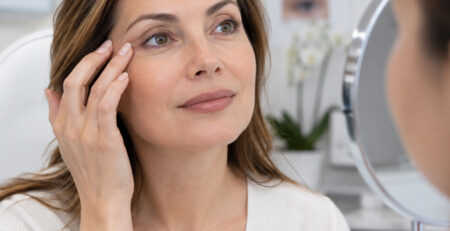
The eye area is one of the regions that most affects the face’s age and expression of fatigue. Excess skin on the upper eyelid, hollowness under the eyes, fat bags, skin quality, and eyebrow position can make a person look more tired.
However, in procedures for the eye area, the root problem must also be correctly identified. For example, in a person with real under-eye bags, simply filling the hollowness may not always yield an ideal result. While volume support might be considered for some individuals, eyelid surgery or different options may become relevant for others.
For more information on this distinction, you can review the content titled Can Under-Eye Bags Be Eliminated with Fillers?.
Why Should Skin Quality Not Be Overlooked in Facial Rejuvenation?
A naturally youthful appearance is not achieved solely by lifting the face or addressing volume loss. Surface characteristics such as skin tone, texture, elasticity, moisture balance, sun damage, and pigmentation also affect the perception of age.
For example, a person with good facial contours but with sun damage, dullness, and uneven skin tone may still appear more tired than they are. Therefore, in a facial rejuvenation plan, skin quality treatments can also be considered as a separate topic when necessary.
Regarding changes that occur in the skin, especially after intense sun exposure, you can take a look at the content Sunspots and Post-Summer Skin Rejuvenation Methods.
Why Are Facial Proportions Important in Natural Rejuvenation?
One of the elements that makes the human face aesthetic is not the perfection of a single area, but the balance between regions. The proportion of the forehead, midface, nose, lips, chin, and jawline to each other forms a person’s characteristic appearance.
Therefore, trying to achieve a face shape that is only popular on social media might not be appropriate for a natural look. A prominent cheekbone, sharp jawline, or a different lip ratio that looks good on another person might not create the same result on your face.
Successful facial rejuvenation should aim to correct changes that appear with aging while preserving one’s own facial proportions, rather than making the person resemble someone else.
Does Genetic Makeup Affect the Outcome of Natural Facial Rejuvenation?
Genetic characteristics can influence face shape, bone structure, fat distribution, skin quality, and the way one ages. This is one reason why two people of the same age might show completely different signs of aging on their faces.
In some individuals, changes around the eyes may appear early, while in others, lower face and neck laxity might be more pronounced. Volume loss might be prominent in some faces, while tissue sagging could be dominant in others.
Therefore, it is important that the treatment is planned according to the individual’s anatomy. For detailed information on this topic, you can review the article titled Does Genetic Makeup Affect Aesthetic Results?.
Can a Facial Rejuvenation Plan Be Made by Looking at a Photograph?
Photographs can provide important information about the general appearance of the face, but they are not sufficient on their own for a personalized, definitive treatment plan. In facial rejuvenation, it may be necessary to evaluate not only the face at rest but also how it moves during expressions.
During the examination, skin elasticity, tissue quality, facial volume, activity of mimic muscles, the relationship between the face and neck, natural asymmetries, and the patient’s primary expectations can all be evaluated together.
Therefore, it is not appropriate to provide definitive answers that apply to everyone to questions asked online such as “How many ml of filler do I need?”, “Should I definitely get a facelift?”, or “Which procedure will make me look ten years younger?”.
Can a Gradual Approach in Facial Rejuvenation Provide More Natural Results?
Especially in non-surgical facial rejuvenation procedures, a gradual planning can provide a more controlled approach for some individuals. The main advantage of this is that it allows for the evaluation of the effect of the changes made on the face and the planning of the subsequent stage accordingly.
However, a gradual approach does not necessarily mean that everyone needs to undergo numerous procedures. On the contrary, one of the important principles of natural rejuvenation is to minimize unnecessary procedures.
Sometimes, balancing a single area can help the entire face look more rested. In another individual, a combined approach may be considered due to different aging mechanisms.
What Does “Combined Treatment” Mean in Facial Rejuvenation?
Since facial aging has different components, in some patients, instead of a single method, complementary procedures may be considered. The method used for expression lines is not the same as the procedure for volume loss. Similarly, a procedure targeting skin texture is not an alternative to surgical intervention performed to correct actual tissue sagging.
The main goal of combined planning is not to perform as many procedures as possible, but to address different problems with appropriate methods.
For example, if a person has significant tissue sagging on their face, while a surgical approach is considered, skin quality or volume losses in different areas can be addressed separately. In another individual, changes may be present that do not require surgery.
To generally examine face rejuvenation methods, you can benefit from the guide titled Face Rejuvenation Aesthetics.
For a Natural Look, Planning Should Be Done According to the Face, Not the Age
One of the frequently asked questions about face rejuvenation is, “At what age should I get a facelift?” or “At what age should fillers be started?” However, chronological age alone does not determine the method to be applied.
Even though two people are the same age, the changes in their faces can be completely different. Many factors such as genetic structure, sun exposure, weight changes, smoking, skin structure, facial bone anatomy, and past aesthetic procedures can affect the appearance of the face.
Therefore, instead of a standard plan like “this procedure at 40, that procedure at 50,” the person’s current anatomical findings should be evaluated.
Is It Better to Have Too Many Procedures Done at an Early Age?
In face rejuvenation, more procedures do not always mean better results. Having many procedures done simultaneously, just because they are trending, even when there is no apparent need on the person’s face, can alter their natural facial character.
Especially at younger ages, if the goal is not to redesign the existing facial anatomy, it is important to evaluate which region the complaint truly originates from. Sometimes, the appearance a person is bothered by may stem not from aging but from their natural facial anatomy.
Therefore, starting treatment not with the question “Which procedures can I have done?” but with the question “What is the anatomical reason for the change on my face that bothers me?” is a healthier approach.
Can Old Photographs Be Useful in a Natural Facial Rejuvenation Plan?
In some cases, a person’s photographs from younger ages can help understand the face’s past natural volume distribution and facial proportions. The goal is not to create an exact replica of the past appearance.
However, old photographs can be guiding in evaluating the person’s naturally fuller areas, eyebrow position, cheek structure, or changes in the jawline.
This approach is particularly compatible with the idea of evaluating a person’s face according to their own youthful anatomy, rather than altering it to another aesthetic standard.
Can Aesthetic Trends in Social Media Affect Natural Appearance?
Social media and filters can significantly influence people’s perception of faces. Very prominent cheekbones, overly sharp jawlines, specific lip proportions, or completely wrinkle-free faces can become popular at certain times.
However, applying these features to everyone’s face does not ensure a natural appearance. Imitating trends without considering face shape, gender characteristics, bone structure, age, and personal facial character can alter a person’s unique appearance.
Natural rejuvenation requires the evaluation of a person’s anatomy, independent of trends.
Should Asymmetry Be Completely Eliminated in Facial Rejuvenation?
The human face is not naturally completely symmetrical. Small differences may be found in eyebrow height, eye shape, cheek volume, lip line, or jawline.
During facial rejuvenation, reducing noticeable asymmetries that bother the person can be considered, but attempting to make the face mathematically completely symmetrical may not always create a natural appearance.
It should be remembered that the natural facial character contains small differences.
How is a Natural Facial Rejuvenation Result Understood?
The result of natural facial rejuvenation should not be evaluated merely as “reduced wrinkles.” It is also important for the face to appear balanced when the person speaks, smiles, and makes expressions while looking natural at rest.
After a successful rejuvenation, the ideal expectation is not for the person’s face to appear completely changed. The aim can be to achieve a more rested, more vibrant, more balanced, or younger appearance while preserving the facial character.
Naturalness is also related to the person feeling their new appearance as a part of their own face. In the 2026 international filler consensus, a natural result is considered along with different dimensions such as touch, the person’s self-perception, and the preservation of facial expression, in addition to visual appearance.
What is Evaluated During a Free Initial Examination or Consultation?
The first examination or initial consultation at Op. Dr. Şükrü İşler Aesthetic Clinic is free of charge. This evaluation is particularly important in facial rejuvenation because it is not possible to definitively determine which method will provide the most natural result for you through the internet or solely from a photograph.
The following topics can generally be covered during the initial evaluation:
- Changes on your face that bother you the most,
- General proportions and anatomical structure of the face,
- Forehead and eyebrow area,
- Eye area and eyelids,
- Mid-face and cheek volume,
- Nasolabial area and perioral region,
- Chin and jawline,
- Tissue laxity in the face and neck,
- Skin quality and elasticity,
- Movements of facial muscles,
- Natural facial asymmetries,
- Previous aesthetic procedures,
- The person’s expectations,
- Whether non-surgical methods are sufficient,
- Whether surgical facial rejuvenation is necessary,
- Advantages, limitations, and recovery processes of possible procedures.
As a result of this evaluation, you are not obliged to undergo a procedure immediately. The purpose of the free initial consultation is for you to understand the reason for the changes in your face and to learn about the options that can be considered for you.
To request a consultation, you can use the Online Appointment page or contact the clinic through the Contact page.
10 Essential Principles for Preserving a Natural Look in Facial Rejuvenation
- Evaluating the face as a whole instead of individual areas: The eye area, cheek, jawline, and neck are interconnected.
- Preserving the person’s facial character: The goal is not to create a different face, but to make the person’s existing face look more rested and youthful.
- Not trying to completely erase every line: Some expression lines are part of the natural facial expression.
- Evaluating expressions: The face should look natural not only when still but also when speaking and smiling.
- Distinguishing between volume loss and tissue sagging: Fillers and facelifts are methods aimed at different anatomical problems.
- Do not apply excessive volume: More filler does not automatically mean a younger appearance.
- Do not neglect skin quality: Skin tone, elasticity, and texture also affect the perception of age.
- Act according to facial anatomy rather than trends: Proportions that look good on another person may not be suitable for your face.
- Consider a combined approach when necessary: Different aging mechanisms may require different methods.
- Decide with a personalized examination: A facial rejuvenation plan should be created based on personal anatomy, not on age or social media photos.
Which Procedure Provides the Most Natural Results in Facial Rejuvenation?
There is no single answer to the question “Which is the most natural facial rejuvenation method?” that applies to everyone. A natural result is less about the name of the procedure and more about applying the right method to the right problem.
Different methods may be considered for a person with prominent mimic lines, different methods for a person with significant volume loss, and completely different methods for a person with actual tissue sagging.
Therefore, the most important principle of natural facial rejuvenation is not to do less, but to do as much as necessary and the right procedure. While a single application may be sufficient for some individuals, a combined plan may yield more balanced results for others.
Will People Realize I’ve Had Cosmetic Work After Facial Rejuvenation?
This situation may vary depending on the method applied, initial anatomy, scope of the procedure, and the healing process. In surgical procedures, early-stage edema and signs of healing may be present. Non-surgical applications may also show temporary swelling, redness, or other post-procedure changes.
Regarding the ultimate natural result, the goal is to preserve the individual’s facial character. Especially avoiding excessive volume changes and procedures that unnecessarily alter facial proportions is important for a more natural appearance.
How Permanent Is Natural Facial Rejuvenation?
The permanence varies depending on the method applied. The effect of some non-surgical applications is temporary and may diminish over time. While surgical facial rejuvenation methods can provide longer-lasting changes, no method completely stops the natural aging process.
An individual’s genetic makeup, lifestyle, sun exposure, skin characteristics, weight changes, and the aging process can affect long-term appearance.
When Is the Right Time for Facial Rejuvenation?
The right time depends more on the nature of the change bothering you than your age. An individual with fine expression lines may not need the same method or procedure at the same time as someone with noticeable laxity in their jawline.
If you are considering facial rejuvenation, determining the cause of the changes on your face is a more accurate starting point than trying to decide which procedure to have first.
Natural Facial Rejuvenation Approach at Op. Dr. Şükrü İşler Aesthetic Clinic
The foundation of natural results in facial rejuvenation lies in accurately interpreting facial anatomy and creating a personalized plan. Since every face has a different bone structure, skin characteristics, volume distribution, expressions, and aging pattern, it’s not possible to talk about a standard facial rejuvenation recipe.
At Op. Dr. Şükrü İşler Aesthetic Clinic, when evaluating facial rejuvenation options, the individual’s existing anatomy, primary complaints, and expectations can be considered together. Which surgical and non-surgical methods may be suitable is determined after examination.
The initial examination or first consultation is free of charge. This way, before deciding on any aesthetic procedure, you can have the current condition of your face evaluated and learn which options might be suitable for you to preserve a natural appearance.
Frequently Asked Questions
Will my face change if I get facial rejuvenation?
The goal of proper and personalized planning is not to transform your face into a different one, but to subtly reduce the changes that occur with aging. However, the result varies depending on the method applied and the scope of the procedure.
What is the most natural method for facial rejuvenation?
There isn’t a single most natural method for everyone. Expression lines, volume loss, skin quality, and tissue sagging may require different approaches. The most natural approach is to choose the method appropriate for the primary problem on your face.
Is facial rejuvenation possible without fillers?
Yes. Facial rejuvenation is not limited to filler applications. Depending on the individual’s needs, various non-surgical methods or surgical options like facelifts and eyelid aesthetics can be considered.
Can too much filler make the face look older?
Excessive or anatomically unsuitable volume applications can make the face appear heavy, swollen, or out of natural proportion in some individuals. Therefore, a correct assessment of volume loss is important.
Do facial expressions completely disappear after Botox?
In botulinum toxin applications, the dose, application area, and the individual’s muscle activity affect the outcome. In modern personalized approaches, evaluating the individual’s muscle anatomy and facial expressions is important.
Can a facelift look natural?
The goal in facelift surgery is not merely to stretch the skin as much as possible. Appropriate patient selection, evaluation of facial anatomy, and surgical planning are crucial for a natural appearance.
Can I get fillers instead of a facelift?
This depends on the cause of the change in your face. Volume loss and actual tissue sagging are not the same problem. In some individuals with significant sagging, surgical options may need to be considered instead of continuously adding volume.
At what age should one get facial rejuvenation?
There is no fixed age limit for facial rejuvenation. Rather than chronological age, facial anatomy, signs of aging, skin quality, and the individual’s expectations should be evaluated.
Does one need fewer procedures to look natural?
Not always. Naturalness is not solely determined by the number of procedures. What’s important is to avoid unnecessary procedures and to address each existing problem with the appropriate method.
Why can the eye area make the face look older?
Excess eyelid skin, under-eye bags, hollowing, changes in eyebrow position, and skin quality can contribute to the face appearing tired or older. Treatment selection should be based on the source of the problem.
Is it enough to just send a photo for facial rejuvenation?
A photo can assist with a general assessment, but a personalized and definitive treatment plan may require a physical examination, evaluation of skin and tissue structure, and examination of the face’s dynamic movements.
Does facial rejuvenation completely stop aging?
No. No aesthetic procedure, surgical or non-surgical, completely stops the natural aging process. The procedures aim to reduce or reshape specific parts of existing signs of aging.
Is the initial examination or consultation charged?
No. The first examination or initial consultation at Op. Dr. Şükrü İşler Aesthetic Clinic is free of charge. If you are considering facial rejuvenation, you can get information about your facial anatomy, aging type, your expectations, and the surgical or non-surgical methods that can be evaluated for you during a free initial consultation.
The First Step for a Natural Look: Correct Facial Analysis
In facial rejuvenation, a successful outcome begins not with changing a person’s face as much as possible, but with accurately interpreting the changes that occur with aging. It is necessary to distinguish volume loss from tissue sagging, expression lines from static wrinkles, and skin quality problems from deep anatomical changes.
Most importantly, the person’s unique facial character must be preserved. Instead of copying faces popular on social media, an approach based on the natural proportions of your own face helps to achieve a more balanced and personalized result.
If you want to learn why the changes on your face have occurred and which facial rejuvenation options can be considered for you, you can benefit from a free initial examination or first consultation at Op. Dr. Şükrü İşler Aesthetic Clinic. The definitive application and treatment plan should be created after a doctor’s examination and personal evaluation.
Information: This content has been prepared for general informational purposes and does not replace personal medical advice, diagnosis, or treatment. The suitability, potential risks, recovery process, and expected results of surgical and non-surgical aesthetic procedures may vary from person to person. The decision for application should be made after a doctor’s examination.