Do thick legs thin with liposuction? | Leg thinning
Do thick legs thin with liposuction?
Short answer: Yes, if the main reason for the thick appearance of the legs is the regional adipose tissue accumulating under the skin, liposuction can be achieved with liposuction in the thigh, around the knee, calf and in some cases, thinning and a more balanced leg contour can be obtained in the ankle area. But not every thick leg is suitable for liposuction. The treatment plan may be different if the thick appearance of the leg is caused by muscle structure, bone anatomy, edema, lipedema, lymphedema or severe skin laxity.
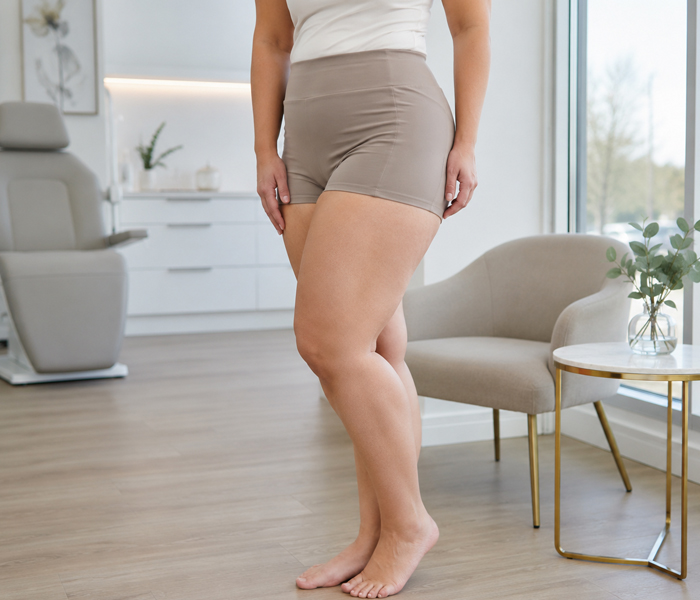
The legs appear thicker than the rest of the body, which may occur due to both genetic characteristics and fat distribution. Resistant adipose tissue that accumulates in the inner thighs and knees, especially in the hips, outer thighs; Despite losing weight, it may not be completely lost. In this case, the goal is not to reduce the weight on the scale, but to make the contour of the legs more compatible with the rest of the body.
Op. Dr. ŞÜKRÜ İŞLER AESTHETIC CLINIC leg aesthetics On the page, the lubrication of the legs can be seen especially in the hips, thighs and inside the knees; It is stated that in some patients, the leg may be evaluated environmentally and the appropriate areas may be needed.
The most important point for people with a thick leg complaint is to determine the reason for the thickness instead of reaching the “I should have liposuction” directly. Because the starting point of a successful leg thinning process is the right patient selection and personalized anatomical evaluation.
Op. Dr. The first examination or first meeting is free of charge in Şükrü İşler Aesthetics Clinic. In the interview, the most appropriate approach can be planned by evaluating the leg structure, fat distribution, skin elasticity, knee and ankle contour and the expectations of the person together.
How can liposuction thin legs?
Liposuction is a body shaping method based on the controlled reduction of adipose tissue under the skin that makes the leg look wider than it is. During the procedure, the targeted adipose tissue is removed through fine cannulas placed from very small entry points.
The goal here is not to get the most oil possible. The main goal in a successful leg liposuction is to create a smoother, balanced and natural-looking contour by maintaining the anatomical transitions of the leg.
Therefore, instead of reducing the fat at only one point of the thigh, the transitions between the hips, hips, thighs, knees and calves may be evaluated together. Sometimes even a few centimeters of localized fat accumulation can significantly change the overall silhouette of the leg.
It is also emphasized in the medical literature that liposuction is basically a body contouring method and should not be considered as a weight loss treatment. Comprehensive published by NCBI In the clinical evaluation of liposuctionIt is stated that the procedure is a body shaping method used to reduce subcutaneous adipose tissue in certain anatomical regions.
Is the cause of thick legs always lubrication?
No. Many different anatomical and medical conditions can cause the legs to appear thick. This distinction is extremely important in terms of predicting the liposuction result.
Leg thickness can be caused by a combination of one or more of the following reasons:
- Regional lubrication: It is one of the most effective causes of liposuction.
- Genetic fat distribution: There may be a predisposition to fat storage, especially around the hips, thighs and around the knee.
- Advanced calf muscles: If a significant part of the thickness is caused by muscle tissue, the same amount of thinning cannot be achieved as liposuction.
- Bone Structure: Anatomy of the pelvis, femur, knee and lower leg can affect the overall width of the legs.
- Skin looseness: Especially in people who have lost a high amount of weight, the problem may be more skin excess than oil.
- Payment: Increased swelling during the day may show thicker legs.
- lipedema: It is a special adipose tissue disease that can affect both legs symmetrically, especially in women, and can progress with symptoms such as pain and easy bruising.
- lymphedema or circulatory problems: Aesthetic liposuction requires medical evaluation before planning.
Therefore, “My legs are thick, can I have liposuction?” It is not correct to answer the question only through the photograph or by measuring the circumference of the legs.
Genetically, do thick legs become thinner with liposuction?
The genetic structure can significantly affect where the fat is stored in the body. While some people lose weight, the fat tissue around the thighs and hips may remain more resistant, while the face, chest or abdomen thinner.
Liposuction may be a suitable option if there is significant fat in the hips, thighs and around the knee, although the overall weight of the person is normal or close to normal.
However, in people with genetically strong calf muscles or large bone structure, it may not be possible to dramatically shrink the entire leg circumference with liposuction alone. Therefore, the expectation should be formed according to the anatomy of the person.
Does the thigh thin with liposuction?
The thigh area is one of the most frequently evaluated areas in leg liposuction applications. Lubrication in the inner thigh and outer thighs can lead to different aesthetic problems.
inner thigh lubrication, may cause the legs to rub against each other while walking or to make the leg gap appear more closed than it is. Regional volume can be reduced with controlled liposuction in suitable patients.
External thigh and hip lubrication may expand the hip-leg transition. Shaping fats in this area can affect not only the thigh but also the overall body silhouette.
In cases where the hip and hip area should be evaluated together with the leg contour hip aesthetics options can also be included in the planning.
Anatomical structure is important in thigh liposuction applications. There are also anatomical studies examining the superficial fascia system in the thigh and different layers of oil should be taken into account. published in the plastic surgery literature Thigh lipoplasty anatomy studydraws attention to the importance of anatomical planning in thigh contouring.
Can fat in the knee be removed by liposuction?
Yes. Localized fat accumulations, especially on the inner side of the knees, can prevent the leg from appearing straight and long. In general, even in thin people, small fat pads can be genetically found inside the knees.
Although the knee circumference is a small area, it is very important aesthetically. In order to help the transition from the thigh to the lower leg to appear softer, controlled liposuction can be performed using thin cannulas.
It is important to avoid excessive fat removal here. The aim is not to make the knee circumference bony, but to reduce the excess volume by preserving the natural anatomy of the leg.
Does the calf become thin with liposuction?
Liposuction can be evaluated in people whose calf thickness is caused by adipose tissue. However, the calf region is a region that needs to be evaluated more carefully than the thighs.
Because the main reason for the appearance of thick calf in some people is not fat, but the development of calf muscles such as gastrocnemius and soleus. Removal of fat under the skin in a leg where muscle volume is dominant can create a limited environmental change.
For this reason, it is necessary to evaluate how much of the calf consists of fat and how much is made of muscle tissue.
It is especially important to prevent contour irregularity in calf and ankle liposuction applications. Academic publications examining unwanted contour problems that may occur after liposuction in the lower leg region show the importance of controlled technique and correct patient selection in these regions.
Does the ankle become thin with liposuction?
In some people, there may be significant adipose tissue in the area extending from the knee to the ankle, and the ankle line may not appear to be sufficiently prominent.
In appropriate cases where the thickness is caused by adipose tissue, controlled liposuction can be applied around the ankle. But the ankle; It is an anatomical region that needs to be carefully studied in terms of vascular, nerve and lymphatic structures.
For this reason, it is not correct to think that every thick ankle can be thinned with liposuction. Edema, lymphatic problems, or the person’s natural bone structure can also cause a thick ankle appearance.
Can liposuction be performed on the entire leg?
In some people, lubrication may be commonly found not only on the inner thigh or around the knee, but on different surfaces of the leg. In these cases, the surgeon can plan an environmental contouring by evaluating the leg 360 degrees.
However, the expression “all leg liposuction” does not mean that equal amounts of oil will be taken from every surface. The oil thicknesses on the front, back, inner and outer faces of the leg are different from each other. Some regions may need to be preserved while some anatomical transitions may be required.
Natural appearance in leg aesthetics is not only about finesse, but with the right proportions.
Can Vaser Liposuction be used on legs?
Yes. Vaser liposuction is one of the options that can be used in leg and thigh contouring in suitable patients.
In vaser liposuction, ultrasound is facilitated to separate the adipose tissue from the surrounding tissues, and then the fat cells are removed by cannulas. The selection of the technology to be used should be made according to the amount of fat, the anatomy of the region, the skin quality and the plan of the surgeon.
For detailed information on the working principle of Vaser technology, its application areas and its use in other body areas Modern way to get rid of regional fats with Vaser Liposuction content can be viewed.
Technology alone does not determine the result. More important issues than the device used in leg aesthetics are the right patient selection, anatomical planning, balanced fat intake and surgical experience.
Does leg liposuction make you lose weight?
Liposuction is not a slimming surgery. As a result of the procedure, a certain amount of adipose tissue is removed from the body, and the scale may change; However, the main purpose of the operation is not to lose weight, but to shape the body lines.
For this reason, the primary approach for people who have significant overweight and generally want to lose weight is a healthy eating, regular physical activity and, when necessary, a weight control program managed by the relevant branch physicians.
Liposuction can create a more significant body contour change, especially in people with resistant adipose tissue in certain regions, although their weight is relatively stable.
American Society of Plastic Surgeons also states that liposuction is not an alternative to obesity treatment or diet and exercise; states that it is used to shape localized oil accumulations.
How many kilos should leg liposuction be done after losing weight?
There is no specific kilogram limit that applies to everyone. Here, the person’s initial weight, height, body mass index, whether weight change continues, skin quality and fat distribution are evaluated together.
Surgical planning can be postponed as the body contour will continue to change in people who have recently lost a significant amount of weight but still continue to lose weight.
Liposuction alone may not be enough if there is significant skin sagging in the thigh area after losing a large amount of weight. In these people Body shaping after weight loss Skin excess may also be considered.
Does liposuction recover saggy legs?
The answer to this question depends on the quality of the skin.
Liposuction reduces adipose tissue; It is not a skin-removing surgery. When the elasticity of the skin is good, the skin can adapt to the new contour to a certain extent after the oil volume is reduced.
However, in people with severe skin laxity, reducing the fat may not provide the desired tight appearance alone. In fact, an empty and sagging appearance may become more prominent in the wrong patient selection.
Thigh lift surgery can be evaluated, especially in people with significant skin excess in the inner thighs after rapid or high weight loss.
The plastic surgery literature on medial thigh lift also shows that liposuction and surgical stretching methods serve different purposes in patients with excess skin.
Therefore, “Liposuction or thigh lift?” It is not correct to make the decision without evaluating the quality of the skin.
Does leg liposuction destroy cellulite?
The main purpose of liposuction is not the treatment of cellulite. cellulite appearance; Connective tissue bands under the skin are formed by a combination of fat lobules, skin quality and genetic characteristics.
Reducing the volume of fat may make the overall appearance of the leg smoother in some people, but it cannot be guaranteed that liposuction will completely eliminate cellulite.
In fact, uncontrolled removal of the superficial layer of fat can increase the fluctuations on the skin surface, so it is important to reduce the adipose tissue in the leg liposuction process.
Does inner leg rubbing decrease after liposuction?
Proper fat reduction in people with the legs in contact with each other due to significant fat accumulation in the inner thighs can reduce the contact and friction of the thighs.
However, everyone’s bone structure and leg anatomy are different. It is not correct to say that there will definitely be a distinct “thigh gap”, that is, leg space after liposuction.
The width of the pelvis, the femoral angle, the muscle structure and the natural anatomy of the person determine the extent to which the legs come into contact with each other. The surgical target should be thinning suitable for natural anatomy.
How much thinning after leg liposuction?
How many centimeters of thinning will be after leg liposuction varies from person to person. The thickness of the adipose tissue, which areas are treated, the person’s bone and muscle structure, skin elasticity and the amount of safe fat that can be taken affect the result.
For this reason, it is not correct to promise a result such as “Your leg will be 5 centimeters thinner for sure” without examination.
In some people, even a small-volume process can make a visual difference due to the clarification of the knee and thigh transitions. In some people, the change around the legs may be more limited.
The main criterion of success is not only a tape measure, but the leg is more proportional to the rest of the body.
When will the result of leg liposuction be determined?
Although the oil volume is reduced immediately after the operation, edema in the first days may hide the real result.
In the first weeks, swelling, bruises and temporary asymmetric appearance may occur. As edema decreases, the leg contour becomes more pronounced. For the final result to be evaluated, the tissues need to heal and the swelling will regress to a great extent.
Recovery time may vary depending on the extent of the procedure, the treated areas, the person’s circulatory structure and individual recovery rate. Therefore, control examinations are important.
Can a corset be used after leg liposuction?
Depending on the surgeon’s preference and the scope of the procedure, special compression garments or corsets can be used after leg liposuction.
The purpose of the compression is to help control the edema that may occur in the early period and to help the tissues adapt to the new contour.
The type of corset and how long it will be used are not the same for everyone. In the postoperative process, the instructions for use given by the surgeon should be followed.
Is it necessary to walk after leg liposuction?
Early controlled movement in the post-surgical patients is usually one of the important parts of the recovery plan. However, when and how much to walk should be determined according to the scope of the procedure and the health status of the person.
In the first days, instead of long walks and intense exercise, the controlled movement plan recommended by the surgeon should be followed. The return to sports activities is also carried out gradually.
Will the fat reappear after leg liposuction?
During liposuction, some of the fat cells in the targeted area are physically removed from the body. However, this does not mean that the person cannot gain weight in the future.
If there is a significant weight gain after the operation, the remaining fat cells in the body may grow and the leg contour may change again over time.
For this reason, maintaining stable weight, balanced diet and regular physical activity are important for long-term results.
The result of liposuction should not be considered as “it never changes in life”. Aging, pregnancy, hormonal changes and weight fluctuations can affect body contour over time.
What is the difference between lipedema and thick leg?
The fact that both legs are disproportionately thicker than the upper part of the body may suggest the possibility of lipedema, especially in women.
Lipoedema is not just an aesthetic lubrication problem. With symmetrical fat accumulation in the legs, symptoms such as touching tenderness, pain, easy bruising and swelling may be present.
In the clinical guidelines published on lipedema, the disease should be evaluated with history and clinical examination; It is stated that symmetrical and disproportionate extremity lubrication, sensitivity and easy bruising are among the important findings. For detailed scientific evaluation Lipoedema diagnosis and treatment guide can be viewed.
The liposuction approach, which can be applied in patients with lipedema, may require different evaluations from the standard aesthetic leg liposuction. Prepared by the British Association of Aesthetic Plastic Surgeons and the British Association of Plastic Reconstructive and Aesthetic Surgeons Liposuction safety and recommendations in lipoedema highlights the importance of this distinction.
For this reason, the correct diagnosis should be made before planning the aesthetic procedure in people with painful, easily bruised and two-sided prominent leg thickness.
Who is the leg liposuction more suitable for?
Although the most suitable candidate profile varies from person to person, people who are generally suitable for surgery, whose weight is relatively stable, who have localized excess fat in certain legs and who have sufficient skin elasticity, may be more suitable candidates.
It is important that one’s expectations are also realistic. Liposuction is not a process that completely changes the leg anatomy or makes everyone get the same leg form.
The aim is to create a more balanced and aesthetic contour within the person’s own anatomy.
Whose Liposuction alone may not be enough?
Classical aesthetic liposuction alone may not provide the desired result in people with whom most of the thickness originates from muscle tissue, patients with advanced skin sagging, those with significant lipedema or lymphedema suspects, and in cases where the main problem is bone anatomy.
Similarly, it is not correct for a person who needs to lose a large amount of weight to see liposuction as a weight loss process.
People who need a holistic body assessment body aesthetics It can be evaluated within the scope of a personal surgical plan over the proportions of different regions with each other.
Is leg liposuction risky?
As in every surgical procedure, liposuction also has risks. There may be swelling, bruises, temporary sensations, fluid accumulation, infection, contour irregularities, asymmetry, and rarer surgical complications.
In the systematic review and meta-analysis published in 2024, it was stated that contour irregularities were among the most commonly reported problems after liposuction. Details of the research Liposuction Risks and Complications in Systematic Review can be viewed.
Prepared by the British Association of Aesthetic Plastic Surgeons and the British Association of Plastic Reconstructive and Aesthetic Surgeons Aesthetic Liposuction Safety Recommendations The correct patient selection also emphasizes that appropriate surgical technique and perioperative management are essential in terms of safety.
Since the risks should be evaluated individually, the operation decision must be made after the physical examination and the evaluation of the health history.
Will there be any scars after leg liposuction?
Liposuction is made from small entry points created to enter the cannula instead of large surgical incisions. Small scars can be seen in these regions at the beginning.
The extent to which the scars will be determined over time varies according to the skin type, wound healing features, genetic predisposition and the location of the entry points.
Planning the entry points as well as the leg contours look as natural as possible is also a part of surgical planning.
What is the difference between leg liposuction and thigh lift?
The two operations are not performed for the same problem.
liposuction It basically reduces excess adipose tissue.
thigh lift On the other hand, it is a surgical procedure to correct significant skin excess and sagging.
Liposuction alone may be sufficient in people where lubrication is at the forefront and skin elasticity is sufficient. In people with significant skin excess, surgical methods combined with thigh lift or liposuction can be evaluated.
Focusing only on the adipose tissue, especially in the excess of skin that occurs after serious weight loss, may not give the right result.
Can leg liposuction be done in men and women?
Yes. Leg liposuction can be applied if appropriate anatomical conditions are present in both men and women.
However, the surgical plan is not the same, as the fat distribution of women and men may be different, the muscle structure and aesthetic goals may be different.
While internal-external thighs, hips and intra-the-knee lubrication may come to the fore more frequently in women, preserving the muscle structure and maintaining a more athletic contour may require different planning in men.
What is evaluated before leg liposuction?
In the first evaluation, only the weight of the person is not looked at. The front, back, inner and outer faces of the leg are examined together. Thigh-knee-calf-ankle transitions, skin elasticity, fat thickness, muscle structure, asymmetries, and circulatory or edema symptoms, if any, are evaluated.
In addition, the drugs used by the person, chronic diseases, previous operations, smoking and general health may affect surgical planning.
Although the photo evaluation can give an idea, it is healthier to make the final operation plan after the physical examination.
First meeting for those who are considering leg liposuction in Bursa
The most important step in people who are disturbed by the thickness of their legs is to determine whether the thickness is caused by too much adipose tissue.
Serving in Bursa, Op. Dr. In Şükrü İşler Aesthetics Clinic, the contour of the leg, thigh, knee circumference, calf and ankle can be evaluated as a holistic one. When necessary, classical liposuction, vaser liposuction or different leg aesthetic options can be considered according to the anatomy of the person.
The first examination or first meeting is free. In this interview, a personalized road map can be created by evaluating the regions that the person complains about, the level of thinning he expects, the skin structure and the methods that can be applied.
When deciding on leg liposuction, it is a better approach to consider the ratio of the legs to the whole body instead of evaluating only “how many liters of oil will be taken” or “how many centimeters of thinning”.
Frequently Asked Questions
Do thick legs really thin with liposuction?
If a significant part of the thickness is caused by subcutaneous adipose tissue, a significant contour change can be achieved in suitable patients. Thickness due to muscle or bone structure cannot be changed to the same extent as liposuction.
How many centimeters does leg liposuction thin?
There is no fixed centimeter value valid for everyone. The result varies according to the amount of fat, leg anatomy, skin elasticity and treated areas.
Can inner leg liposuction be done?
Yes. Liposuction can be performed in suitable patients with localized fat accumulation in the inner thigh.
Can Intra-Knee Fats Be Taken With Liposuction?
In suitable patients, localized fat pads in the knee can be shaped with thin cannulas.
Can calf liposuction be done?
It can be applied in selected patients, where the thickness in the calf is due to adipose tissue. If the main reason for the thickness is muscle structure, the expected thinning may be limited.
Is ankle liposuction done?
It can be applied in appropriate patients with ankle thickness due to adipose tissue. However, edema, lymphatic problems and bone structure must be distinguished.
Does leg liposuction make you lose weight?
No. Liposuction is not a weight loss operation. It aims to shape the body contour by reducing the regional adipose tissue.
Do the legs thicken again after liposuction?
The fat cells removed by the process do not come back in the same way, but in case of weight gain, the remaining fat cells may grow and the appearance of the legs may change again.
Does Leg Liposuction Have Cellulitis?
Liposuction is not a direct treatment for cellulite and does not guarantee that cellulite will disappear completely.
Does leg liposuction correct sagging?
In people with mild laxity and good skin elasticity, the skin may adapt to the new contour. In severe sagging, different procedures such as thigh lift may be required.
Is Vaser Liposuction or Classic Liposuction Better?
One method is not the best for every patient. The method should be selected according to oil distribution, skin structure, application area and surgical targets.
Can people with lipedema be given leg liposuction?
Lipoedema is a chronic disease that needs to be evaluated separately. After the diagnosis is confirmed, special surgical approaches can be evaluated in suitable patients. Standard aesthetic leg should not be treated in the same way as liposuction.
When can I walk after leg liposuction?
The action plan is determined by the scope of the operation. In suitable patients, a controlled early movement may be recommended, but personal surgical instructions should be followed.
When can sports be done after leg liposuction?
Return to exercise varies according to the person’s recovery rate and the extent of the application. Intense exercise should be gradually returned with the approval of the surgeon.
Can a corset be used after leg liposuction?
In many patients, a post-operative compression garment may be recommended. The type and duration of use of the corset to be used are determined according to the person.
Can a weak person have leg liposuction?
Yes. Liposuction is not just a procedure for overweight people. People with localized thigh, knee or leg fat, although their general weight is normal, may also be a suitable candidate.
Does leg liposuction leave a scar?
At the beginning of the small entry points where the cannulae are placed, traces may be found at the beginning. The appearance of scars over time varies according to the wound healing characteristics of the person.
Is the first inspection paid?
No. Op. Dr. The first examination or first meeting is free of charge in Şükrü İşler Aesthetics Clinic. The cause of the leg thickness and which procedure may be appropriate can be determined after personal evaluation.
Leg liposuction is not the solution of every thick leg
Thick legs can be thinned with liposuction; However, the most important condition of this is that most of the thickness is caused by the subcutaneous adipose tissue that can be removed. The inner and outer thighs, hips, knee circumference, calf and in appropriate cases the ankle area can be shaped by liposuction.
On the other hand, liposuction alone may not be the right solution in cases such as strong muscle structure, wide bone anatomy, advanced skin sagging, lipedema, lymphedema or edema.
For this reason, the aim of leg thinning operations is not to remove as much fat as possible; It is to create a contour that harmonizes with the person’s body by maintaining the natural transitions of the leg between the hips, thighs, knees, calves and ankles.
Op. Dr. You can contact Şükrü İşler Aesthetics Clinic. The first examination or interview is free.
NOTE: This content is prepared for general information purposes. It is not a substitute for diagnosis, treatment or personalized surgery. Eligibility for liposuction and other aesthetic surgery procedures can only be determined after the physician’s examination.